
The story of Jesus and Lazarus is found in the Gospel of John, chapter 11, where Jesus raises His beloved friend Lazarus from the dead after four days in the tomb. This powerful miracle demonstrates Jesus’ divine authority over death and serves as a profound sign pointing to His own resurrection. The account affirms that Jesus Christ is the Son of God who has power over life and death for all who believe in Him.
There is perhaps no story in Scripture that so tenderly reveals the humanity and the divinity of Jesus as the account of Jesus and Lazarus. It is a story of deep friendship, heartbreaking sorrow, and a miracle so staggering that it shook an entire nation. In the Gospel of John, chapter 11, we witness Jesus standing at the tomb of His beloved friend, weeping with those around Him, and then calling Lazarus forth from the grave four days after his death. This is not a parable, not a metaphor, and not a legend — it is a recorded act of God that points unmistakably to the power of Jesus over death itself.
In this article, we will walk through the beautiful and powerful story of Jesus and Lazarus verse by verse, exploring who Lazarus was, why Jesus chose to wait before going to him, and what it all means for us as believers today. Whether you are new to the Bible or have studied it for years, the resurrection of Lazarus offers a profound reminder that Jesus is exactly who He claimed to be — “the resurrection and the life“ (John 11:25). Let us open God’s Word together and discover the lessons of faith, friendship, and eternal truth found in this extraordinary event.
The Story of Jesus and Lazarus: What Really Happened?

Where in the Bible Does the Story Appear?
The powerful story of Jesus and Lazarus is found exclusively in the Gospel of John, Chapter 11. This is the longest single narrative in John’s Gospel. It is an eyewitness account of the miracle of Jesus raising Lazarus from the dead.
Furthermore, the Bible tells us that this event was so significant it led directly to the religious leaders’ final decision to plotting Jesus’ arrest. John chapter 12 follows the events of chapter 11, showing how Lazarus’ resurrection fueled both faith and opposition. John 11:1-44 is the primary passage where the full story of this miracle unfolds.
Why Is This Miracle So Significant?
The miracle of Jesus raising Lazarus is arguably the most dramatic and faith-building miracle in all the Gospels. It is a cornerstone event in Jesus’ ministry. Here are a few reasons why this miracle holds such profound importance:
- It is the ultimate sign of Jesus’ divine power. This miracle demonstrated Jesus’ complete authority over death, the final enemy of humanity.
- It directly foreshadowed Jesus’ own resurrection. By calling Lazarus back to life, Jesus proved He truly is “the resurrection and the life” (John 11:25). This acted as a preview of His own victory over the grave.
- It serves as a catalyst for the Passion Week. Many people believed in Jesus because of this miracle. Yet it also infuriated the religious leaders, who then conspired to put both Jesus and Lazarus to death (John 11:53; 12:10-11).
- It provides immense hope for all believers. Jesus’ words, “I am the resurrection and the life. The one who believes in me will live, even though they die” (John 11:25), offer eternal hope to every person who puts their faith in Jesus Christ.
In short, this powerful encounter between Jesus and Lazarus is not just a moving story. It is a profound demonstration of the Gospel message: that Jesus Christ has absolute power over death, and those who believe in Him will receive eternal life.
Who Was Lazarus in the Bible?
Who Are the Two Lazarus in the Bible?
If you have spent any time reading the Bible, you may have noticed that the name Lazarus appears in more than one story. However, these two accounts are very different. As a result, it is important not to confuse them.
The first Lazarus is found in the Gospel of Luke. He appears in a parable that Jesus told in Luke 16:19–31. In this story, Lazarus is a poor, sick beggar who sits at a rich man’s gate, longing for scraps of food. After he dies, he is carried by angels to Abraham’s side. By contrast, the rich man suffers in Hades. This Lazarus is part of a parable. He is not a historical person in this context.
The second Lazarus is the one we are exploring in this article. He is the brother of Mary and Martha of Bethany. More importantly, he was a real person whom Jesus loved deeply. This Lazarus is central to one of the most powerful miracles recorded in all of scripture.
Understanding this distinction matters greatly. When people search for answers about who Lazarus was, they need to know which Lazarus is being discussed. Here is a simple way to tell them apart:
| Feature | Lazarus in Luke 16 (Parable) | Lazarus in John 11 (Historical) |
|---|---|---|
| Bible Reference | Luke 16:19–31 | John 11:1–44 |
| Type of Story | A parable told by Jesus | A real historical event |
| Family | Not mentioned | Brother of Mary and Martha |
| Relationship to Jesus | No personal relationship described | A close friend and beloved follower |
| Raised from the Dead | Not in the parable’s narrative | Yes, after being dead four days |
Throughout the rest of this article, whenever we refer to Lazarus, we are talking about the brother of Mary and Martha. He is the faithful friend of Jesus who experienced the incredible miracle of resurrection.
How Did Lazarus and Jesus Become Friends?
The Bible does not give us a detailed account of exactly when Jesus first met Lazarus. However, scripture does tell us that Jesus had a deep, personal bond with Lazarus and his sisters. In John 11:5, we read these beautiful words:
“Now Jesus loved Martha and her sister and Lazarus.” (John 11:5)
This single verse speaks volumes. Notice that Jesus did not merely love Martha and Mary. He also loved Lazarus individually. Their friendship was real, personal, and rooted in love.
Furthermore, the home of Mary, Martha, and Lazarus in Bethany became a place of rest and comfort for Jesus. Bethany was located just two miles from Jerusalem. As a result, Jesus often stayed with them when He traveled to the city. Their home was a refuge from the pressures of ministry and the hostility of the religious leaders.
In addition, we can see evidence of their close relationship in other passages. When Lazarus became ill, his sisters sent word to Jesus with a simple but profound message: “Lord, the one you love is sick” (John 11:3). They did not need to explain further. They knew Jesus would understand. More importantly, they knew Jesus cared.
In Luke 10:38–42, we see Jesus visiting their home. Martha was busy serving, while Mary sat at Jesus’ feet, listening to His teaching. Jesus gently corrected Martha’s anxious spirit, affirming Mary’s choice. Throughout these interactions, Lazarus was part of this household of faith. He was a devoted listener and follower of Christ.
Their friendship also illustrates something deeply important about Jesus. He was not a distant or detached teacher. He was not merely a miracle worker moving from town to town without connection. Instead, Jesus formed real friendships. He shared meals with people. He entered their homes. He felt their sorrows. Their joys became His joys. Their pain became His pain.
This is the beauty of the relationship between Jesus and Lazarus. It reminds us that Jesus desires genuine friendship with each one of us. He is not some cold, faraway God. He is Immanuel, which means “God with us“ (Matthew 1:23). He comes near. He cares. He loves.
Here are key truths we can draw from this friendship:
- Jesus values personal relationships. He did not only minister to crowds. He invested in individuals like Lazarus, Mary, and Martha.
- Jesus’ love is specific and personal. John 11:5 says He loved Lazarus by name, not just generally.
- Faith opens the door to deeper fellowship with Christ. The household of Bethany opened their home to Jesus, and their friendship grew.
- Jesus is a friend who is present in our suffering. When Lazarus fell ill, the family immediately turned to Jesus.
- God uses our homes and families as places of ministry. The home in Bethany became a place where Jesus taught, rested, and loved.
Ultimately, the friendship between Jesus and Lazarus teaches us something we all need to hear. Jesus wants to know you personally. He is not far off. He is not disinterested in your life. On the contrary, He invited Lazarus into a relationship of love, trust, and faith. Furthermore, He extends that same invitation to you right now.
As Jesus Himself declared in John 15:15, “I have called you friends.” This was not just for Lazarus. This is for every person who believes in Him. Through faith in Jesus Christ — the Son of God, who died for our sins and rose again — we are invited into the most important relationship we will ever know.
What Was Lazarus’ Relationship to Jesus?
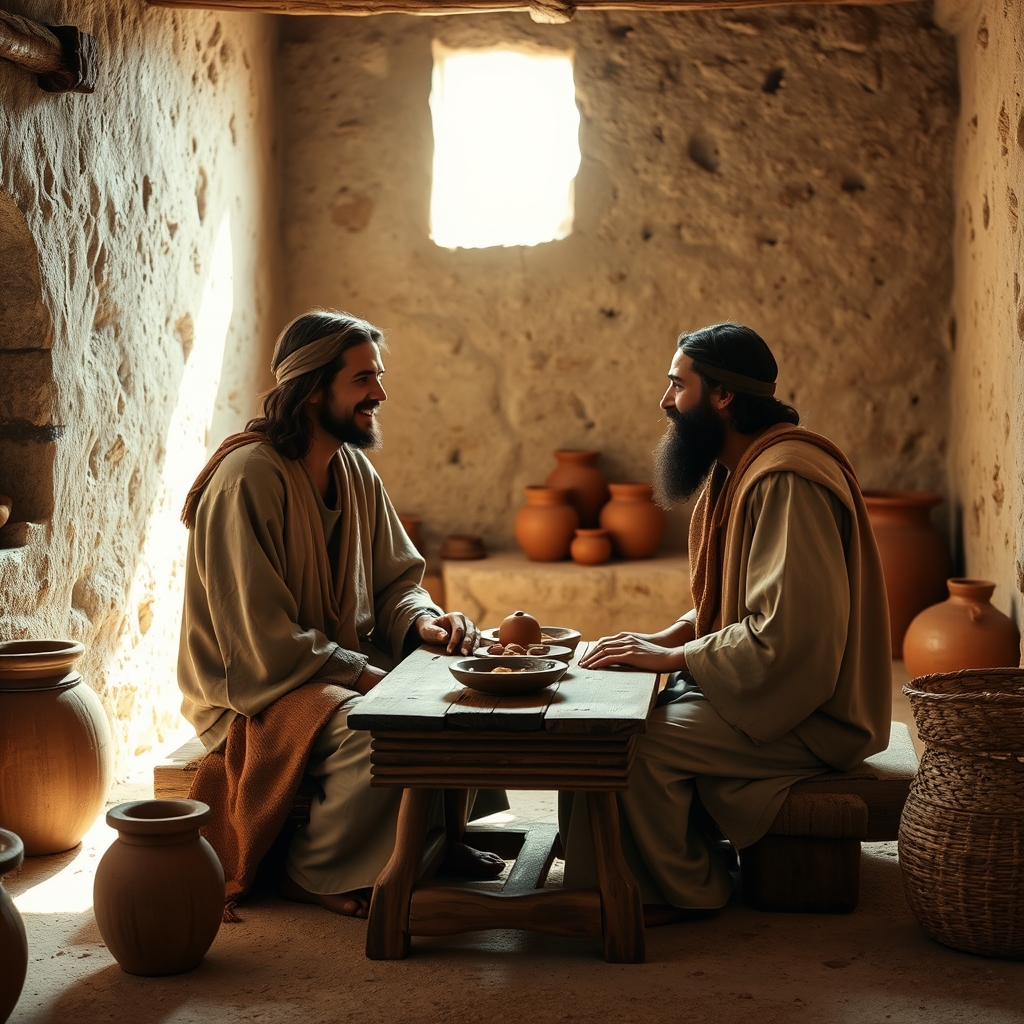
Jesus Loved Lazarus Deeply
The bond between Jesus and Lazarus was one of genuine, heartfelt love. While Jesus had many followers and disciples, His friendship with Lazarus stood out in a remarkable way.
In fact, the Bible tells us openly, “Jesus loved Martha and her sister and Lazarus” (John 11:5). This statement is powerful because it is rare for Scripture to speak so plainly about Jesus’ personal affection for specific individuals.
So, what did this love look like in practice?
- Jesus wept: When Lazarus died, Jesus did not remain stoic or distant. Instead, He wept openly at the tomb (John 11:35). This shortest verse in the Bible reveals the depth of Jesus’ compassion and heartbreak. [1]
- Jesus responded to their need: When Mary and Martha sent word that Lazarus was sick, Jesus did not turn a deaf ear. Even though He waited to act, His love was always present. He ultimately came to raise Lazarus from the dead, demonstrating that His love conquers even death itself.
- Jesus shared life with them: Bethany, the village where Lazarus lived with his sisters, was one of the places Jesus would retreat to rest and find comfort (Luke 10:38-42; John 11:54). This shows that their relationship was not merely theological; it was personal and intimate.
As a result, the relationship between Jesus and Lazarus reminds us of a profound truth: Jesus is not distant or detached from us. He is a Savior who weeps with those who weep and rejoices with those who rejoice. His love is both divine and deeply personal.
Mary, Martha, and Lazarus: A Household of Faith
Lazarus did not walk alone in his faith. He was part of a family that deeply loved and trusted Jesus. His sisters, Mary and Martha, are each highlighted in Scripture as women of great devotion.
Together, this household in Bethany offered Jesus something very rare: a welcoming home where He could be known, loved, and served with sincerity.
Mary is remembered for sitting at the feet of Jesus and listening to His teaching (Luke 10:39). Then later in John 12:3, she anointed Jesus’ feet with expensive perfume, an act of worshipful sacrifice that Jesus Himself called beautiful.
Martha, on the other hand, is known for her active service and bold faith. When Lazarus died, she went out to meet Jesus and declared, “Lord, if You had been here, my brother would not have died” (John 11:21). Even in her grief, she expressed an unshakable confidence in Jesus’ power.
This family modeled what it means to follow Christ in different ways:
- Through worship: Mary showed us the importance of drawing close to Jesus in adoration and surrender.
- Through service: Martha demonstrated that loving Jesus includes practical, wholehearted care for others.
- Through trust: Lazarus, though less vocal in Scripture, stood as a living testimony to Jesus’ power. His very death and resurrection became the stage upon which God’s glory was displayed.
Furthermore, this family’s faith was not performative. It was tested deeply by loss and sorrow. When Lazarus fell sick, they reached out to Jesus in faith, believing He could heal. Even though death came first, Jesus’ power was not limited by it.
In addition, their story teaches us that faith is not the absence of questions or pain. Martha questioned why Jesus had not come sooner. Mary wept openly at His feet. Yet both held on to their belief that Jesus was who He said He was.
As a result, Mary, Martha, and Lazarus remind us that faith flourishes best within community. Today, we follow Christ not in isolation but alongside brothers and sisters who worship with us, serve alongside us, and trust Jesus together with us.
In the end, the story of Jesus and Lazarus is not simply an ancient account. It is a living reminder that Jesus Christ is the same yesterday, today, and forever (Hebrews 13:8). He is the Lord of life and death, and He loves each one of us with a love that will never fail.
How Many Days Was Lazarus Dead?
The Significance of Four Days
When Jesus arrived in Bethany, Lazarus had already been in the tomb for four days. This detail is not accidental. In Jewish tradition of that time, it was widely believed that the soul lingered near the body for three days, hoping to return. By the fourth day, decomposition had begun, and all hope of recovery was considered gone. [2]
Jesus allowed this full four-day period to pass. Why? So that no one could claim Lazarus was merely unconscious or in a deep sleep. The miracle would be undeniable. Death was certain. The decay was real. And yet, Jesus was about to show that even irreversible death bows to His command.
This moment reveals something powerful: Jesus does not rush to meet our expectations. He often allows situations to reach their lowest point. Then He acts—not just to help, but to reveal the glory of God in a way no one can explain away.
Why Jesus Waited Before Coming
When Mary and Martha sent word that Lazarus was sick, Jesus did not immediately go to them. Instead, He stayed where He was for two more days (John 11:6). This delay was not neglect. It was purposeful. Jesus knew that Lazarus would die. He also knew He would raise him from the dead.
Jesus said clearly, “This sickness will not end in death. No, it is for God’s glory so that God’s Son may be glorified through it” (John 11:4). His delay was not indifference. It was divine timing. He waited so that the miracle would bring even greater glory to God and deeper faith to those who witnessed it.
Sometimes, we wonder why Jesus seems silent in our pain. We pray, but He does not come right away. Yet His delay is never denial. He sees the full picture. He knows the end from the beginning. And He is always working—even when we cannot see it.
The story of Jesus and Lazarus reminds us that God’s timing is perfect. What feels like absence is often preparation for a greater revelation of His power and love.
Jesus Raises Lazarus from the Dead: What Is the Lesson?
`html
Jesus Showed Compassion Even in His Plan
One of the most moving aspects of the story of Jesus and Lazarus is the compassion Jesus displayed, even while following a divine plan far greater than anyone present could understand. When Lazarus fell sick, his sisters Mary and Martha sent word to Jesus, saying, “Lord, the one you love is sick” (John 11:3). Jesus loved this family deeply. Yet He did not rush to their side.
Instead, Jesus remained where He was for two more days. This delay was not out of indifference. It was purposeful. Through this waiting, God’s greater purpose would unfold. As a result, the miracle that followed would shake the faith of everyone who witnessed it.
By the time Jesus arrived, Lazarus had been in the tomb four days. Martha met Jesus first and said, “Lord, if you had been here, my brother would not have died” (John 11:21). Can you hear the ache in her words? She believed in Jesus. Yet she could not understand His timing.
Even so, Jesus met her pain with truth. He said, “Your brother will rise again” (John 11:23). Martha responded with hope in the resurrection. But Jesus went further. He declared, “I am the resurrection and the life. The one who believes in me will live, even though they die” (John 11:25).
This moment reveals a beautiful truth. Jesus is never late. His timing is perfect. He weeps with those who weep (John 11:35). At the same time, He works all things according to His glorious plan. Furthermore, His delay in coming to Lazarus was not neglect. It was an invitation for deeper faith.
For believers today, this lesson remains powerful. When God seems silent, He is still at work. When prayers appear unanswered, His love has not wavered. In addition, trust grows strongest in seasons of waiting. God’s plan is always worth the wait.
Jesus Has Power Over Death Itself
The raising of Lazarus stands as one of the most dramatic miracles in all of Scripture. It reveals a truth that surpasses every earthly power. Jesus has absolute authority over death.
Death, in every human sense, was final for Lazarus. His body had been sealed in a tomb. The decay process had begun. His sisters grieved without hope of seeing him again. In the eyes of everyone around, the story was over.
But it was not over for Jesus.
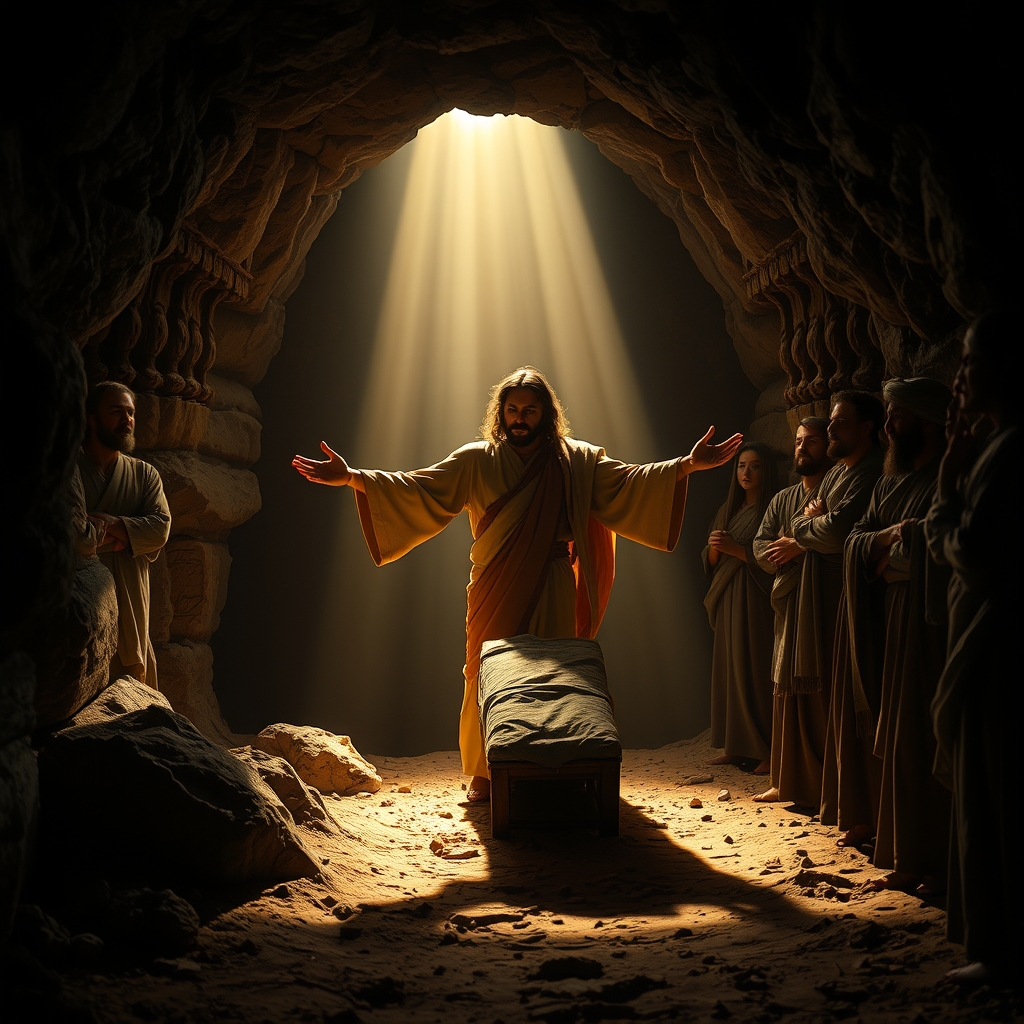
With a simple, commanding voice, Jesus called out, “Lazarus, come out!” (John 11:43). And the dead man walked out of the tomb, still wrapped in burial cloths. Let that image sink in. The voice that spoke creation into existence now called a dead man back to life.
This miracle foreshadowed the greatest event in history. Jesus Himself would die and rise from the grave three days later. As the apostle Paul wrote, “For as in Adam all die, so in Christ all will be made alive” (1 Corinthians 15:22). The resurrection of Lazarus was a living prophecy. It proved that Jesus holds the keys to life and death.
Here is what this means for us:
- Death is not the end for those who believe in Jesus.
- Jesus conquered the grave once and for all through His own resurrection.
- No power in heaven, on earth, or under the earth can separate us from His love.
- Because He lives, believers have eternal hope beyond the grave.
As a result of this miracle, many who witnessed it believed in Jesus. Others reported the event to the religious leaders. Their reaction only accelerated the path to the cross. Even the raising of a dead man could not stop what God had ordained for the salvation of the world.
The power of Jesus over death is not just a lesson from the past. It is present hope. It is the assurance that resonates through every generation. If Jesus can bring a four-decaying dead man back to life, He can restore your broken heart, your lost hope, and your deepest grief.
God’s Glory Is Revealed Through Faith
The entire miracle of Jesus and Lazarus points to one ultimate purpose: the glory of God. Before raising Lazarus, Jesus told His disciples, “This sickness will not end in death. No, it is for God’s glory so that God’s Son may be glorified through it” (John 11:4).
Faith was central to how this glory unfolded. Martha believed Jesus was the Christ, the Son of God, even as she mourned (John 11:27). Mary fell at His feet in raw sorrow. The grieving crowd wept openly. Each person in that moment was drawn closer to the truth of who Jesus is.
Jesus then prayed aloud to the Father. He said, “Father, I thank you that you have heard me. I knew that you always hear me, but I said this for the benefit of the people standing here, that they may believe that you sent me” (John 11:41–42). His prayer was not for information. It was an invitation for faith.
The lessons in this story extend to every believer:
- God allows difficult seasons so that His glory can be more fully revealed.
- Faith grows not in the absence of suffering but through trust in Jesus during suffering.
- When we bring our grief to Jesus, He meets us with power and with compassion.
- The miracles of God are meant to draw more people to faith in Jesus Christ.
After witnessing this miracle, many believed. However, others went to the Pharisees. Their hearts were hardened. This response reminds us that God’s glory always produces one of two reactions: belief or rejection.
Finally, the raising of Lazarus sealed Jesus’ identity. He is the Son of God. He is the resurrection and the life. And He still performs miracles in the hearts of those who come to Him in faith today.
`
What Does John 11:11 Say and What Does It Mean?
Understanding Jesus’ Words
When Jesus received word that His friend Lazarus was sick, He made a remarkable statement. In John 11:11, He said: “Our friend Lazarus is asleep; but I am going to wake him up.”
At first, Jesus’ disciples misunderstood Him. They thought Jesus meant literal rest would help Lazarus recover. However, Jesus was speaking about something far deeper than physical sleep.
Looking at this verse in context reveals several important truths:
- Jesus called Lazarus “our friend.” This shows the deep, personal bond between Jesus and Lazarus. It was not a distant, formal relationship. It was one of genuine love and closeness.
- Jesus described death as sleep. This was not confusion. It was a deliberate choice of words that carries profound theological meaning.
- Jesus stated His intention clearly. He said, “I am going to wake him up.” He was declaring that He had the power and the plan to reverse what seemed to be final.
After the disciples misunderstood, Jesus spoke more plainly. John 11:14 tells us Jesus “told them plainly, ‘Lazarus is dead.'” He had been using metaphor, but He made sure His disciples understood His mission.
Here is the remarkable truth embedded in this verse: what seems like the end to us is merely sleep in the eyes of Jesus. Death, which terrifies the human heart, is simply rest in the presence of the Lord. He holds the power to call us forth from that rest, just as easily as one wakes a sleeping friend.
The story of Jesus and Lazarus in this chapter is one of the most intimate accounts in all of Scripture. Jesus does not approach this miracle with cold detachment. He weeps. He grieves with the sisters. Yet He moves forward with unwavering confidence because He is the God of life and resurrection.
Sleep as a Metaphor for Death in Scripture
The metaphor of sleep for death appears throughout the Bible. It is not unique to John’s Gospel. However, it carries a specific and beautiful meaning that speaks directly to the believer’s hope.
In the Old Testament, King David used this language when speaking about his infant son. In 2 Samuel 12:23, David said, “I will go to him, but he will not return to me.” The implication was clear. His child had not ceased to exist. He had simply fallen asleep in the presence of God.
In the New Testament, the apostle Paul used the same imagery. Writing to the Thessalonians, he comforted believers who had lost loved ones. In 1 Thessalonians 4:13-14, he wrote:
“Brothers and sisters, we do not want you to be uninformed about those who sleep in death, so that you do not grieve like the rest of mankind, who have no hope. For we believe that Jesus died and rose again, and so we believe that God will bring with Jesus those who have fallen asleep in him.”
This metaphor communicates several essential truths:
- Death is not the end. Sleep has an awakening. For those who trust in Jesus, physical death is temporary.
- Death is not to be feared by believers. Jesus reframed death entirely. It is not a permanent separation. It is a rest before a glorious reunion.
- Jesus Himself confirms this truth through His resurrection. He defeated death and declared Himself “the resurrection and the life” (John 11:25).
Furthermore, Jesus used this same sleep language when He healed Jairus’ daughter. In Luke 8:52, when people laughed at Him because the girl had died, He said, “Stop wailing. She is not dead but asleep.” Then He took her by the hand and she got up immediately.
The consistent message across Scripture is clear: death does not have the final word. For the believer, it is simply a temporary state. And the one who holds the key to life’s deepest mystery is Jesus Christ, the Son of the living God.
When we consider the story of Jesus and Lazarus, this metaphor takes on extraordinary power. Jesus stood before a tomb sealed with a stone. He stood before a body that had been dead for four days. And with a single, authoritative call, He shattered the power of death itself. The “sleeping” Lazarus emerged alive, walking out of his grave wrapped in burial cloths.
This is our hope as followers of Jesus. Death is real, but it is not ultimate. Our Savior has conquered it. And one day, just as Lazarus walked out of his tomb, all who belong to Christ will rise to eternal life.
Jesus and Lazarus Bible Verses You Should Know
Key Scripture Passages from John 11
The miracle of Jesus raising Lazarus is found entirely in the Gospel of John. This powerful chapter reveals the heart of Jesus and His authority over death. Below are essential Bible verses that every believer should know and treasure.
Consider writing these verses down. Meditate on them. Let them strengthen your faith in Jesus Christ, the Son of the living God.
Verses That Reveal Jesus’ Love
The love Jesus had for Lazarus and His friends begins the story. These verses remind us that Jesus is not distant or uncaring. He is moved by our suffering.
| Verse | Text | Key Truth |
|---|---|---|
| John 11:3 | “So the sisters sent word to Jesus, ‘Lord, the one you love is sick.'” | Jesus had a deep, personal love for Lazarus. |
| John 11:5 | “Jesus loved Martha and her sister and Lazarus.” | God’s Word explicitly affirms Jesus’ love for this family. |
| John 11:35 | “Jesus wept.” | Jesus is not untouched by our grief. He shares in our sorrow. |
These verses carry a profound truth. The Son of God knows what it means to love and to grieve. When you face sorrow, Jesus is not standing afar off. He draws near. He enters into your pain with tender compassion.
Verses That Promise the Resurrection
Amid the grief of loss, Jesus spoke words of eternal hope. He declared truth that changes everything for all who believe.
- John 11:25–26 — “Jesus said to her, ‘I am the resurrection and the life. The one who believes in me will live, even though they die; and whoever lives by believing in me will never die. Do you believe this?'” [3]
- John 11:23 — “Jesus said to her, ‘Your brother will rise again.'”
These words are the foundation of every Christian’s hope. Physical death is not the final word. Jesus Himself is the resurrection. He holds the keys to eternal life. Everyone who places their trust in Him receives the gift of everlasting life.
Furthermore, Jesus asked Martha a question that He still asks each of us today: “Do you believe this?” The answer to that question shapes your life for eternity.
Verses That Display Jesus’ Power Over Death
The climax of the story is breathtaking. Jesus commands and death obeys. No other figure in all of Scripture possesses this divine authority.
| Verse | Event | Significance |
|---|---|---|
| John 11:43 | Jesus cried out, ‘Lazarus, come out!’ | Jesus spoke with absolute authority over death. |
| John 11:44 | “The dead man came out, his hands and feet wrapped with strips of linen.” | Death could not hold Lazarus when Jesus commanded life. |
Once more, consider the setting. Lazarus had been in the tomb four days. His body was decaying. The situation was, by every human standard, impossible. Yet Jesus is not limited by human standards. With a single spoken word, He shattered the chains of death and called a dead man back to life.
In addition, Jesus did not whisper this command quietly. He cried out loudly. This public declaration was intentional. It revealed God’s glory. It demonstrated to all witnesses that Jesus is the Son of God with power over the grave.
Verses to Memorize and Carry in Your Heart
The story of Jesus and Lazarus is not merely a historical account. It is a living testimony of who Jesus is and what He offers to every person. Here is a summary of the key verses every Christian should commit to memory:
- John 11:25–26 — Jesus declares Himself as the resurrection and the life.
- John 11:35 — Jesus wept, showing His deep compassion for those who suffer.
- John 11:4 — “This sickness will not end in death. It is for God’s glory so that God’s Son may be glorified through it.”
- John 11:40 — “Did I not tell you that if you believe, you will see the glory of God?”
- John 11:43–44 — Jesus calls Lazarus from the tomb, and death releases its grip.
Believe these words. Hold fast to them. Jesus has the same power today that He demonstrated at the tomb of Lazarus. He holds authority over every grave, every sickness, and every fear you face. His name is Jesus Christ, Lord and Savior, and He alone is the way, the truth, and the life (John 14:6).
Why Does Jesus Raising Lazarus Not Appear in Matthew or Luke?

Why the Gospel of John Records This Miracle
The raising of Lazarus is found only in the Gospel of John. This fact sometimes puzzles readers. However, understanding why John included this account deepens our faith.
John wrote his Gospel with a clear purpose. He wanted readers to believe that Jesus is the Christ, the Son of God (John 20:31). The miracle of Lazarus serves this purpose perfectly.
John selected specific signs and miracles to prove Jesus’ divine identity. He called these events “signs” because they pointed to a greater truth. The raising of Lazarus was the greatest public miracle Jesus performed before His own death.
The timing of this event is critical. It happened shortly before Jesus’ crucifixion. This miracle revealed that Jesus held power over death itself. Furthermore, it directly led the religious leaders to plot Jesus’ death.
Each Gospel Has a Unique Purpose
The four Gospels were not written to repeat the same stories. Each author wrote under the Holy Spirit’s guidance with a distinct focus. Together, they paint a complete portrait of Jesus Christ.
Consider the unique purpose of each Gospel:
- Matthew wrote primarily to Jewish readers. He emphasized Jesus as the promised King and Messiah. His Gospel includes miracles that fulfilled Old Testament prophecies.
- Mark wrote a Gospel focused on action. He presented Jesus as the suffering servant. His account moves quickly and emphasizes Jesus’ authority over demons, disease, and nature.
- Luke wrote an orderly, detailed account. He highlighted Jesus’ compassion for the poor, the outcast, and women. Luke also included the parable of another Lazarus in Luke 16:19-31, which teaches a different spiritual lesson entirely.
- John wrote to reveal Jesus’ divine nature. He included seven major signs that proved Jesus was God in the flesh. The raising of Lazarus was the climactic sign.
None of the Gospel writers tried to record every single thing Jesus did. John himself admitted this openly. He wrote, “Jesus performed many other signs in the presence of His disciples, which are not recorded in this book” (John 20:30).
The Holy Spirit guided each writer to include exactly what the Church needed. As a result, we now have four complementary accounts rather than one repetitive record. Each Gospel fills in details the others do not cover.
This is an important reminder for us as believers. The Bible does not need to mention an event in four separate places for it to be true. One reliable testimony from an eyewitness is sufficient. John was that eyewitness. He was the disciple “whom Jesus loved” and saw this miracle firsthand (John 13:23).
The Gospels work together like four witnesses describing the same scene from different angles. One witness might describe the face. Another might describe the surroundings. Each perspective adds depth and richness. In the same way, Matthew, Mark, Luke, and John each reveal something beautiful and unique about our Lord Jesus Christ.
The raising of Lazarus by Jesus is a powerful testimony to who Christ is. It shows us that He is the Resurrection and the Life (John 11:25). Matthew and Luke did not record this event. However, their Gospels magnify Jesus in their own divinely inspired ways. Together, all four accounts glorify our Savior and strengthen our faith in Him.
Lazarus in The Chosen: Faithful to Scripture?
The Portrayal of Jesus and Lazarus in The Chosen Series
The Chosen series aims to visualize the biblical narrative for modern audiences. Viewers often feel a deep connection to the characters depicted. In this series, the relationship between Jesus and Lazarus appears quite authentic. It highlights the profound friendship shared by the Savior and the man He resurrected.
Furthermore, the show emphasizes the emotional reality of the scene in Bethany. Jesus wept with Mary and Martha during their grief, as recorded in Scripture. This portrayal remains faithful to the compassionate nature of Christ. The series depicts Jesus as approachable yet distinctively divine.
Key aspects of the portrayal include the following points:
- Deep Friendship: Jesus is shown loving the household of Bethany.
- Human Emotion: The Savior expresses genuine sorrow at the tomb.
- Divine Authority: Jesus calls Lazarus from the grave with command.
Additionally, the dynamic between the sisters is highlighted significantly. Martha expresses her faith before the miracle occurs. Mary seeks Jesus personally for comfort. These interactions reflect the core truths of John 11. [4]” target=”_blank” rel=”nofollow”>[source: John 11:35] reminds us that Jesus deeply loved them.
However, viewers must remember the show is a dramatization. It uses creative license to flesh out scenes not found in the text. The primary goal is to draw attention to the Gospel story. Ultimately, the focus remains on the power of Jesus.
How Accurately Does The Chosen Depict This Story?
Accuracy is vital when discussing Scripture and historical drama. The Chosen generally aligns with the biblical account of the resurrection. Yet, some specific details differ from the biblical text. We must distinguish between confirmed truth and artistic adaptation.
Consequently, the most important aspect is the theological core. Does the show affirm Jesus’ divinity? Yes. It confirms His authority over life and death. This is the non-negotiable truth of Christianity.
The following table compares scriptural truths with dramatic elements:
| Element | Scripture Authority (John 11) | Dramatic License in The Chosen |
|---|---|---|
| Timing | Jesus arrived after four days | Timelines are kept consistent in this aspect |
| Dialogue | Key phrases are quoted directly | Conversation extends beyond the text |
| Tone | Compassion and power are central | Emotional depth is emphasized |
| Miracle | Jesus calls him out of the cave | Depiction of the grave scene varies slightly |
In addition, the series does not validate skepticism. It does not present the miracle as a metaphor or legend. Christians should view this depiction as an encouragement to read the word. The Bible remains the final authority on the life of Christ.
Therefore, believers should prioritize the scriptural record over the television screen. Consider these recommendations for further study:
- Read John chapter 11 in its entirety.
- Focus on the resurrection’s meaning for eternal life.
- Avoid getting distracted by minor historical details.
Ultimately, the story of Jesus and Lazarus points to one person. That person is the Lord and Savior. He conquered death so we might have life. This truth is unwavering regardless of the medium used to tell it.
As a result, the series serves as a tool for curiosity. It invites people to ask: “Who is Jesus?” The answers are found in the Gospels. Trust in the written Word for your salvation. [5]” target=”_blank” rel=”nofollow”>[source: John 11:25] confirms Jesus is the resurrection and the life.
Frequently Asked Questions
What Was Lazarus’ Relationship to Jesus?
The Gospels reveal something beautiful about Jesus and Lazarus. They shared a deep, personal friendship. John 11:3 tells us plainly: “So the sisters sent word to Jesus, ‘Lord, the one you love is sick.'” Furthermore, John 11:5 confirms that “Jesus loved Martha and her sister and Lazarus.”
Their relationship was closer than that of a teacher and student. Jesus found a true home in the household of Lazarus, Mary, and Martha in Bethany. It was a place of rest, love, and genuine fellowship. Therefore, when Lazarus fell ill, the sisters knew exactly where to turn. They trusted that Jesus cared.
In addition, this friendship reminds us something profound. Jesus is not distant or detached from our pain. He forms real bonds with His followers. He loves us personally. As a result, we can bring our deepest sorrows to Him with full confidence.
What Is the Lesson of Jesus Raising Lazarus from the Dead?
This powerful story carries several essential lessons for every believer. These truths continue to strengthen and encourage believers today.
- Jesus has power over death itself. The grave could not hold Lazarus, and it could not hold Jesus. This miracle was a sign pointing directly to Jesus’ own resurrection. He is the Resurrection and the Life (John 11:25).
- Jesus shows compassion even when He has a greater plan. Even though Jesus knew He would raise Lazarus, He still wept (John 11:35). This verse reveals the tender heart of our Savior. He is moved by our suffering.
- God’s glory is revealed through faith. Jesus prayed before the miracle so that people would “believe that you sent me” (John 11:42). Furthermore, this miracle strengthened the faith of His disciples and the watching crowd.
- Jesus’ timing is perfect, even when it feels like a delay. Jesus waited two days before going to Bethany (John 11:6). However, His delay was not neglect. It was purposeful. He was about to do something far greater than healing a sick man.
- Faith must persevere through waiting. Martha and Mary both struggled with Jesus’ delay. Yet Jesus met them in their pain and led them into a deeper revelation of who He is.
As a result, this story challenges every believer to trust Jesus completely, even when circumstances seem hopeless.
What Does John 11:11 Say?
John 11:11 states: “After he had said this, he went on to tell them, ‘Our friend Lazarus has fallen asleep; but I am going there to wake him up.'”
Jesus chose His words carefully here. He used the metaphor of sleep to describe death. This was not because Lazarus was merely unconscious. Rather, Jesus was reframing death through the lens of His power and authority.
For believers, death is not the end. It is temporary. Scripture uses this same metaphor elsewhere:
- 1 Thessalonians 4:14 — “For we believe that Jesus died and rose again, and so we believe that God will bring with Jesus those who have fallen asleep in him.”
- Acts 7:60 — “Then he fell on his knees and cried out, ‘Lord, do not hold this sin against them.’ When he had said this, he fell asleep.”
Therefore, when Jesus called death “sleep,” He was making a bold declaration. Death has no final authority over those who belong to Him. He is the One who holds the keys to life and death.
How Many Days Was Lazarus Dead?
Lazarus was dead for four days before Jesus arrived in Bethany. John 11:17 tells us plainly: “On his arrival, Jesus found that Lazarus had already been in the tomb for four days.”
The number four carries deep significance in this story. In Jewish tradition of that era, it was commonly believed that the soul lingered near the body for three days after death. By the fourth day, decomposition was well underway. There was no natural hope of recovery.
| Timeline | Event | Scripture Reference |
|---|---|---|
| Day 1 | Lazarus falls ill; sisters send word to Jesus | John 11:3 |
| Day 3 | Jesus receives the news and speaks of Lazarus’ “sleep” | John 11:11-14 |
| Day 5 | Jesus begins His journey to Bethany | John 11:17-18 |
| Day 6+ | Jesus arrives; Lazarus has been dead four days | John 11:17 |
Furthermore, the four-day detail was intentional. It removed any possibility that Lazarus had merely been unconscious or in a coma. This was a genuine, irreversible, natural death. Therefore, the miracle was undeniable. Only God has power over death.
Who Are the Two Lazarus in the Bible?
There are indeed two different men named Lazarus in Scripture. However, they are entirely different individuals. Understanding the distinction helps readers study the Bible more clearly.
- Lazarus of Bethany — He was the brother of Mary and Martha. Jesus raised him from the dead in John 11. His story demonstrates Jesus’ power over death and His deep love for His friends. This is the Lazarus discussed throughout this article.
- Lazarus in Jesus’ parable — In Luke 16:19-31, Jesus told a story about a poor beggar named Lazarus who died and was carried to Abraham’s side. This was a parable, not a historical account. The name was common in Jewish culture, which is why Jesus used it.
However, it is important to recognize that some confusion exists between these two accounts. The parable in Luke 16 is a teaching about wealth, compassion, and eternal destiny. It is not the same event as the miracle recorded in John 11.
In conclusion, both accounts ultimately point to Jesus Christ. Both reveal His authority over life, death, and eternity. Therefore, every mention of the name Lazarus in Scripture invites us to look more closely at the power and compassion of our Lord.
Conclusion: Jesus Has Power Over Death

The story of Jesus and Lazarus is more than a miracle. It is a window into the heart of God. It shows us that Jesus is not distant from our suffering. Instead, He draws near. He weeps with us. And then He speaks life where there was only death.
In this account from the Gospel of John, we see that Jesus waited intentionally. He allowed death to take its full course. Why? Because God’s glory would be revealed in a way no one could miss (John 11:4). Jesus was not indifferent to the pain of Mary, Martha, or Lazarus. He loved them deeply. Yet His delay carried a divine purpose, to demonstrate that no situation is beyond His power.
The Victory Over Death Is Real
When Jesus stood before the tomb, He did not speak a philosophical word. He did not offer a prayer of mere hope. Instead, He shouted a command: “Lazarus, come out!” (John 11:43). At that moment, a man who had been dead for four days walked out of the grave, still wrapped in burial cloths.
This was not a resuscitation. This was a resurrection. Death had fully claimed Lazarus. Yet Jesus reversed it with a single word. The onlookers could not deny what they saw. Many believed in Him that day because of this powerful sign (John 11:45).
Jesus Holds the Keys to Life
What happened that day in Bethany was a preview of a far greater victory. Lazarus would eventually die again. But Jesus Himself would rise from the tomb, never to die. Through His death and resurrection, Jesus broke the power of sin and death for all who believe (1 Corinthians 15:54-57).
As Jesus declared Himself:
- “I am the resurrection and the life. The one who believes in me will live, even though they die” (John 11:25).
- He holds authority over both the physical and the spiritual.
- No grave can overpower Him. No darkness can outlast His light.
What This Means for You Today
If you are walking through a season of grief or loss, the story of Lazarus brings comfort. Jesus understands sorrow. He wept at the tomb of His friend. Yet His tears did not signal defeat. They revealed a God who enters into our pain and then overcomes it (John 11:35).
Furthermore, if you feel spiritually dead or far from God, this miracle offers hope. Jesus calls to you the same way He called to Lazarus. He speaks life into places that feel hopeless. All it takes is faith in Him.
The account of Jesus and Lazarus reminds us of two essential truths:
- Jesus loves you personally. His relationship with Lazarus was marked by genuine friendship and deep affection. He knows your name. He cares about your suffering.
- Jesus has power over death itself. Whatever feels dead in your life, He is able to restore. Whether it is a dream, a relationship, or your spiritual walk, nothing is too far gone for His reach.
The raising of Lazarus stands as one of the most powerful signs in all of Scripture. It confirms that Jesus Christ is the Son of God. It validates His claim to be the resurrection and the life. And it gives every believer a rock-solid assurance: death is not the end.
If you have never placed your faith in Jesus, this story is an invitation. He is calling you today. He offers eternal life, not as a distant promise, but as a present reality available through faith in His name (John 3:16).
Because Jesus lives, those who trust in Him will also live forever. That is the ultimate victory. That is our unshakable hope.
Sources
- https://www.biblegateway.com/passage/?search=John+11:35&version=NIV
- https://www.biblegateway.com/resources/commentaries/Matthew-Henry/John/11
- https://www.biblegateway.com/passage/?search=John+11&version=NIV
- https://www.biblegateway.com/passage/?search=John+11:35&version=ESV
- https://www.biblegateway.com/passage/?search=John+11:25&version=ESV