Jesus made seven profound ‘I am’ statements in the Gospel of John, each revealing a different aspect of His divine nature and mission. These declarations, such as ‘I am the bread of life’ and ‘I am the way, the truth, and the life,’ are central to understanding His identity as the Son of God.
There are few moments in Scripture more breathtaking than the ones in which Jesus Christ opens His mouth and declares, “I am.” With those two simple words, spoken throughout the Gospel of John, Jesus did not merely describe what He does — He revealed who He is. When Jesus said “I am,” He was making a claim so bold, so divine, and so unmistakable that those who heard Him either fell on their knees in worship or fell backward under the weight of His glory. These seven powerful “I am” statements are not poetic metaphors or casual illustrations. They are direct, intentional declarations from the Son of God, each one unveiling a different facet of His identity, His mission, and His eternal love for you.
In this article, we will walk through each of the seven “I am” statements Jesus made in the Bible, exploring what they meant to those who first heard them and what they mean for your life today. Whether you are a new believer just beginning to discover who Jesus is, or a longtime follower of Christ seeking to go deeper, these words will strengthen your faith and remind you that Jesus is exactly who He said He is — the Bread of Life, the Light of the World, the Good Shepherd, the Resurrection and the Life, the Way the Truth and the Life, and the True Vine. Let us open God’s Word together and listen as Jesus speaks.
Introduction: The Weight of Jesus’ Words

Throughout the Gospels, Jesus Christ made declarations that stunned His listeners, silenced His enemies, and still echo through the centuries today. Among the most powerful words He ever spoke were the “I Am” statements — profound declarations of His identity, His mission, and His eternal nature. These seven statements were not casual remarks. They were bold claims of divinity, each one revealing a different dimension of who Jesus truly is.
When you explore what Jesus said “I am,” you encounter the very heart of the Gospel. Each declaration addresses a deep human need — hunger, darkness, loneliness, confusion, death, lost direction, and fruitless living. Jesus met every one of these needs with a single, sovereign answer: “I am.”
Why These Words Still Matter
The “I Am” statements of Jesus are not merely historical quotations. They carry eternal weight. In the Old Testament, God revealed Himself to Moses with the holy name, “I AM WHO I AM” (Exodus 3:14). When Jesus used this same divine name to describe Himself, He was making an unmistakable claim to deity. [1]
>
In doing so, Jesus invited — and still invites — every person to respond with the same question the crowd once asked: “Who is this man?” (Matthew 16:15). The answer changes everything.
Human Needs, Divine Answers
People today still face the same struggles people faced two thousand years ago. We still hunger for lasting peace. We still stumble through darkness. We still fear death. We still search for truth. Jesus did not simply offer advice or good ideas. He offered Himself — as the Bread, the Light, the Gate, the Shepherd, the Resurrection, the Way, and the Vine.
Over the next several sections, we will walk through each of these seven “I Am” statements one by one, examining the context in which Jesus spoke them, the scripture that records them, and what they mean for your life today. Whether you have walked with Jesus for decades or you are just beginning to ask questions about Him, these words have the power to deepen your faith and transform your understanding of who He is.
Jesus did not leave His identity open to interpretation. He defined Himself — clearly, compassionately, and without apology. As you read what follows, invite the Holy Spirit to open your heart. These words are not just theology to study. They are an encounter with the living christ.
Where in the Bible does Jesus say I am?
When we ask, “Where in the Bible does Jesus say I am?” we are searching for some of the most profound and life-changing words ever spoken. These declarations are not mere statements. They are divine revelations of who Jesus truly is.
The phrase “I am” carries extraordinary weight in Scripture. In the Old Testament, God revealed Himself to Moses as “I AM WHO I AM” (Exodus 3:14). When Jesus used this same phrase, He was making a direct claim to deity. He was identifying Himself as the eternal God who spoke to Moses from the burning bush.
The Gospel of John: The Heart of the “I Am” Statements
The majority of Jesus’ “I am” declarations are found in the Gospel of John. John’s Gospel was written so that we might believe that Jesus is the Christ, the Son of God, and that by believing we might have life in His name (John 20:31). Throughout this Gospel, Jesus makes seven powerful “I am” statements, each revealing a different aspect of His identity and mission.
Here are the key passages where Jesus said “I am”:
- John 6:35 — “I am the bread of life.”
- John 8:12 — “I am the light of the world.”
- John 10:9 — “I am the gate.”
- John 10:11 — “I am the good shepherd.”
- John 11:25 — “I am the resurrection and the life.”
- John 14:6 — “I am the way, the truth, and the life.”
- John 15:1 — “I am the true vine.”
Each of these statements was spoken in a specific context. Jesus was addressing real needs — hunger, darkness, danger, loss, confusion, and fruitlessness. He met each need by declaring that He Himself is the answer.
Jesus’ “I Am” in John 8:58
Perhaps the most striking use of “I am” appears in John 8:58, where Jesus said, “Before Abraham was, I am.” This statement caused the religious leaders to pick up stones to kill Him. They understood exactly what He was claiming. He was not merely saying He existed before Abraham. He was using the sacred name of God — “I AM” — to declare His eternal, divine nature.
This is the same “I AM” that God used when He spoke to Moses at the burning bush (Exodus 3:14). Jesus was not a created being. He was claiming to be the eternal God Himself.
Other Key “I Am” Moments
Beyond the seven declarations in John, Jesus also said “I am” in other significant moments:
- John 18:5-6 — When soldiers came to arrest Jesus in the garden, He said “I am He,” and they drew back and fell to the ground. His words carried divine authority.
- Mark 14:62 — Before the high priest, Jesus said, “I am [the Christ, the Son of the Blessed One].”
- John 4:26 — Jesus told the Samaritan woman, “I who speak to you am He.”
Every time Jesus said “I am,” He was revealing His true identity. He was not a prophet. He was not merely a good teacher. He was — and is — the Son of God, the Savior of the world, and the fulfillment of every promise God ever made.
What are the 7 things Jesus said I am?
Throughout the Gospels, Jesus made extraordinary declarations about His identity. When Jesus said “I am,” He was not merely describing what He does. He was revealing who He is. Each of these seven statements carries deep theological meaning and boundless hope for every believer.
These “I am” statements did not originate with Jesus alone in Scripture. They echo the very name God revealed to Moses at the burning bush: “I AM WHO I AM” (Exodus 3:14). When Jesus spoke these words, His audience understood the weight of what He was claiming. He was declaring Himself to be God in human flesh. Let’s walk through each of these seven powerful declarations.
I Am the Bread of Life (John 6:35)
Jesus declared, “I am the bread of life. Whoever comes to me will never go hungry, and whoever believes in me will never be thirsty” (John 6:35, NIV). In a world where people scramble to satisfy their deepest needs through possessions, relationships, and achievements, Jesus offers Himself as the only true source of spiritual nourishment.
Just as physical bread sustains our bodies, Jesus sustains our souls. No amount of worldly success can fill the emptiness inside every human heart. Only Christ can satisfy that hunger. When we partake in Him through faith, prayer, and His Word, we find lasting fulfillment that nothing else can provide.
This statement also points forward to the Lord’s Supper, where bread symbolizes His body broken for us. He is not just a source of life. He is life itself.
I Am the Light of the World (John 8:12)
In John 8:12, Jesus proclaimed, “I am the light of the world. Whoever follows me will never walk in darkness, but will have the light of life” (NIV). Darkness in Scripture often represents sin, ignorance, and separation from God. Jesus steps into that darkness and overcomes it completely.
Think about walking through a pitch-black room. Every step is uncertain. Fear creeps in. But the moment someone switches on a light, everything changes. That is what Jesus does for us. He illuminates our path, exposes the truth, and guides us safely through a fallen world.
Furthermore, this declaration echoes the opening of John’s Gospel: “The light shines in the darkness, and the darkness has not overcome it” (John 1:5). Jesus is not one light among many. He is the Light — the definitive revelation of God to humanity.
I Am the Gate (John 10:9)
Jesus said, “I am the gate; whoever enters through me will be saved. They will come in and go out, and find pasture” (John 10:9, NIV). In ancient times, sheepfolds had no doors — only a narrow opening. The shepherd himself would lie across that opening, becoming the gate to protect the sheep from thieves and predators.
Jesus is making a profound statement here. We live in a culture that says all paths lead to God. But Jesus is unmistakable: He is the gate. There is no other entrance into a right relationship with the Father. He is both our protector and our access point to salvation.
| Key Truth | Scripture Reference |
|---|---|
| Jesus is the only way to salvation | John 10:9 |
| Through Him we find spiritual rest and provision | Matthew 11:28 |
| He guards and protects His people | John 10:28-29 |
When Jesus said “I am” the gate, He left no ambiguity. He did not say a gate. He said the gate.
I Am the Good Shepherd (John 10:11)
Perhaps one of the most tender and personal declarations Jesus made is found in John 10:11: “I am the good shepherd. The good shepherd lays down his life for the sheep” (NIV). In the ancient Near East, shepherds were known for their fierce devotion. They would risk everything to protect their flock.
Jesus contrasts Himself with hired hands who flee when danger comes. He stays. He fights. He lays down His very life. This statement directly points to His sacrificial death on the cross, where He willingly gave Himself for us — not because we earned it, but because of His immeasurable love.
Here is what makes this declaration so comforting:
- He knows His sheep by name (John 10:3) — God is not distant or detached. He knows you personally.
- He leads them to green pastures — He provides for our needs, both physical and spiritual.
- He protects them from every danger — No thief, no wolf, no force can snatch us from His hand.
- He lays down His life willingly — The cross was not an accident. It was the plan of redemption from before the foundation of the world.
I Am the Resurrection and the Life (John 11:25)
This powerful declaration was spoken at one of the most emotional moments in all of Scripture. Jesus stood before the tomb of His dear friend Lazarus, and Martha — Lazarus’s sister — came to Him in grief. Jesus tenderly replied, “I am the resurrection and the life. The one who believes in me will live, even though they die” (John 11:25, NIV).
Notice what He did not say. He did not say, “I give resurrection and life” or “I show the way to resurrection.” He said, “I am the resurrection and the life.” Resurrection is not just something Jesus provides. It is woven into His very being.
The proof came moments later when He called Lazarus out of the tomb — a man who had been dead for four days. And ultimately, the greatest proof came three days after Jesus’s own crucifixion, when He rose from the dead. His resurrection is the cornerstone of our faith (1 Corinthians 15:14). Because He lives, we too shall live.
For every believer facing the shadow of death — whether their own or that of a loved one — this promise stands unshakable. Death is not the end. Jesus is the resurrection and the life.
I Am the Way, the Truth, and the Life (John 14:6)
This is perhaps the most quoted and most debated of all the “I am” statements. Jesus said, “I am the way and the truth and the life. No one comes to the Father except through me” (John 14:6, NIV). In an age of relativism, where many claim that all religions lead to the same God, this verse stands as a bold, uncompromising declaration.
Let’s break down each part of this threefold claim:
- The Way — Jesus is not a path among many. He is the path to the Father. He is the bridge across the chasm of sin that separates us from a holy God.
- The Truth — In a world drowning in misinformation and shifting opinions, Jesus is the unchanging, eternal Truth. His Word does not waver. His promises do not fail.
- The Life — He is not merely a teacher of how to live. He is life itself — abundant life now and eternal life forever.
Some find this statement exclusive. But consider it from another angle: it is the most inclusive statement ever made. Jesus did not say, “I am the way for a select few.” He said, “I am the way” — open to everyone who believes. The invitation is universal. The access is through Him alone.
I Am the True Vine (John 15:1)
The final “I am” statement in John’s Gospel is deeply relational: “I am the true vine, and my Father is the gardener” (John 15:1, NIV). Here, Jesus paints a picture of intimate connection between Himself and His followers. We are the branches. He is the vine. Apart from Him, we can do nothing (John 15:5).
This metaphor carries several vital truths:
- We are dependent on Christ — A branch severed from the vine withers and dies. Our spiritual vitality flows directly from our connection to Jesus.
- God the Father is actively involved — He prunes the branches that bear fruit so they produce even more. Even our trials have purpose in His hands.
- Fruitfulness comes through abiding — The key command in this passage is to “remain” in Him (John 15:4). It is not about striving. It is about staying close.
- Love is the evidence of connection — Jesus ties abiding in the vine directly to love: “As the Father has loved me, so have I loved you. Now remain in my love” (John 15:9).
Jesus is the true vine, implying that there are false vines — counterfeit sources of spiritual life. Only in Him do we find genuine growth, fruit, and purpose.
The Unifying Message of the “I Am” Statements
When we step back and look at all seven declarations together, a breathtaking portrait of Jesus emerges. He is:
- Our sustenance (Bread of Life)
- Our guidance (Light of the World)
- Our access to God (The Gate)
- Our protector (The Good Shepherd)
- Our victory over death (The Resurrection and the Life)
- Our only way to the Father (The Way, the Truth, and the Life)
- Our source of spiritual fruitfulness (The True Vine)
Each statement answers a deep human need. Each one reveals another facet of who Jesus truly is. And each one invites us to respond — not with mere intellectual agreement, but with wholehearted faith and surrender.
When Jesus said “I am,” He was not offering suggestions. He was making claims that only God can make. The question He poses to every one of us is the same one He asked His disciples: “Who do you say I am?” (Matthew 16:15). How we answer that question changes everything.
Jesus said I am WHO I am verse
Perhaps the most dramatic and powerful moment when Jesus declared “I Am” is found in John 18:5-6. This passage reveals the raw, divine authority behind His words. When a crowd came to arrest Him in the Garden of Gethsemane, Jesus simply spoke two words — and the entire mob fell backward to the ground.
The Scene in the Garden of Gethsemane
The night was dark. A crowd armed with torches, lanterns, and weapons approached Jesus. They were sent by the chief priests and Pharisees to arrest Him (John 18:3). The atmosphere was tense, even violent.
Jesus, fully aware of what was about to happen, stepped forward and asked them a simple question.
“Whom are you seeking?” — John 18:4 (NKJV)
They answered, “Jesus of Nazareth.” And then Jesus spoke words that shook the very ground beneath them.
“I Am He” — And They Fell Back
“Jesus answered, ‘I told you that I am He. If you seek Me, let these go their way.'” — John 18:8 (NKJV)
Here is what makes this moment so extraordinary. In the original Greek, Jesus’ reply is simply “ego eimi” — “I Am.” He did not say “I am Jesus.” He did not say “I am the one you want.” He used the same divine name that God revealed to Moses at the burning bush.
The immediate response of the crowd confirms the power behind His words:
“Now when He said to them, ‘I Am He,’ they drew back and fell to the ground.” — John 18:6 (NKJV)
Imagine the scene. Roman soldiers, temple guards, and armed religious leaders all fell backward to the ground — not because Jesus wielded a weapon, not because His disciples fought back, but because of the power of His spoken name.
What This Moment Teaches Us
This single event carries profound truths about who Jesus truly is:
- No one took His life from Him. Jesus willingly laid it down. Even in His arrest, He was in complete authority.
- The name “I Am” carries divine power. Jesus was not merely identifying Himself. He was declaring His identity as the eternal God.
- Jesus protected His disciples. Even in His own moment of crisis, He made sure those under His care were safe.
Connection to the Name of God
To fully understand the weight of this moment, we need to go back to Exodus 3:14. When Moses asked God for His name at the burning bush, God replied:
“I AM WHO I AM. Thus you shall say to the children of Israel, ‘I AM has sent me to you.'”
Jesus deliberately used the same divine title. He was not just a prophet or a teacher. He was claiming to be the same God who spoke to Moses from the burning bush. This is why the crowd could not stand in His presence. The full force of His deity was momentarily revealed through those two words.
Why This Matters for Your Faith
When you read that Jesus said “I Am” and the crowd fell back, you are witnessing the divine power of Christ on full display. This is not a figure of speech. This is not a metaphor. This is the living God standing in human flesh, demonstrating that no one — not the Roman Empire, not the religious establishment, not even the powers of darkness — had any authority over Him.
Jesus went to the cross willingly. Every step of the way, He was in control. And when He spoke His name — I Am — even armed soldiers could not remain standing.
Beloved, this is the Jesus we serve. Not a helpless victim, but the sovereign Lord of all creation who laid down His life so that you could be saved (John 10:17-18). His name still carries power today. When you call upon the name of the Lord, you call upon the I Am — the same God who spoke the universe into existence and who promised, “I am with you always, even to the end of the age” (Matthew 28:20).
Jesus said, I am and they fell back
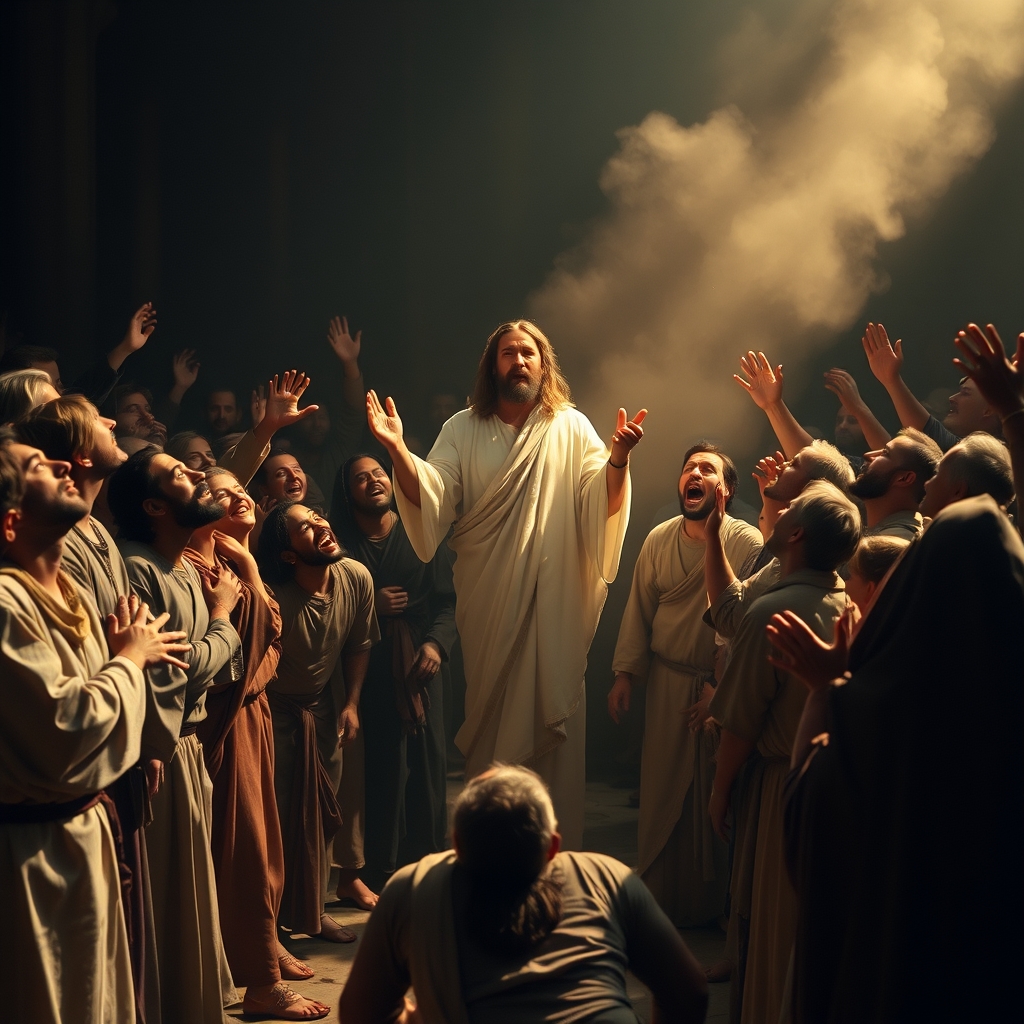
One of the most astonishing moments in all of Scripture occurs in the Gospel of John, when Jesus speaks three simple words—“I am He”—and an entire armed crowd falls backward to the ground. This is not a parable or a poetic illustration. It is a real historical event that reveals the raw, unmatched power of the Son of God.
The Scene: Gethsemane, Night, an Armed Crowd
In John 18:1–6, we read that Jesus went to the Garden of Gethsemane with His disciples. Judas knew this place well, and he arrived with a detachment of soldiers, along with officers from the chief priests and Pharisees. They came carrying torches, lanterns, and weapons—fully prepared to arrest Him.
Yet notice what Jesus does. He does not run. He does not hide. Instead, the Scripture says He “went forward” to meet them.
4 Jesus therefore, knowing all things that would come upon Him, went forward and said to them, “Whom are you seeking?”
5 They answered Him, “Jesus of Nazareth.”
Jesus said to them, “I am He.” — John 18:4–5a (NKJV)
Jesus did not wait to be identified. He stepped into the light of their own torches and asked them a direct question: “Whom are you seeking?”. In that tense, torch-lit moment, Jesus was completely in control, even though everyone else assumed He was about to surrender.
The Words That Made Them Fall
When the soldiers replied, “Jesus of Nazareth,” Christ answered with an extraordinarily powerful declaration:
6 When He said to them, “I am He,” they drew back and fell to the ground. — John 18:6 (NKJV)
Think about what just happened. Rough Roman soldiers and Jewish temple officers—armed, organized, and ready for a confrontation—all stumbled backward and collapsed when Jesus spoke. Why? Because when He said “I am He,” the same God who split the Red Sea, brought down the walls of Jericho, and raised the dead stood before them in human flesh.
These words, “I Am,” echo the name God gave to Moses at the burning bush:
God said to Moses, “I AM WHO I AM.” — Exodus 3:14 (NKJV)
Jesus did not simply say, “That’s me,” or, “I’m the one you’re after.” With the title “I Am,” He identified Himself as Yahweh—the eternal, self-existent God of Israel. Seeing that truth displayed in divine power, the soldiers could not remain standing.
Why This Matters for Us Today
This event is not only fascinating—it is deeply encouraging for every believer who follows Christ. Here is why:
- Jesus was never a victim. He allowed Himself to be arrested. No one took His life from Him; He laid it down willingly (John 10:18).
- Even in His arrest, Jesus showed compassion. He asked the soldiers to let His disciples go free (John 18:8–9), protecting those He loved even as He prepared to endure the cross.
- The power of God’s Word cannot be overpowered. Three words knocked an entire squad to the ground. No army, government, or spiritual force can ever silence God’s truth or stop His purposes.
- Jesus proved again that He is God in the flesh. Just as He declared “I am the bread of life” (John 6:35), “I am the light of the world” (John 8:12), and “I am the resurrection and the life” (John 11:25), He again claimed the divine name—and demonstrated it with undeniable power.
In addition, this scene reminds us that Jesus faced the worst of human sin with complete composure and grace. The One they came to arrest was actually the Lord of glory, calmly fulfilling every word of prophecy written about Him.
The Bigger Picture: Love Drove Him Forward
So why allow the arrest at all? Because Jesus was on His way to the cross for you and for me.
Earlier that same evening, He had prayed in agony in that very garden (Luke 22:44). Still, love compelled Him to go forward. He did not need to prove His power by striking these men down. Instead, He accepted their blows, their mockery, and ultimately the Roman cross so that all who trust in Him would never perish but have everlasting life (John 3:16).
The men who fell to the ground at His words later rose up and placed those same hands—hands that could have held them down forever—in chains. They led Him to trial, to scourging, and to Calvary. Yet even at the cross, Jesus remained King, forgiving His enemies from the wood (Luke 23:34).
A Personal Takeaway
If you ever feel that God is distant, powerless, or unaware of what you’re facing, remember this scene. The Christ who spoke those soldiers flat on their backs is the same risen Savior who lives today. As Paul writes:
For by Him all things were created that are in heaven and that are on earth, visible and invisible, whether thrones or dominions or principalities or powers. All things were created through Him and for Him. — Colossians 1:16 (NKJV)
Jesus did not need to fall back under the pressure of that night; He stood firm. And because He did, we can stand firm also—anchored in His love, sealed by His Spirit, and forever held in His mighty, nail-scarred hands.
Jesus said, I am the Word of life
When Jesus said, “I am the Word of life,” He was making one of the most profound declarations about His identity. This statement is not just a metaphor. It is a direct claim to deity. Jesus is declaring that He and the Word of God are one and the same.
The Context of His Declaration
In the Gospel of John, chapter 1, the apostle John opens with these powerful words:
- “In the beginning was the Word, and the Word was with God, and the Word was God.” (John 1:1)
- “And the Word became flesh and dwelt among us, and we have seen His glory.” (John 1:14)
From the very start, the Bible makes it clear that Jesus is not merely a teacher or prophet. He is the eternal Word of God. Furthermore, 1 John 1:1-3 echoes this truth. John testifies that he had seen, touched, and experienced the Word of life with his own hands. The eternal Son of God took on human form, and the disciples witnessed His glory.
What Does It Mean to Be “the Word of Life”?
This title carries deep meaning for every believer. To fully understand it, let’s break it down into key truths:
- The Word represents God’s complete revelation. Everything God wants us to know about Himself is found in Jesus Christ. He is the full message of God to humanity.
- Life refers to eternal life. Jesus does not just speak words of life — He is life itself. All spiritual life, both now and forever, flows from Him. Without Him, there is only spiritual death and separation from God.
- There is no other source of life. No religious system, no philosophy, and no human effort can substitute for what Jesus offers. He alone is the source of eternal life.
As Jesus Himself declared in John 6:68, Peter said, “Lord, to whom shall we go? You have the words of eternal life.” This is the same truth. The life-giving Word is not found in human wisdom. It is found in Christ alone.
A Distinction Jesus Made Clear
Consider this important contrast in Scripture:
| The Written Word of God | Jesus, the Living Word of God |
|---|---|
| Scripture reveals the truth about God | Jesus is the truth about God in human form |
| The Bible points us to Christ | Christ gives the Bible its authority and meaning |
| The written word guides our steps (Psalm 119:105) | The Living Word gives us eternal life (John 5:24) |
Both are essential. However, Jesus is the fulfillment of everything Scripture promises. Every promise of God finds its “Yes” and “Amen” in Christ (2 Corinthians 1:20). He is greater than the written Word because He is the One the written Word speaks about.
The Authority Behind the Statement
When Jesus said, “I am the Word of life,” He was not being symbolic. He was identifying Himself as the eternal Son of God. Consider the weight of this claim:
- He existed before all creation (John 1:1-2)
- He created all things (Colossians 1:16)
- He holds all things together (Colossians 1:17)
- He offers eternal life to all who believe in Him (John 3:16)
This is why throughout this article, we see the power of the “Jesus said I am” statements. Each one reveals a different dimension of who He is. And this particular statement reveals His eternal nature and supreme authority over life itself.
What This Means for You Today
For those seeking to deepen their faith, this truth is foundational. Jesus said, “I am the Word of life” means that:
- Your faith must rest entirely on who Jesus is — not on your own efforts or understanding
- Every promise you read in Scripture is fulfilled in Christ
- There is no path to the Father except through the Son (John 14:6)
- Your relationship with God is only possible because the living Word became flesh for you
For those who are still exploring the Gospel, consider this carefully. Jesus does not simply teach about life. He claims to be life itself. No other religious figure in history has made such a claim. Either He is telling the truth, or this is the most extraordinary lie ever spoken. The evidence — His resurrection, transformed lives throughout history, and the enduring power of Scripture — points overwhelmingly to the truth.
In the end, Jesus invites you to come to Him, not to an institution or ideology, but to a living Person. He is the Word of life, and He is calling you to believe. As John testified, “That which was from the beginning, which we have heard, which we have seen with our eyes, which we looked upon and have touched with our hands, concerning the word of life — the life was made manifest, and we have seen it” (1 John 1:1-2).
How many times Jesus said I am in the Bible
Understanding the “I Am” Statements in Scripture
When exploring the phrase “jesus said i am” as it appears throughout Scripture, it is essential to clarify what we are actually looking for. In the Gospel of John, Jesus makes seven distinct declarations using the powerful phrase “I Am,” each followed by revealing a unique aspect of His character and mission. However, this number accounts for the most prominent and theologically significant “I Am” statements—not every time those two words appear.
Acknowledging this distinction is vital for context. Jesus used the phrase “I Am” additional times in John, often without the accompanying metaphor. Furthermore, in the original Greek text (koine Greek), Jesus uses the phrase ego eimi (“I Am”) approximately 48 times in the Gospel of John, excluding instances found in other Gospels.
List of I am in the Bible
The phrase “I am” carries extraordinary weight when spoken by Jesus Christ. Throughout the Gospels, Jesus used “I am” statements to reveal His divine identity and His mission to save humanity. These declarations were not casual. In the original Greek, “I am” (ego eimi) echoes the very name God gave Moses at the burning bush in Exodus 3:14. Jesus was making a direct claim to deity.
The Famous “I Am” Statements of Jesus
The Gospel of John records the most well-known “I am” declarations. Jesus paired each statement with a powerful metaphor to help us understand who He is and what He offers:
- “I am the bread of life” — John 6:35 — Jesus alone satisfies the deepest hunger of our souls.
- “I am the light of the world” — John 8:12 — Jesus illuminates a world darkened by sin and leads us into God’s truth.
- “I am the gate” — John 10:9 — Jesus is the only entry point to salvation and abundant life.
- “I am the good shepherd” — John 10:11 — Jesus lays down His life for His people and cares for them personally.
- “I am the resurrection and the life” — John 11:25 — Jesus holds authority over death itself and promises eternal life to all who believe.
- “I am the way, the truth, and the life” — John 14:6 — Jesus is the only path to the Father. No one comes to God except through Him.
- “I am the true vine” — John 15:1 — Jesus is our source of spiritual life, and we are called to remain connected to Him.
Powerful “Sole” Statements
Jesus also made “sole” declarations throughout the Gospels using the phrase “I am” followed by a defining truth about Himself. These moments reveal His unmatched authority:
- John 6:48 — “I am the bread of life.”
- John 8:12 — “I am the light of the world.”
- John 8:24 — “If you do not believe that I am, you will die in your sins.” This is a solemn warning that our eternal destiny depends on trusting in who Jesus is.
- John 8:28 — “When you have lifted up the Son of Man, then you will know that I am.”
- John 8:58 — “Before Abraham was, I am.” This is one of the most striking claims in all of Scripture. Jesus declared existence before Abraham, and the Jewish listeners understood He was identifying Himself with the eternal God.
- John 10:7 — “I am the gate for the sheep.”
- John 10:14 — “I am the good shepherd.”
- John 11:25 — “I am the resurrection and the life.”
- John 13:19 — “I am telling you now before it happens, so that when it does happen you will believe that I am.”
- John 14:6 — “I am the way and the truth and the life.”
- John 15:1 — “I am the true vine.”
- John 15:5 — “I am the vine; you are the branches.”
- John 18:5 — When soldiers came to arrest Jesus in Gethsemane, He said “I am,” and they drew back and fell to the ground. His words carried supernatural power.
Putting It All Together
Altogether, Jesus made a remarkable number of “I am” declarations throughout His ministry. Scholars note that the phrase appears dozens of times in the Gospel of John alone. Each statement builds a complete picture of who Jesus is — the Savior, the Creator, and the eternal Son of God.
| Reference | “I Am” Statement | What It Reveals About Jesus |
|---|---|---|
| John 6:35, 48 | I am the bread of life | He is the source of eternal sustenance for our souls |
| John 8:12 | I am the light of the world | He reveals truth and drives away spiritual darkness |
| John 10:9 | I am the gate | He is the only way to salvation |
| John 10:11, 14 | I am the good shepherd | He sacrificially loves and protects His people |
| John 11:25 | I am the resurrection and the life | He conquers death and gives eternal life |
| John 14:6 | I am the way, the truth, and the life | He is the exclusive path to God the Father |
| John 15:1, 5 | I am the true vine | He is the source of spiritual fruit and life for believers |
| John 8:58 | Before Abraham was, I am | He is the eternal, self-existent God |
Each of these statements deserves deep reflection. They are not mere metaphors or poetry. Jesus declared truths about His very nature. When you read these words, you are hearing the Son of God speak directly to your heart.
These “I am” declarations call us to a response. Will we believe? Will we trust Him as our Shepherd, our Life, our Way to the Father? Jesus is who He said He is — and that changes everything.
40 statements of who God says I am
When we open the pages of Scripture, we discover something extraordinary. God, our Creator, does not leave us guessing about who we are. He speaks directly to our souls. He tells us exactly who we are. This section is deeply connected to the “I am” sayings of Jesus. When He declared “I am” throughout the Gospels, He was revealing His divine identity as the Great I AM of the Old Testament (Exodus 3:14). And because of who HE is, we can truly understand who WE are in Him.
These 40 declarations are not based on feelings. They are not based on what the world says about you. They are based on the eternal, unchanging Word of God. As you read each one, let these truths sink deep into your heart and transform the way you see yourself through the eyes of your Savior.
You Are a Child of God
- You are a child of God (John 1:12)
- You are born again through faith in Jesus (1 Peter 1:23)
- You have become a new creation in Christ (2 Corinthians 5:17)
- You have been chosen by God before the foundation of the world (Ephesians 1:4)
- You are adopted into God’s family (Ephesians 1:5)
- You are no longer a slave to sin, but a son or daughter of the living God (Romans 8:15)
- You belong to Christ (1 Corinthians 6:19-20)
You Are Made Right with God
- You are justified by grace through faith (Romans 3:24)
- You are redeemed by the precious blood of Jesus (1 Peter 1:18-19)
- You have been forgiven of all your sins (Colossians 1:14)
- You have been reconciled to God through the cross (Colossians 1:20)
- You are holy and blameless before God (Ephesians 1:4)
- You have been set free from the law of sin and death (Romans 8:2)
- You are a saint, not because of your own goodness, but because of Christ in you (1 Corinthians 1:2)
You Are Loved Beyond Measure
- You are loved by God with an everlasting love (Jeremiah 31:3)
- You are the apple of God’s eye (Zechariah 2:8)
- You are precious in God’s sight (Isaiah 43:4)
- You were purchased with the blood of Jesus, God’s own Son (Acts 20:28)
- You are not condemned, because you are in Christ Jesus (Romans 8:1)
- You are the beloved of God (Colossians 3:12)
- You are greatly loved, and God delights in you (Psalm 149:4)
You Are Given New Identity and Purpose
- You are a citizen of heaven (Philippians 3:20)
- You are a royal priesthood and a holy nation (1 Peter 2:9)
- You are God’s workmanship, created in Christ Jesus to do good works (Ephesians 2:10)
- You are the salt of the earth (Matthew 5:13)
- You are the light of the world (Matthew 5:14)
- You are a foreigner and exile on earth, longing for your true home in heaven (1 Peter 2:11)
- You are a co-heir with Christ, sharing in His glory (Romans 8:17)
You Are Empowered and Sustained by God
- You are being transformed into the image of Christ (2 Corinthians 3:18)
- You can do all things through Christ who strengthens you (Philippians 4:13)
- You are more than a conqueror through Him who loves you (Romans 8:37)
- You have been given the mind of Christ (1 Corinthians 2:16)
- The Holy Spirit lives inside you as a guarantee of your inheritance (Ephesians 1:14)
- You are complete in Christ, who is the head of all authority (Colossians 2:10)
- You have been given authority over all the power of the enemy (Luke 10:19)
You Are Held Secure in God’s Hands
- You are sealed with the Holy Spirit until the day of redemption (Ephesians 4:30)
- Nothing in all creation can separate you from the love of God in Christ Jesus (Romans 8:38-39)
- You are grafted into the true vine, Jesus Christ, and you will bear much fruit (John 15:5)
- You are God’s temple. His Spirit dwells in you (1 Corinthians 3:16)
- You are assured that the ONE who began a good work in you will complete it until the day of Christ Jesus (Philippians 1:6)
What a glorious list this is! When Jesus said “I am the Bread of Life,” “I am the Light of the World,” “I am the Good Shepherd,” and all His other “I am” declarations, He was not only revealing who HE is. He was revealing what that means for YOU. Because He IS life, you are alive in Him. Because He IS the light, you are called to walk in that light. Because He IS the Good Shepherd, you are His beloved sheep who hear His voice and follow Him.
So when the enemy whispers lies about your identity, do not listen. Instead, open your Bible. Read these truths. And stand firmly on what God has spoken over you. You are who God says you are. And He never lies.
Frequently Asked Questions
What Color Will We Wear in Heaven?
When we think about heaven, it is natural to wonder what life there will include. However, the Bible does not specifically tell us what color clothing we will wear in heaven. Scripture instead focuses on what truly matters about eternal life with Jesus.
In heaven, we will be fully clothed in the righteousness of Christ. The book of Revelation tells us that the saints are dressed in white robes (Revelation 7:9, 13–14). This white symbolizes purity, holiness, and the cleansing power of Jesus’ blood. The most important thing about heaven is not what we wear, but that we are with Jesus forever.
Jesus said, “I am the resurrection and the life. The one who believes in me will live, even though they die” (John 11:25). This gives us great comfort. Our eternal hope is found in knowing Jesus, not in the physical details of heaven. When we place our faith in Him, we are assured of a place in His Father’s house with many rooms (John 14:2).
Focus on building your relationship with Jesus now. The eternal joy of His presence far outweighs any earthly question about heaven’s details.
Why Do Catholics Touch Their Forehead, Lips, and Chest?
Some people use the sign of the cross by touching their forehead, lips, and chest as a gesture of prayer and devotion. This practice is common in Catholic and some other Christian traditions. However, as followers of Jesus, it is important to examine every practice by the truth of Scripture.
Jesus never instructed His followers to perform this gesture. Nor did the apostles teach it in the New Testament. The Bible directs us to worship God in spirit and in truth (John 4:24). Our faith should be rooted solely in Jesus Christ, His Word, and His finished work on the cross.
The Bible teaches us to approach God directly through Jesus. There is no need for physical gestures or rituals to gain access to the Father. Jesus said, “I am the way, the truth, and the life. No one comes to the Father except through me” (John 14:6). This means our connection to God is through a living relationship with Jesus, not through outward signs or traditions.
Here is what Scripture emphasizes over physical ritual:
- A personal faith in Jesus Christ as Lord and Savior (Romans 10:9)
- Direct prayer to God through Jesus (Hebrews 4:16)
- The authority of the Word of God over human tradition (Mark 7:8–9)
- Worship that flows from the heart, not from outward form (Matthew 15:8–9)
As believers, we should always point people to Jesus. He is the only mediator between God and humanity (1 Timothy 2:5). True worship is not about the motion of our hands. It is about the posture of our hearts toward Jesus Christ.
Conclusion: Jesus Is Who He Said He Is

Throughout this study of Jesus’s “I Am” statements, one truth rises above all others: Jesus is exactly who He claimed to be. He did not merely speak metaphors or offer philosophical ideas. He made divine declarations rooted in the very name of God Himself.
When Jesus said, “I am the Bread of Life” (John 6:35), He was not simply comparing Himself to bread. In the same way, when He declared, “I am the Light of the World” (John 8:12), He was offering far more than an illustration. Each statement carried the weight of eternity. Each one pointed to His divine identity.
Jesus Spoke With Divine Authority
The phrase “I am” echoes God’s self-revelation to Moses at the burning bush. God said, “I AM WHO I AM” (Exodus 3:14). Jesus used that same sacred language. He said, “Before Abraham was, I am.rdquo; (John 8:58). The people understood exactly what He meant. They picked up stones to kill Him because they knew He was claiming to be God.
Jesus never corrected them. He never softened His words. He stood firm in His identity. That is because He was not a good teacher who made a mistake. He was and is God in the flesh.
Every “I Am” Statement Points to One Truth
Each of the seven “I Am” statements reveals a different aspect of who Jesus is and what He offers:
- Bread of Life — He alone satisfies the deepest hunger of the soul.
- Light of the World — He alone dispels the darkness of sin and death.
- The Gate — He alone provides access to God the Father.
- The Good Shepherd — He alone lays down His life for His sheep.
- The Resurrection and the Life — He alone conquers death for all who believe.
- The Way, the Truth, and the Life — He alone is the path to eternal life with God.
- The True Vine — He alone is the source of spiritual life and fruitfulness.
Together, these statements form a complete picture. Jesus is not one option among many. He is the only way to the Father (John 14:6). He is not a guide pointing to someone else. He is the destination Himself.
The Evidence Is Undeniable
Jesus backed up His words with actions. He healed the sick. He raised the dead. He forgave sins — something only God can do (Mark 2:7). And ultimately, He rose from the grave on the third day, just as He promised (1 Corinthians 15:4).
His resurrection is the ultimate proof. No other religious leader in history has conquered death. Jesus did. He lives today, and He offers that same life to everyone who trusts in Him.
What Will You Do With Jesus?
The question is not whether Jesus said “I am.” He did, clearly and repeatedly. The real question is what you will do with His words. Will you receive Him as Lord and Savior? Will you place your trust in the One who is the Way, the Truth, and the Life?
Jesus is not waiting for you to be perfect. He is waiting for you to come to Him. He said, “Whoever comes to me I will never cast out” (John 6:37). That promise stands forever.
If you have never surrendered your life to Christ, today is the day. Confess with your mouth that Jesus is Lord. Believe in your heart that God raised Him from the dead. And you will be saved (Romans 10:9).
Jesus is who He said He is. He is the Son of God. He is the Savior of the world. And He is calling you by name right now.