
The doubting Thomas scripture refers to the account in John 20:24-29, where the Apostle Thomas refused to believe in the resurrection of Jesus unless he physically touched His wounds. Instead of condemning him, Jesus lovingly appeared and invited Thomas to do just that, leading Thomas to proclaim, ‘My Lord and my God!’ This passage emphasizes that Jesus is compassionate toward our struggles with doubt.
Have you ever found yourself struggling with doubts about your faith, wondering if believing requires seeing? You’re not alone—and you’re in good company. One of the most honest and powerful encounters with doubt in all of Scripture happened not with a stranger, but with one of Jesus’ own closest followers. The doubting Thomas scripture found in John 20 reveals a deeply human moment where uncertainty met the living Christ—and what happened next changed everything. In this article, we’ll walk through the real story behind doubting Thomas scripture, explore exactly what the Bible says in John 20:24-29, and discover the profound lessons Jesus gave us about doubt, faith, and the incredible grace He extends to every one of us who has ever needed that little extra confirmation.
Whether you’re a lifelong believer wrestling with hard questions or someone just beginning to seek the truth about who Jesus really is, this passage speaks directly to your heart. Jesus didn’t turn Thomas away for doubting—He drew near. Let’s open God’s Word together and find out why.
What is the real story of doubting Thomas?
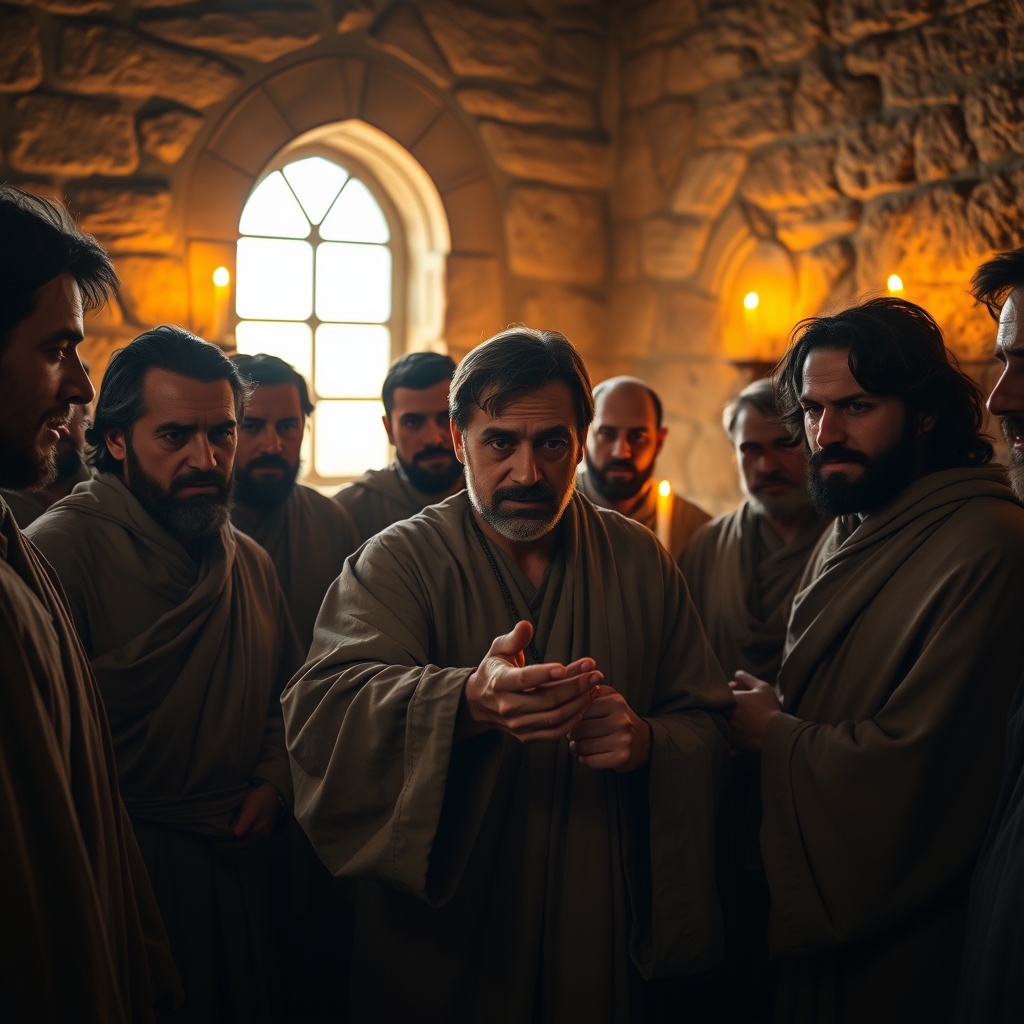
The doubting Thomas scripture reveals a deeply human and relatable encounter with the risen Christ. Far from being a story about weak faith, it is a testament to Jesus’s compassion toward honest hardship. Thomas’s journey from grief to knowing worship offers us profound lessons about the nature of true belief.
The Setting: Fear Among the Disciples
In the days following the crucifixion of Jesus, His followers were devastated. The very foundation of their lives had just been torn apart. They had expected the Messiah to overthrow Rome, and instead, they watched Him die on a cross [1].
First, Mary Magdalene saw an empty tomb. She reported the news to the others. Then, on Resurrection Sunday, Jesus appeared to the disciples. However, Thomas, known also as Didymus or “the twin,” was not present.
While the other ten had seen Jesus and removed the locked door fear, Thomas had been elsewhere. He was likely overwhelmed by sorrow and disappointment. His world had shattered with the death of His Lord. Because of this, he missed the most important event in history.
The Return of Thomas
When Thomas finally returned, his friends had immediate, electrifying news. “We have seen the Lord!” they exclaimed to him. They were no longer cowering in fear; they had become bold followers again.
However, Thomas could not bring himself to accept their claims. He knew the brutal reality of death. He saw the Cross. He heard the mocking crowds. Therefore, physical evidence was his absolute necessity. He declared that unless he personally saw and touched the wounds, he would not believe.
It was a very human response. He was not rejecting Jesus; he was seeking to overcome immense grief. He needed the presence of the Lord himself to bridge the gap between his despair and his hope.
Jesus Meets Thomas in His Doubt
A week later, the disciples were inside again. This time, Thomas was with them. Suddenly, Jesus appeared among them, even though the doors were locked. He stood in their midst and greeted them with peace.
Why did Jesus return? He came specifically for Thomas. He is a personal Savior. Jesus did not stand at a distance and demand blind acceptance. Instead, He offered exactly what Thomas needed to believe.
Notice the tender approach of the Lord.
- He addressed his fear: Jesus said, “Peace to you.”
- He extended an invitation: He said to Thomas, “Reach your finger here, and look at My hands; and reach your hand here, and put it into My side.”
- He provided a gentle rebuke: He added, “Do not be unbelieving, but believing.”
During that moment, Thomas realized the profound reality. The crucified Lord was standing before him. In deep awe and conviction, He fell to his knees and spoke the greatest confession of faith in the entire New Testament: “My Lord and my God!”
Through this encounter, the doubting Thomas scripture teaches us that God understands our struggles. He meets us right where we are, taking our honest questions and transforming them into vibrant worship.
What does the doubting Thomas scripture actually say?

John 20:24-29
The doubting Thomas scripture is found in the Gospel of John. It gives us one of the most honest accounts of faith and doubt in the entire Bible. Thomas is one of the twelve disciples of Jesus. Yet, he was missing when Jesus first appeared to the others.
Read what the scripture says:
“But Thomas, one of the twelve, called the Twin, was not with them when Jesus came. (25) So the other disciples told him, ‘We have seen the Lord.’ But he said to them, ‘Unless I see in his hands the mark of the nails, and place my finger into the mark of the nails, and place my hand into his side, I will never believe.’ (26) Eight days later, his disciples were inside again, and Thomas was with them. Although the doors were locked, Jesus came and stood among them and said, ‘Peace be with you.’ (27) Then he said to Thomas, ‘Put your finger here, and see my hands; and put out your hand, and place it in my side. Do not disbelieve, but believe.’ (28) Thomas answered him, ‘My Lord and my God!’ (29) Jesus said to him, ‘Have you believed because you have seen me? Blessed are those who have not seen and yet have believed.'” — John 20:24-29
This passage reveals a deep conversation between Thomas and the risen Christ. Jesus did not reject Thomas. Instead, He met Thomas exactly where he was.
Why Did Thomas Demand Physical Evidence?
Thomas is often unfairly called “Doubting Thomas.” However, his reaction was deeply human. He had watched his Master die. Furthermore, he likely felt broken-hearted by the crucifixion. As a result, making claims of resurrection seemed impossible to him.
Thomas demanded physical evidence for three key reasons:
- Trauma and Grief: Thomas had witnessed the brutal death of Jesus. His grief made it very difficult to believe in a resurrection. [2]
- Desire for Authenticity: Thomas wanted to be absolutely sure. He did not want to accept a false hope. His demand for proof was a search for truth.
- Presence of the Disciples: The other disciples claimed they saw Jesus. Yet, Thomas was not with them when Jesus appeared. Therefore, he needed his own personal encounter with Jesus.
Jesus did not punish Thomas for his questions. Instead, He provided the evidence Thomas asked for. This shows us that Jesus understands our human struggles. He is patient with our doubts and invites us to draw near to Him.
Today, simply search for “doubting Thomas scripture” to read this story for yourself. You will find that God does not despise your questions. Rather, He uses them to lead you into a deeper, more personal faith.
What can we learn about doubt and faith from this scripture?
Doubt is Not The Opposite of Faith
Many believers assume doubt disqualifies them from a genuine relationship with God. However, the doubting Thomas scripture in John 20 reveals something far more compassionate. Thomas did not abandon the other disciples. He simply could not accept their testimony without personal proof.
In addition, Jesus never condemned Thomas. He gently met Thomas where he was. This shows that doubt is often a journey within faith, not outside it. Furthermore, Romans 14:22 reminds us that blessed is the one who does not condemn himself in what he approves.
Jesus Invites Personal Encounter
Jesus appeared to Thomas personally in John 20:27. He said, “Put your finger here; see my hands. Reach out your hand and put it into my side.” He did not avoid Thomas’s questions. He embraced them. Jesus desires a real, personal relationship with each of us.
Moreover, this personal invitation reveals God’s deep love. He does not leave us alone with our questions. As a result, we can bring our doubts honestly to Him. Jesus promised in Jeremiah 33:3, “Call to me and I will answer you.” He wants to meet us personally.
The Blessing of Believing Without Seeing
Jesus said to Thomas, “Blessed are those who have not seen and yet have believed” (John 20:29). This blessing applies to us today. We live in a world with distractions, yet we trust Jesus without physical evidence.
Furthermore, 1 Peter 1:8-9 explains this beautifully. We love Jesus without seeing Him. We believe in Him, and we rejoice with an inexpressible and glorious joy. Even without seeing Him, we receive the goal of our faith—our souls’ salvation.
| Aspect | Jesus’ Response |
|---|---|
| Doubt | Jesus does not reject the doubter; He invites deeper encounter. [3] |
In conclusion, the doubting Thomas scripture teaches us that doubt is not the end of faith. Instead, it can be the beginning of a deeper, more personal walk with Jesus Christ. He meets us right where we are. Remember, Jesus’ invitation stands: “Blessed are those who have not seen and yet have believed” (John 20:29).
Frequently Asked Questions
Who was the only disciple that was not killed?
The Apostle John is widely believed to be the only one of the twelve disciples who died of natural causes. According to tradition and church history, the other eleven disciples suffered martyrdom for their faith in Jesus Christ. John, however, lived to an old age. He ministered on the island of Patmos, where he received the visions recorded in Revelation. Ultimately, John died peacefully around the end of the first century. His long life was a testament to God’s sovereign plan and His protection of the Gospel’s witnesses.
Will we still be male and female in Heaven?
This is a profound question that touches on the nature of our eternal identity. Jesus addresses this in Matthew 22:30, stating that in the resurrection, people “will neither marry nor be given in marriage; they will be like the angels in heaven.” This indicates that earthly roles and biological distinctions will be transcended by our glorified state.
However, this doesn’t mean we lose our personhood or gender identity entirely. We will still be us, yet in a perfected, glorified form. Our identity in Christ will be fully realized. We will be free from the limitations and struggles of our current bodies, living in perfect fellowship with God and each other for eternity.
What generation will not pass away?
Jesus spoke these words in Matthew 24:34, saying, “Truly I tell you, this generation will certainly not pass away until all these things have happened.” This statement has been the subject of much study and interpretation. Some scholars believe Jesus was referring to the generation that would witness the destruction of Jerusalem in 70 AD. Others see a broader application to the period encompassing His first and second comings. Regardless of the specific timeline, the message is clear: every word of Jesus will be fulfilled. His promises are absolutely trustworthy.
Doubting Thomas meaning?
The phrase “Doubting Thomas” is used to describe someone who is skeptical and requires direct evidence before believing something. It originates from the story of Thomas in John 20:24-29. After the resurrection, Thomas declared he would not believe unless he saw and touched the wounds of Jesus. However, the story gives us a much richer picture of Thomas. He was not a cynical unbeliever but a devoted follower who was deeply affected by the trauma of the crucifixion.
Jesus appeared to Thomas personally and invited him to touch His wounds, lovingly meeting him right in his doubt. The true meaning is not one of condemnation. Instead, it is a story of grace. It shows that Jesus patiently understands our struggles. He is compassionate toward our questions. For all who believe without seeing His physical body, Jesus offers a special blessing: “Blessed are those who have not seen and yet have believed.” (John 20:29). The doubting Thomas scripture ultimately encourages us to bring our honest doubts directly to Jesus. He welcomes us with loving assurance and the full truth of His risen life.