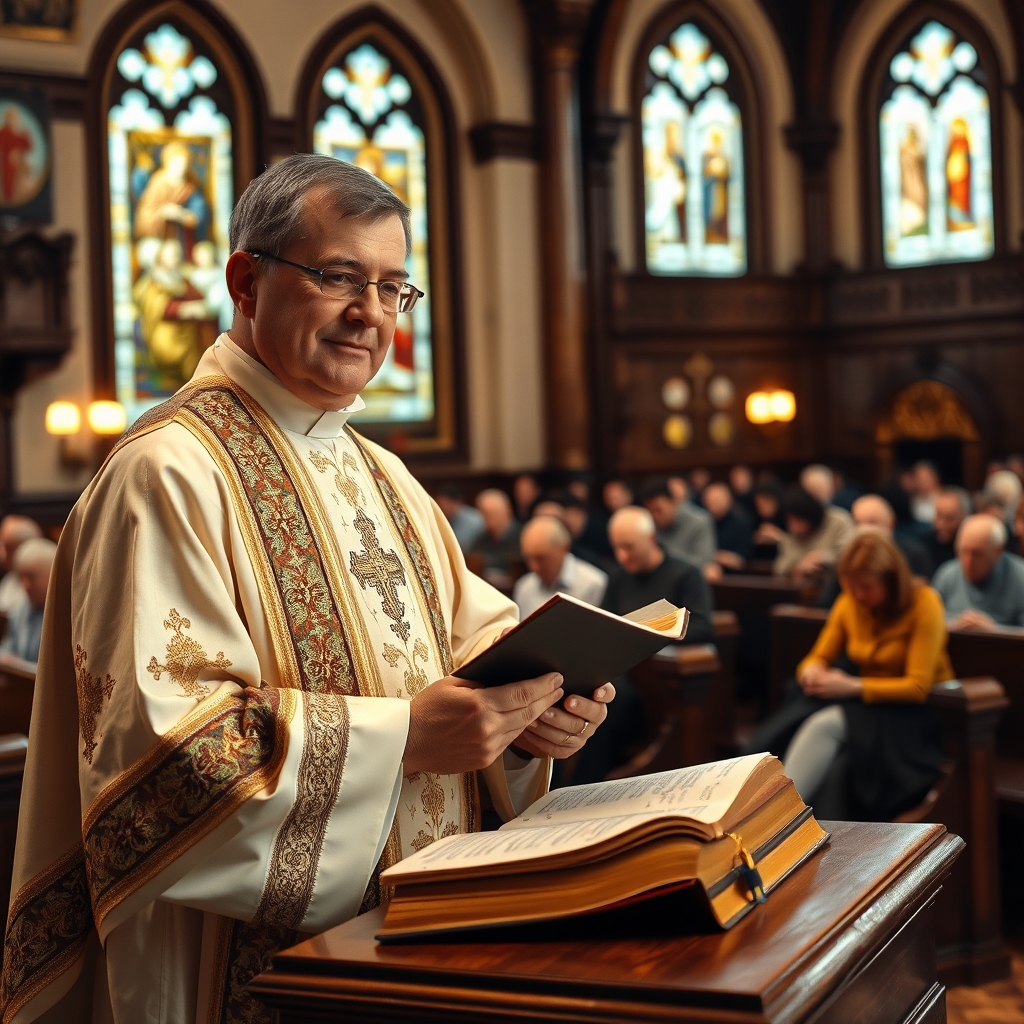
The readings at Mass today include the First Reading, Responsorial Psalm, and Gospel Reading as appointed by the Catholic Church’s liturgical calendar. To find today’s specific readings, consult your parish bulletin or visit the USCCB website for the daily Mass readings.
Have you ever entered church, heard the readings at Mass today, and wondered how to really receive them—not just hear them? God’s Word is not a distant text from the past; it is alive, active, and meant to speak directly to your heart today. Jesus said, “My sheep hear My voice, and I know them, and they follow Me” (John 10:27). When the Scriptures are proclaimed at Mass, Jesus Himself is present, calling you closer.
In this article, you will see the Catholic readings for today and reflections drawn from the daily Mass, along with the Sunday readings and Gospel. More importantly, you will learn how to prepare your heart, understand the Lectionary cycle, and apply God’s Word to everyday life. Whether you are a lifelong Catholic, a new believer, or simply searching for the core truths of Jesus Christ, this guide will help you move from just sitting in the pew to truly meeting the Lord in His Word.
What Are the Readings at Mass Today?
`html
Each day, the Church gathers to hear God’s Word proclaimed in a structured and beautiful way. The readings at Mass today are not random selections. They are carefully chosen to reveal God’s plan of salvation through Jesus Christ. Understanding these readings helps us encounter the living God in a deeper, more personal way.
The daily Mass readings follow a set pattern. This pattern has been used by believers for centuries. It draws us into the heart of Scripture and, ultimately, into the heart of Jesus.
First Reading
The First Reading typically comes from the Old Testament. It reveals God’s faithfulness throughout history. Furthermore, it points forward to the coming of Jesus Christ, our Savior.
This reading often highlights God’s covenant with His people. It shows how He prepared the world for the Messiah. As a result, we see that Jesus was not an afterthought. He was God’s plan from the very beginning.
Key themes in the First Reading include:
- God’s faithfulness — He keeps His promises across generations (2 Timothy 2:13).
- The promise of a Savior — Prophets foretold the coming of Christ (Isaiah 9:6).
- God’s love for His people — Even in their failures, He pursued them (Hosea 11:8).
When we hear the First Reading, we are reminded that the God of Abraham, Isaac, and Jacob is the same God who sent His Son, Jesus, to save us.
Responsorial Psalm
The Responsorial Psalm is our response to God’s Word. It is usually taken from the Book of Psalms in the Bible. The congregation often sings or recites a refrain together.
This psalm connects to the theme of the First Reading. It gives us words to praise, lament, trust, and worship. In addition, it teaches us how to talk to God honestly.
The Psalms cover the full range of human emotion:
- Praise — “The Lord is my shepherd; I shall not want” (Psalm 23:1).
- Repentance — “Create in me a clean heart, O God” (Psalm 51:10).
- Trust — “The Lord is my light and my salvation; whom shall I fear?” (Psalm 27:1).
- Thanksgiving — “Give thanks to the Lord, for He is good” (Psalm 107:1).
Through the Responsorial Psalm, we join our voices with believers across all time. We respond to what God has spoken with hearts full of faith.
Gospel Reading
The Gospel Reading is the high point of the Liturgy of the Word. It comes from one of the four Gospels: Matthew, Mark, Luke, or John. This reading reveals the life, teachings, death, and resurrection of Jesus Christ.
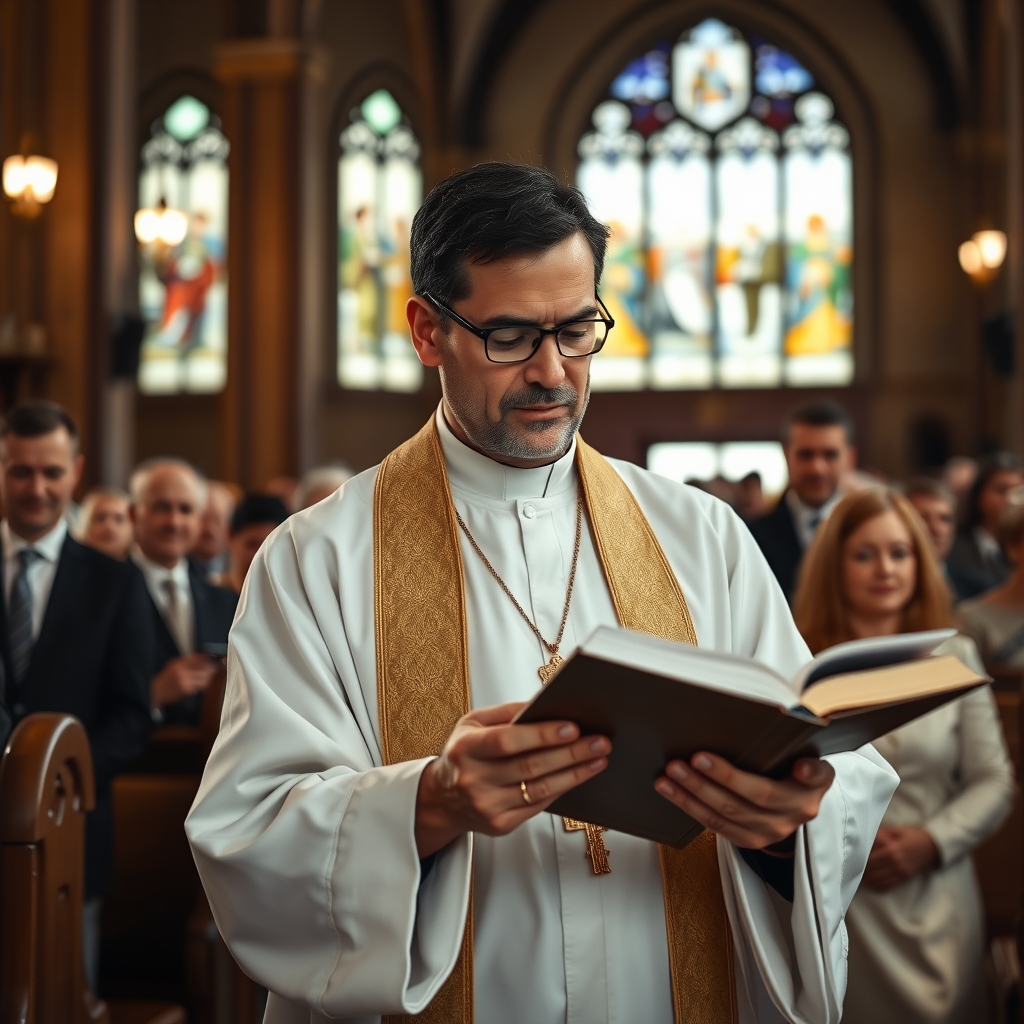
We stand for the Gospel because it is the Word of Christ Himself. In fact, the priest or deacon often processes with the Book of the Gospels. This shows the central place Jesus holds in our worship.
The Gospel reading calls us to:
- Listen to Jesus — “My sheep hear my voice, and I know them, and they follow me” (John 10:27).
- Believe in Him — “For God so loved the world, that He gave His only Son, that whoever believes in Him should not perish but have eternal life” (John 3:16).
- Follow Him — “If anyone would come after me, let him deny himself and take up his cross and follow me” (Matthew 16:24).
Every Gospel reading brings us face to face with Jesus. He is not a distant figure from history. He is the risen Lord who speaks to us today through His Word.
Together, the First Reading, Responsorial Psalm, and Gospel Reading form a unified proclamation of God’s love. They reveal the story of salvation that finds its fulfillment in Jesus Christ. As you engage with the readings at Mass today, open your heart to the One who is “the way, and the truth, and the life” (John 14:6).
`
Catholic Readings for Today and Reflections
How to Read the Daily Readings
The daily readings are a cornerstone of deepening your relationship with Jesus Christ. They are not merely ancient texts; they are the living and active Word of God, relevant to your life today. To get the most from them, you need a simple, heart-focused approach.
Regardless of the specific readings at mass today, the process remains the same. First, read each passage slowly and attentively, allowing the words to sink in. Don’t rush through them; give them space to speak to your heart. Second, don’t be afraid to re-read a verse that stands out or a phrase you don’t fully understand. God often speaks through a quiet whisper, and His Word is perfect for teaching and correction. Third, ask the Holy Spirit to give you understanding. The Bible itself tells us that the Spirit will guide us into all truth (John 16:13). Your simple, prayerful desire to hear from Him is what matters most.
Applying the Readings to Your Life
Reading the Bible is only the first step. True growth happens when you take what you’ve read and apply it to your daily walk with Jesus. This is where faith moves from the head to the heart. Therefore, after your reading, pause and reflect on the message.
- Pray about it: Talk to God about what you’ve read. Ask Him to show you how to live it out. You might pray, “Jesus, help me to forgive as You forgive me.”
- Journal your thoughts: Writing down a key verse or a thought helps it stick. Our website, Just Jesus Time, is built to be a resource for this journey of reflection.
- Find the Christ connection: How does this passage point to Jesus? How does it show you more about His love, His sacrifice, or His power?
- Take action: If a reading calls you to be more kind, seek an opportunity to do so. If it encourages you to trust, make a conscious choice to do so.
The goal is not just information, but transformation. Let the Word of God take root in your heart and bear fruit in your life.
Sunday Mass Readings for Today
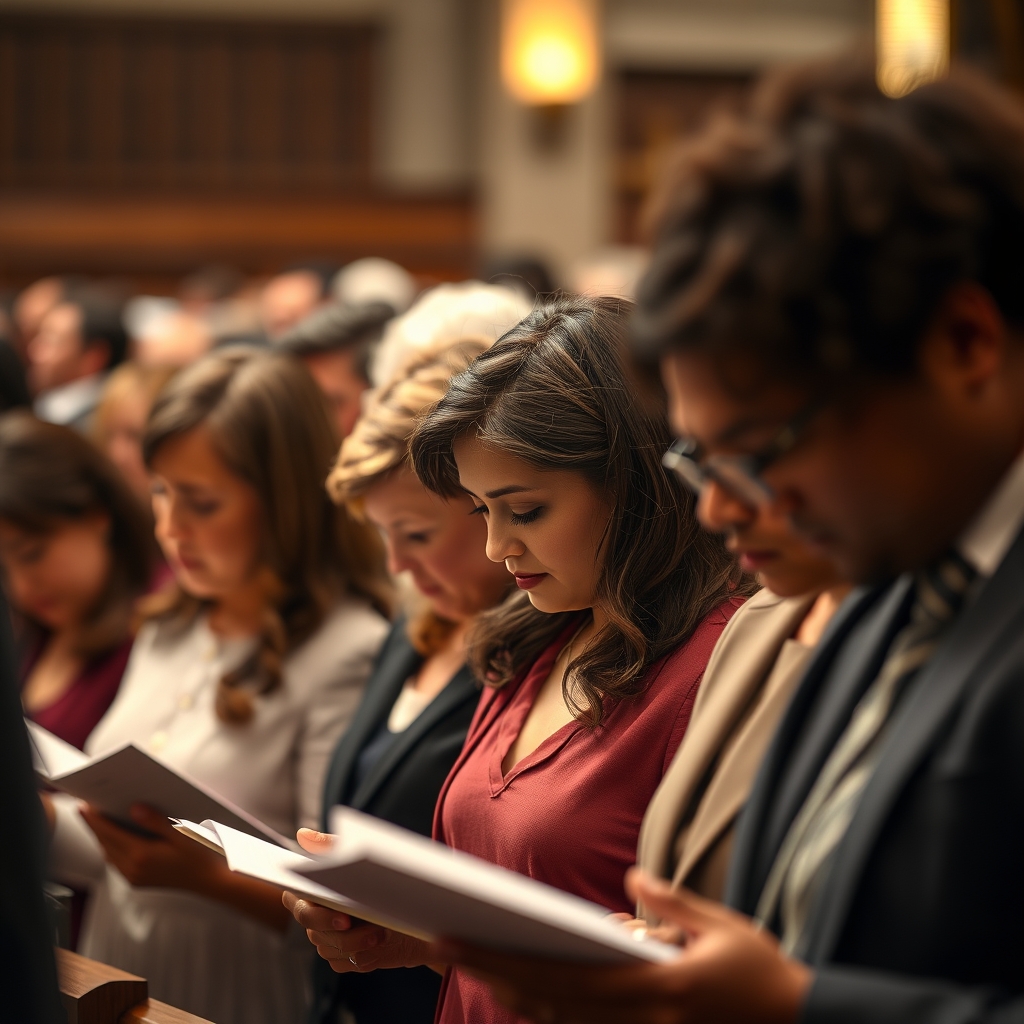
First Reading
The First Reading on Sundays typically comes from the Old Testament. It sets the stage for the Gospel message. God’s faithfulness in the past points us toward His ultimate promise in Jesus Christ. These readings remind us that God has always been at work in human history.
Consider the story of Abraham. God asked him to leave everything familiar. Abraham obeyed in faith. This act of trust foreshadows the greater faith God calls each of us to have in Christ. The Old Testament is not merely history. It is a living testimony of God’s unchanging love.
When you hear the First Reading, ask yourself: How is God speaking to me through this ancient text? the Holy Spirit uses these words to prepare your heart for the Gospel. Let the message sink deep into your spirit today.
Second Reading
The Second Reading often comes from the letters of Paul or other apostles. These writings apply the Gospel to daily living. They teach us how to walk in faith, hope, and love. The apostles faced real struggles, just as we do today.
Paul wrote to the Romans: “If God is for us, who can be against us??” (Romans 8:31). This powerful truth still speaks to every believer. No matter what you face, God is on your side. His love in Christ Jesus is your foundation.
Here are key themes often found in the Second Reading:
- Grace and salvation through faith in Jesus Christ — We are saved by grace, not by our own works (Ephesians 2:8-9).
- Unity in the Body of Christ — We are one family, called to love and serve one another.
- Living a holy life — The apostles urge us to turn from sin and walk in the light of Christ.
- Hope in the resurrection — Because Jesus rose from the dead, we have eternal hope.
Let these readings challenge and encourage you. The Word of God is alive and active. It has the power to transform your heart and mind.
Gospel
The Gospel reading is the heart of the Liturgy of the Word. It reveals the life, teachings, death, and resurrection of Jesus Christ. Every Sunday, we encounter Jesus in a fresh and powerful way through the Gospel.
The Gospels of Matthew, Mark, Luke, and John each offer a unique portrait of our Lord. Yet all four proclaim the same glorious truth: Jesus is the Son of God, the Savior of the world, and the Way, the Truth, and the Life (John 14:6).
When the Gospel is proclaimed, we stand in reverence. We respond, “Glory to You, O Lord.” This is not a mere formality. It is an act of worship. We honor Jesus as the living Word of God.
Here is how to receive the Gospel reading with an open heart:
- Listen attentively. Put aside distractions and focus on every word.
- Let the message speak to your situation. Ask the Holy Spirit to show you how this passage applies to your life.
- Respond in faith. The Gospel demands a response. Let it move you to deeper trust in Jesus.
- Carry the message into your week. The Gospel is not just for Sunday. It is your guide for every day.
Jesus said, “Whoever hears my word and believes him who sent me has eternal life” (John 5:24). This is the promise of the Gospel. When you receive God’s Word with faith, you receive life itself.
As you reflect on today’s readings, remember that every Scripture points to Jesus. From Genesis to Revelation, the Bible tells one story — God’s redemptive plan through His Son. Let the Word of Christ dwell in you richly today and always.
Catholic Mass Readings for This Sunday 2026
How to Prepare Your Heart for Mass
Coming to Mass is more than a routine. It is a sacred moment to meet Jesus Christ Himself. Therefore, preparing your heart beforehand can transform your experience entirely. As Scripture says, “Draw near to God, and He will draw near to you” (James 4:8).
Practical ways to prepare your heart for Mass include:
- Pray before you arrive. Ask the Holy Spirit to open your heart to the readings at mass today. Even a simple prayer invites God’s presence.
- Read the daily readings in advance. Spending time with God’s Word before Mass helps you receive it more deeply during the liturgy.
- Examine your conscience. Reflect honestly on your past week. Where did you fall short? Where did you see Jesus at work? Therefore, bring your real self before the Lord.
- Come with expectation. Jesus said, “Where two or three are gathered in my name, there am I among them” (Matthew 18:20). As a result, you can trust He is truly present when the Church gathers.
- Leave distractions behind. Silence your phone. Furthermore, quiet your mind. Make space for the Lord to speak. His voice still matters more than anything else competing for your attention.
The goal is not perfection. Rather, it is openness. God meets us where we are, but He calls us to come ready to receive. Above all, remember that every reading at Mass today is an invitation from Jesus to know Him more deeply.
Understanding the Lectionary Cycle
The Catholic Church follows a structured schedule of Scripture readings called the Lectionary. This system ensures that, over time, the faithful hear a broad portion of the Bible during worship. However, it is more than a reading plan. It is the Church’s Christ-centered way of walking through the story of salvation each year.
The Lectionary follows a multi-year cycle organized as follows:
| Cycle | Focus Gospel | Years Used |
|---|---|---|
| Year A | Gospel of Matthew | 2025–2026, 2028–2029, etc. |
| Year B | Gospel of Mark | 2026–2027, 2029–2030, etc. |
| Year C | Gospel of Luke | 2027–2028, 2030–2031, etc. |
In addition to the three-year Sunday cycle, weekday readings follow a two-year cycle. Furthermore, the Gospel of John appears prominently during the Easter season across all three years. This is intentional, because John’s Gospel reveals the deepest truths about who Jesus is.
Why the Lectionary Matters
The Lectionary ensures that no single portion of Scripture is neglected. As a result, the Church moves through the Old and New Testaments in a balanced way. This structure keeps the readings connected to the liturgical seasons. For example, Advent readings prepare us for Christ’s coming. Lenten readings call us to repentance. Easter readings celebrate the resurrection.
Moreover, the three readings at each Sunday Mass are carefully paired. The First Reading from the Old Testament connects thematically to the Gospel. In addition, the Responsorial Psalm responds to the First Reading. Finally, the Second Reading (usually from the letters of Paul or other apostles) offers further reflection on living out the faith.
Jesus at the Center of Every Reading
The Church has always taught that Christ is the interpretive key to all of Scripture (Luke 24:27). Therefore, even when the readings at mass today come from the Old Testament, they point forward to Jesus. Every covenant, every prophecy, and every act of God in the Old Testament finds its completion in the person of Christ.
- The sacrifices of the Old Testament point to Jesus as the ultimate Lamb of God.
- The prophets foretold His birth, suffering, and glory.
- The Psalms express the full range of human emotion, yet many speak directly of Christ’s passion and resurrection.
As you approach the Sunday Mass readings for 2026, do not miss this bigger picture. The Lectionary is designed to immerse you in the story of God’s love, which reaches its climax in Jesus Christ. Therefore, whether you hear the readings at mass today on a quiet weekday or during a solemn Sunday liturgy, the invitation remains the same: encounter the living Word made flesh.
As the prophet Isaiah declared, “The grass withers, the flower fades, but the word of our God will stand forever” (Isaiah 40:8). Furthermore, Jesus Himself said, “My words will not pass away” (Mark 13:31). Consequently, every reading at Mass is an opportunity to hear the eternal Word of God.
Key takeaways for approaching the Lectionary:
- Trust that the readings are chosen with purpose and prayerful intention.
- Look for Christ in every reading, whether from the Old or New Testament.
- Allow the liturgical seasons to shape your spiritual journey throughout the year.
- Remember that the readings connect you to the universal Church, which hears the same Scriptures around the world on the same day.
Ultimately, the Lectionary is not about information. Furthermore, it is about transformation. As you listen to the Word proclaimed at Mass, you stand alongside every generation of believers who have heard the same call to faith. Jesus Christ is the same yesterday, today, and forever (Hebrews 13:8). Therefore, let His Word shape your heart as you prepare to receive Him in the readings at mass today.
Readings and Gospel for Today
The readings at Mass today are a gift, inviting you directly into God’s Word. The Prophet Isaiah proclaimed: “So shall my word be that goes forth from my mouth; it shall not return to me void, but shall do my will, achieving the end for which I sent it” (Isaiah 55:11). This means when you hear Scripture proclaimed, you are receiving a living and active message from the Almighty.
The Word proclaimed at Mass is not merely a historical document. It is a direct communication from God, instructing, correcting, and encouraging you in your faith journey. Therefore, come with a heart prepared to listen and obey.
- Listen actively: Open your heart to the specific message the Holy Spirit has for you today.
- Receive with faith: Trust that God’s Word is true and applicable to your life.
- Respond with action: Let the Word move you to live differently, with greater love and obedience.
Furthermore, the Gospel reading is the pinnacle of the Liturgy of the Word. It is the direct words and deeds of our Lord Jesus Christ. As a result, it demands your full attention and deepest reverence.
Living the Gospel message is the ultimate goal of hearing the Word. It is not enough to simply listen; you must become a “doer of the word, and not a hearer only” (James 1:22). This means allowing the teachings of Jesus to transform your daily actions, your relationships, and your entire way of life.
Consider how the Gospel challenges you today. Is there a call to forgive someone? Is there an invitation to serve the poor? Is there a command to love more deeply? The Holy Spirit will illuminate the specific application for your life.
Here are practical ways to live the Gospel message:
- Practice Daily Forgiveness: Just as Christ forgave you, extend that same grace to others.
- Serve Others Selflessly: Look for opportunities to help those in need, reflecting the servant heart of Jesus.
- Share Your Faith: Tell others about the hope and salvation you have found in Christ.
- Pray Continually: Maintain an open line of communication with God throughout your day.
In conclusion, the readings at Mass today are a powerful encounter with the living God. They are designed to equip you for the journey ahead. Therefore, receive them with joy, meditate on them throughout the week, and allow them to bear abundant fruit in your life.
Mass Readings for Tomorrow
Preview of Coming Readings
Tomorrow’s readings at Mass offer a fresh opportunity to encounter the living Word of God. Furthermore, by previewing these readings beforehand, you can open your heart and mind to receive the message that the Lord has prepared for you. In doing so, you align yourself with centuries of Christians who have faithfully gathered to hear the scriptures proclaimed.
The readings follow the liturgical calendar, which means each day carries a unique theme. As a result, tomorrow’s selections may focus on:
- A passage from the Old Testament that reveals God’s faithfulness
- A psalm of praise or repentance that stirs the soul
- A Gospel passage that unveils the teachings and miracles of Jesus Christ
- New Testament letters that encourage believers in their walk of faith
Jesus Himself said, “Man shall not live by bread alone, but by every word that comes from the mouth of God” (Matthew 4:4). Therefore, these readings are not just words on a page — they are spiritual nourishment for your journey today and tomorrow.
Preparing for Sunday
Sunday is the Lord’s Day — the day we celebrate the resurrection of Jesus Christ (1 Corinthians 16:2). Consequently, preparing your heart before you enter the church allows you to worship with greater depth and reverence. However, preparation is not merely about reading words; it is about transforming your life through faith.
Here are simple ways to prepare:
- Read tomorrow’s Gospel passage aloud — hearing the Word proclaimed prepares your spirit to receive it with joy
- Spend a few minutes in silence — quiet your heart so that God’s voice can be heard above the noise of daily life
- Open your Bible to the psalms — the psalms teach us how to praise, lament, and trust in the Lord
- Pray honestly — tell God what is on your heart, and listen for His gentle, loving response
- Come to Mass with expectation — Jesus promised, “Where two or three are gathered in my name, there am I among them” (Matthew 18:20)
The Bible reminds us: “Today, if you hear his voice, do not harden your hearts” (Hebrews 3:7–8). As you look ahead to tomorrow’s readings and Sunday’s Gospel, let your heart remain soft and receptive. In the same way that the disciples on the road to Emmaus recognized Jesus in the breaking of the bread (Luke 24:30–31), may you encounter Him in every reading, every prayer, and every moment of worship.
Most importantly, remember that the readings at Mass are not historical relics or moral suggestions. They are the very Word of the living God — active, powerful, and life-changing. As Hebrews 4:12 declares, “The word of God is living and active, sharper than any two-edged sword.” Therefore, approach tomorrow’s readings with faith, and trust that Jesus Christ — the same yesterday, today, and forever (Hebrews 13:8) — will speak directly to your heart.
Daily Readings for Today
Morning Prayer with Scripture
Starting your day with Scripture changes everything. Readings at mass today offer a perfect foundation for morning devotion. Today’s readings are not ancient words on a page. They are living messages from the heart of a God who speaks to you personally.
Jesus said, “Man shall not live by bread alone, but by every word that proceeds from the mouth of God” (Matthew 4:4). Morning prayer with Scripture nourishes your soul before the day begins.
Here is a simple way to begin your morning prayer time:
- Open your Bible to today’s readings and read them slowly.
- Sit quietly for a few moments and listen for what Jesus is saying to you.
- Speak to God honestly about your hopes, fears, and needs.
- Ask the Holy Spirit to guide your thoughts and actions throughout the day.
- Close with gratitude, thanking the Lord for His presence in your life.
The psalmist declared, “The Lord is my shepherd; I shall not want” (Psalm 23:1). When you open God’s Word in the morning, you place yourself under His care for the entire day.
Morning prayer does not need to be complicated. Even a few quiet minutes with Jesus can transform your entire outlook. He promises, “Ask, and it will be given to you” (Matthew 7:7). Come to Him first thing, and watch how He fills your heart with peace.
Evening Reflection
As the day draws to a close, evening reflection invites you to look back with the eyes of faith. Today’s readings take on deeper meaning when you revisit them at the end of the day. The Holy Spirit often reveals new truths as you ponder His Word in quiet moments.
Evening reflection is not about guilt or failure. Instead, it is about recognizing where Jesus met you today. It is about noticing His faithfulness in both small and large moments. Reflection helps you see God’s hand at work even in ordinary circumstances.
Consider these questions as you reflect this evening:
- Where did I see Jesus today? Look for moments of His presence in people, events, or Scripture.
- How did I respond to His voice through the readings and circumstances?
- Where do I need His grace tomorrow that I did not fully receive today?
- What am I grateful for from this day, no matter how small?
The apostle Paul wrote, “Rejoice always, pray without ceasing, give thanks in all circumstances” (1 Thessalonians 5:16-18). Evening reflection is an act of thanksgiving. It is your way of saying, “Lord, You were with me today, and I trust You for tomorrow.”
Jesus invites you to cast all your anxieties on Him because He cares for you (1 Peter 5:7). Evening reflection is the perfect time to surrender your worries, your regrets, and your plans into His hands. He is faithful, and He will sustain you through the night and into a new morning.
Let every day end where it began: in the presence of Jesus Christ, the same yesterday, today, and forever (Hebrews 13:8).
Catholic Readings for Tomorrow and Reflections
Anticipating the Word
Tomorrow’s readings at mass today invite us into a deeper encounter with Jesus Christ. When we anticipate God’s Word before it is proclaimed, we prepare our hearts to receive His truth with open hands. Scripture tells us, “Your word is a lamp to my feet and a light to my path” (Psalm 119:105). This promise reminds us that the Bible is not merely ancient text. It is the living voice of our Lord speaking directly to us.
Taking time to preview tomorrow’s readings is a powerful spiritual discipline. It allows the Holy Spirit to begin working in our hearts even before we enter the church. Furthermore, it helps us approach the liturgy with expectation and reverence. We are not passive listeners. We are active participants in God’s unfolding story of redemption.
Here are some ways to anticipate tomorrow’s Word with purpose:
- Read the passages aloud. Hearing the words engages both mind and spirit in a unique way.
- Ask the Holy Spirit for guidance. Jesus promised the Spirit would guide us into all truth (John 16:13).
- Note any words or phrases that stand out. Often, God speaks through a single verse that captures our attention.
- Reflect on how the readings connect to your current life circumstances. God’s Word is always timely and personal.
- Pray for an open heart. Ask the Lord to remove any distractions or hardness of heart.
When we approach Scripture this way, we move beyond simply reading words on a page. Instead, we enter into a living conversation with the One who spoke the universe into existence. Jesus Himself said, “The words that I speak to you are spirit, and they are life” (John 6:63). Therefore, every reading is an opportunity to draw closer to Him.
Spiritual Preparation
Spiritual preparation is the foundation of a meaningful encounter with the readings at mass today and tomorrow. Without it, we risk hearing the words but missing their transformative power. Jesus illustrated this truth in the Parable of the Sower (Matthew 13:1–23). The seed that fell on good soil represents those who hear the Word and understand it, producing a fruitful harvest in their lives.
To prepare your heart spiritually, consider these essential practices:
- Begin with prayer. Ask God to soften your heart and open your ears to His Word. Even a simple prayer like “Lord, speak to me through Your Scripture” can make a profound difference.
- Examine your conscience. Honestly reflect on areas where you have fallen short. Confession and repentance clear the way for God’s Word to take root (1 John 1:9).
- Set aside worldly distractions. Turn off your phone, quiet your mind, and create space for God to work. Silence is often where His voice is heard most clearly.
- Meditate on God’s faithfulness. Recall how the Lord has spoken to you in the past. This builds confidence that He will speak again through tomorrow’s readings.
- Come with humility. Approach Scripture not as a critic but as a learner. James 1:21 urges us to “receive with meekness the implanted word, which is able to save your souls.”
Spiritual preparation is not about perfection. It is about posture. When we come before the Lord with humble, expectant hearts, He meets us right where we are. The readings at mass today and tomorrow are not just information to absorb. They are invitations to transformation. Jesus Christ, the Living Word, stands ready to speak life, hope, and direction into every willing heart.
As you prepare for tomorrow’s liturgy, remember this beautiful truth: the same Jesus who calmed the storms, healed the sick, and rose victorious over death is present in every verse of Scripture. He is not distant or detached. He is intimately involved in your journey of faith. Let His Word be the anchor of your soul and the compass for your life. For in Him, all the promises of God find their “Amen” (2 Corinthians 1:20).
Frequently Asked Questions
Catholic Readings for Today and Reflections EWTN
Many Christians seek daily Bible readings and Gospel reflections through trusted sources. EWTN is one popular platform for Catholic devotional content. However, here at Just Jesus Time, we center everything on the person of Jesus Christ and the authority of His Word, the Bible. Regardless of where you access the Scripture passages for today, the most important step is opening your heart to what the Lord is speaking. As Romans 10:17 reminds us, “So then faith comes by hearing, and hearing by the word of God.” We encourage you to read today’s readings with faith, allowing the Holy Spirit to guide your understanding. For a more Christ-centered approach to daily Bible readings and reflections, spend time in prayer over each passage you encounter.
Sunday Mass Readings for Today
If you are looking for today’s Sunday Mass readings, you are seeking to connect with the Word of the Lord at the start of your day. The Sunday liturgical readings typically include a first reading from the Old Testament, a psalm, a second reading from the Epistles, and the Gospel. Each passage is chosen to reveal God’s plan of salvation through Jesus Christ. For instance, the Gospel reading always points us to Jesus. Whether it is His teachings, His miracles, or His Passion, the Gospel is the heart of the Mass. We encourage you to read today’s Gospel passage slowly and prayerfully. Ask Jesus what He wants you to hear. As Jesus Himself said in John 8:32, “And you shall know the truth, and the truth shall make you free.”
To help you get the most from today’s readings, consider this simple approach:
- Read the Gospel passage first. The Gospels contain the words and deeds of Jesus Christ Himself.
- Then read the Old Testament reading in light of how it points toward and fulfills Jesus.
- Finally, read the Epistle to understand how the early church applied the Gospel to daily living.
Through this method, every reading becomes a doorway to knowing Jesus more deeply.
Catholic Mass Readings for This Sunday 2026
For those planning ahead to Mass this Sunday in 2026, the readings follow a structured lectionary cycle. In the Roman Catholic tradition, the Sunday readings operate on a three-year cycle (Years A, B, and C), with each year emphasizing a different Synoptic Gospel. Year A focuses on Matthew. Year B highlights Mark. Year C centers on Luke. The Gospel of John is woven into all three years, especially during Lent and Easter. Regardless of the year, every reading ultimately points to Jesus Christ.
The following table outlines the general structure of Sunday Mass readings:
| Reading | Typical Source | How It Points to Jesus |
|---|---|---|
| First Reading | Old Testament | Foreshadows Christ through prophecy, typology, and covenant promises |
| Responsorial Psalm | Book of Psalms | Expresses praise, lament, and hope fulfilled in the Messiah |
| Second Reading | New Testament Epistles | Applies the Gospel truths to the life of the believer |
| Gospel | Matthew, Mark, Luke, or John | Reveals the life, death, and resurrection of Jesus Christ |
As you prepare for Mass this Sunday, remember that the goal is not simply to hear words. Jesus is truly present in His Word. Open your heart and allow Him to transform you.
Catholic Readings for Tomorrow and Reflections
Anticipating tomorrow’s Bible readings is an act of spiritual preparation. By thinking ahead, you position yourself to receive God’s Word with greater reverence. The next day’s Scripture passages often build on themes from today’s readings. This is especially true during liturgical seasons such as Advent, Lent, and Easter.
Here are some practical ways to prepare your heart for tomorrow’s readings:
- End your day with prayer. Ask the Holy Spirit to prepare your mind and heart for the Scriptures you will encounter.
- Preview the readings. Spend five minutes reading tomorrow’s Gospel passage before you go to bed.
- Journal your thoughts. Write down what stands out to you. Note any questions or convictions the Holy Spirit brings.
- Bring it to Jesus. Carry your reflections into prayer. Tell Jesus what you heard and ask Him to help you live it out.
As Psalm 119:105 declares, “Your word is a lamp to my feet and a light to my path.” Beginning each day with this posture of expectation allows the Word of God to guide your steps.
Readings and Gospel for Today
The readings and Gospel for today are not ancient texts without present power. They are the living Word of God, active and sharper than any two-edged sword, as Hebrews 4:12 reminds us. Whether you are reading the Mass readings privately, in a group, or as part of your morning devotion, approach them with faith and humility.
The Gospel reading holds a place of special honor. It is the voice of Jesus speaking to His church today. When you read the Gospel, you are not merely learning history. You are encountering the risen and living Christ. He is the same yesterday, today, and forever (Hebrews 13:8). Let His words challenge you, comfort you, and draw you closer to the cross.
Today’s readings may convict you of sin, call you to greater obedience, or fill you with hope. Whatever the message, respond to Jesus with trust and surrender. He who began a good work in you will be faithful to complete it (Philippians 1:6). Open your Bible. Open your heart. Let Jesus speak.