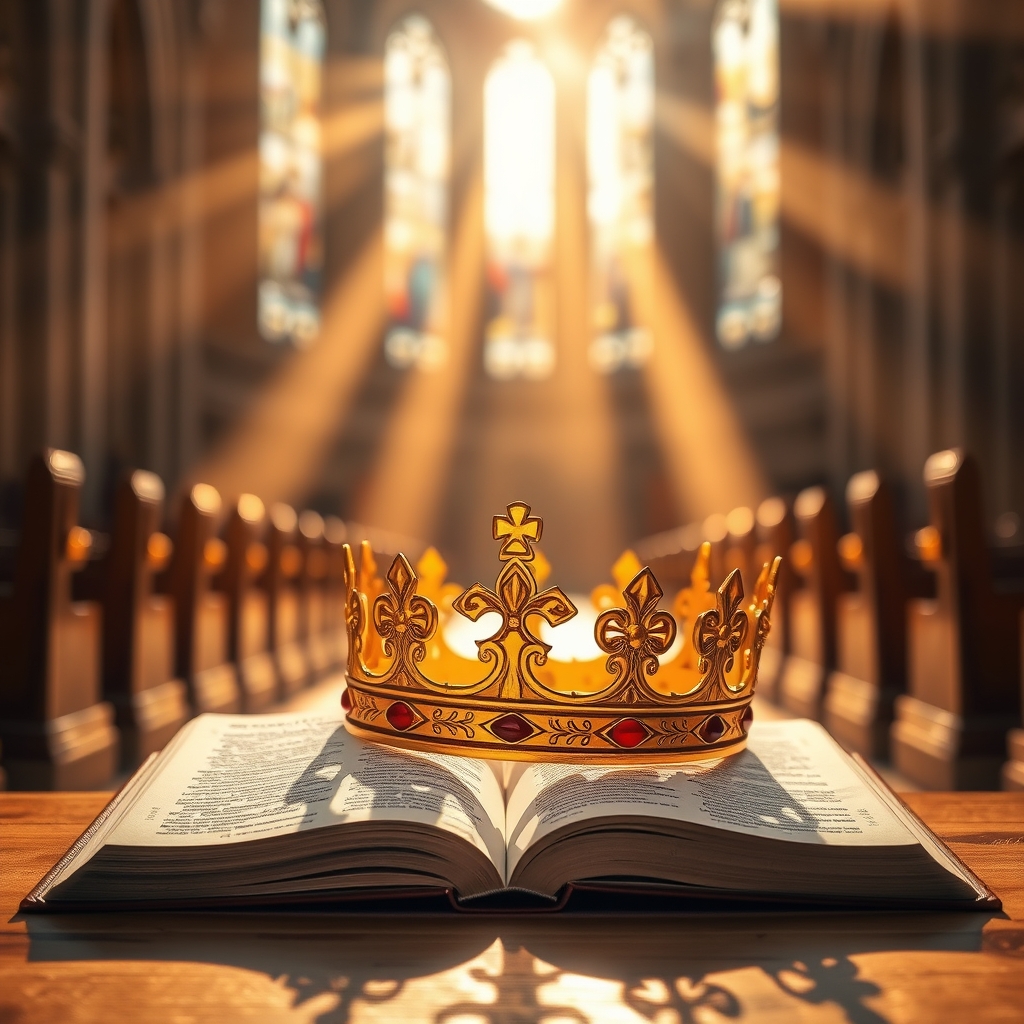
Christ the King Sunday 2022 was celebrated on November 20, 2022, marking the final Sunday of the liturgical year. This feast day declares and celebrates the sovereign kingship of Jesus Christ over all creation, affirming His eternal reign as Lord of lords and King of kings. It invites all Christians to reflect on Christ’s authority, His ultimate victory, and to recommit their hearts to His lordship.
Have you ever wondered what it truly means to call Jesus Christ “King”? In a world that often places its trust in temporary powers — governments, wealth, fame, and even personal ambition — there is one throne that will never be shaken, and one King whose reign will never end. As we approach Christ the King Sunday 2022, Christians around the globe are invited to pause, worship, and proclaim a truth that echoes through eternity: Jesus Christ is King of Kings and Lord of Lords (Revelation 19:16). This sacred occasion is not merely a date on the liturgical calendar; it is a powerful declaration of faith and a reminder that every knee will bow and every tongue will confess that Jesus Christ is Lord, to the glory of God the Father (Philippians 2:10–11).
In this article, we will explore the rich meaning and history behind the Feast of Christ the King — why it was established, how believers across denominations observe it, and what it means for your personal walk with God today. Whether you are a lifelong follower of Jesus or someone sincerely searching for truth, our prayer is that these pages draw you closer to the One who laid down His life for you and who now reigns in glory. Let us discover together why proclaiming Jesus as King matters not just on one Sunday, but every moment of every day.
What Is the Meaning of Christ the King Sunday?

A Day Declaring Jesus Christ as King
Christ the King Sunday is the final Sunday of the Christian liturgical year. On this day, the Church lifts its voice in worship. We boldly declare that Jesus Christ is Lord over all creation. He is not merely a wise teacher or a moral example. He is the living King of Kings and Lord of Lords. Every year, this feast resounds with thankful hearts. Furthermore, it strengthens our confidence that Christ is the sovereign ruler of all things.
The meaning of this day stands firm on God’s eternal Word. For you know that
This year’s celebration, Christ the King Sunday 2022, calls believers to set aside distractions and focus on His authority. Christ is seated at the right hand of the Father. He holds all power, and His Kingdom never ends. As we gather, we remember that Jesus is not simply a figure of history. He is alive and reigning today.
The Biblical Foundation of Christ’s Kingship
The Bible plainly teaches that Jesus is King. His Kingship extends over all creation. In Matthew 28:18, Jesus declares, “All authority in heaven and on earth has been given to me.” This statement is not symbolic; it is ultimate truth. In addition, Paul affirms in Philippians 2:9-11 that God exalted Jesus to the highest place. Every knee will bow and every tongue confess that Jesus Christ is Lord.
Consider these truths about Christ’s eternal Kingship:
- Jesus is the eternal Son of God. He has always existed and was always King.
- Christ’s Kingdom is not of this world, yet it touches every corner of it.
- King David prophesied the coming of Messiah-King in Psalm 110:1: “The Lord said to my Lord, ‘Sit at my right hand.'”
- Revelation 19:16 declares: “On his robe and on his thigh he has this name written: King of Kings and Lord of Lords.”
Christ the King Sunday exists because believers hunger to worship their King. This day is not about earthly power. It is about the One who laid down His life and took it up again ([1]). He conquered death once and for all. As a result, every generation of Christians proclaims the same truth. Jesus Christ is Lord. He is worthy of all praise, now and forever.
Why Was Christ the King Sunday Moved?
The Liturgical Calendar Change
Christ the King Sunday was not always observed on its current date in the Christian liturgical calendar. For many years, the feast was celebrated on the last Sunday of October. However, a significant shift occurred after the Second Vatican Council reformed the Roman Catholic liturgical calendar in the late 1960s. [2]
As a result of these reforms, the Solemnity of Our Lord Jesus Christ, King of the Universe was moved to the final Sunday of the liturgical year — just before Advent begins. This new placement carries deep theological significance. It places the declaration of Christ’s eternal kingship at the culmination of the entire church year. Moreover, it serves as a powerful conclusion to the seasons of teaching, celebration, and remembrance that make up the liturgical cycle. In 2017, Pope Francis officially approved this as the universal date for the feast. [3]
What This Means for Believers Today
Understanding this change helps believers appreciate the feast more fully. Its placement at the end of the liturgical year reminds us that Jesus Christ is the ultimate authority over all creation and all time.
Consider these truths about Christ’s kingship:
- Jesus reigns above all earthly powers. No matter what challenges arise, His sovereignty remains unshaken.
- Every season of the church year points to Jesus. Christ the King Sunday brings all of these reflections together in one final, glorious declaration.
- Advent begins the following week. We enter the season of waiting and hope with the confidence that Jesus Christ is already King and will come again. Revelation 19:16 declares, “On his robe and on his thigh he has this name written: KING OF KINGS AND LORD OF LORDS.”
In a world that constantly competes for our attention and allegiance, this feast calls every believer to surrender fully to the lordship of Jesus Christ. It is not merely a historical observance. Rather, it is a living proclamation that Jesus is King — today, tomorrow, and forever.
Christ the King Sunday History
Understanding the history of Christ the King Sunday reveals a powerful and beautiful story. It is the story of why and how the Church began to set aside a special day to honor Jesus as King. Even as we reflect on Christ the King Sunday 2022 and beyond, knowing this history deepens our worship and strengthens our faith. This feast was not always part of the Church calendar. It was established in a specific moment in history to address a specific need.
The Origin of the Feast by Pope Pius XI
In 1925, Pope Pius XI instituted the Feast of Christ the King. He made this declaration through an encyclical letter titled Quas Primas. [4]. The world at that time was experiencing great upheaval. World War I had recently ended. Furthermore, many nations were embracing secularism and rejecting God’s authority.
In addition, powerful ideologies like communism and fascism were rising. These systems sought to place the state or a human leader above all else. However, the Pope saw a desperate need for a public declaration. He wanted to remind the entire world that there is a King above all earthly powers.
As a result, he established this feast for several key reasons:
- To Proclaim Jesus’ Universal Kingship: The feast was a formal, global declaration that Jesus Christ is King of the entire universe (Revelation 19:16).
- To Counter Secularism: It was a direct response to the growing trend of nations and societies pushing God out of public life.
- To Affirm Christ’s Authority Over All: The feast reminds believers that every person, government, and nation is ultimately subject to the authority of Jesus Christ (Matthew 28:18).
- To Offer a Source of Hope: In a world filled with uncertainty, the feast points to the one true and unchanging King who reigns forever.
The first celebration took place on the last Sunday of October in 1926. It was a powerful moment for the Church. It was a bold statement of faith in a world that was forgetting its Creator.
How the Feast Spread Across Denominations
While the feast began within the Roman Catholic Church, its message resonated far beyond. The truth of Christ’s kingship is not limited to one denomination. It is a core belief for all Christians. Therefore, many other Christian traditions began to adopt the celebration.
For example, many Protestant denominations, including Lutherans, Anglicans, and Methodists, now observe Christ the King Sunday. They see it as a vital part of their worship. It serves as a fitting conclusion to the liturgical year. It reminds believers that the story of the Church year ends with the triumphant reign of Jesus.
Furthermore, the ecumenical nature of the feast is a beautiful thing. It unites Christians from many backgrounds. On this Sunday, believers around the world join together in a single, powerful declaration. They all proclaim that Jesus Christ is Lord of all.
The spread of the feast highlights several important truths:
- A Shared Core Belief: The deity and kingship of Jesus are central to all orthodox Christian faith.
- Unity in Worship: Christians can come together to honor the same Lord, even with different traditions.
- A Prophetic Witness: The feast continues to be a public testimony to the world about who Jesus is.
Today, Christ the King Sunday is a global celebration. It is a day when the Church, in all its diversity, bows its knee to its one true King. It is a day of joy, reverence, and unwavering faith in the One who was, and is, and is to come (Revelation 1:8).
How to Celebrate the Feast of Christ the King

`html
Christ the King Procession and Worship
Worship on Christ the King Sunday is a joyful and reverent way to honor Jesus as Lord over all creation. While this observance holds deep meaning for many Christian traditions, the heart of the celebration is not about a date or a denomination. It is about exalting Jesus Christ as our King and Savior.
- Attend a worship service that focuses on the kingship of Christ.
- Sing hymns and songs that declare the lordship of Jesus.
- Participate in a reading or hearing of key passages that affirm Christ’s reign, such as Revelation 19:16 or Colossians 1:15–20.
A “procession” can be as simple as a congregational march with banners and music, or as quiet as a prayer walk around your community. The outward act matters less than the inward posture of the heart.
Consider these ways a church or community might mark the day:
- Banners and visuals that affirm “Jesus is Lord”
- A short teaching or message on the kingship of Christ
- Corporate confession and renewed dedication to following Jesus
- Special songs or a hymn time focused on the glory of Christ
- A communal prayer of surrender to the rule of Christ in our lives
Philippians 2:9–11 proclaims the truth at the center of this celebration:
“Therefore God exalted him to the highest place and gave him the name that is above every name, that at the name of Jesus every knee should bow, in heaven and on earth and under the earth, and every tongue acknowledge that Jesus Christ is Lord, to the glory of God the Father.”
Prayer, Scripture, and Personal Devotion
While corporate worship is a beautiful expression of Christ’s kingship, your personal time with God is equally significant. Christ the King Sunday invites you to examine your own heart and ask an important question: “Is Jesus truly Lord over every area of my life?”
Prayers for the Feast of Christ the King
Prayer is how we honor Jesus as King in the quiet places of our lives. It is how we speak back to Him the truths we know to be true about His character and authority.
Here are some prayer themes to guide your time with the Lord:
- Surrender: Pray that God would reveal any area of your life where you have not yielded to His lordship.
- Thanksgiving: Thank Jesus for His sacrificial death and resurrection, which made His reign possible.
- Strength: Ask for the courage to live under Christ’s authority in a world that often rejects Him.
- Witness: Pray for opportunities to share the Gospel with others who do not yet know Jesus as King.
Scriptures to Reflect On
The Bible is rich with passages that declare the sovereignty of Christ. Reading and meditating on Scripture is one of the most powerful ways to celebrate this feast day.
Consider reflecting on the following passages throughout the day:
| Scripture | Key Truth |
|---|---|
| John 18:36 | Jesus declares that His kingdom is not of this world. |
| Revelation 19:16 | Jesus is called “King of kings and Lord of lords.” |
| Colossians 1:15–17 | Christ is the image of the invisible God and all things were created through Him. |
| Daniel 7:14 | His dominion is an everlasting dominion that will not pass away. |
| Isaiah 9:6–7 | The Messiah will reign on David’s throne forever with justice and righteousness. |
| Romans 14:9 | Christ died and rose to be Lord of both the dead and the living. |
Take your time with each passage. Read it slowly. Ask the Holy Spirit to speak to you through the Word. As you meditate on these truths, allow them to deepen your understanding of who Jesus is and what it means to live under His loving rule.
Personal Devotion Ideas
Beyond formal worship and prayer, there are many simple ways to make Christ the King Sunday a meaningful day of personal devotion:
- Begin the day with a short act of worship, even if you are alone.
- Read through one of the Gospels and notice how Jesus demonstrates His authority.
- Journal about what it means for Jesus to be Lord over your home, work, and relationships.
- Share a meal with another believer and discuss the lordship of Christ.
- Listen to worship music throughout the day as a way of keeping your heart focused on King Jesus.
Matthew 6:33 reminds us of the priority Christ’s kingship should have in our daily lives:
“But seek first his kingdom and his righteousness, and all these things will be given to you as well.”
The Feast of Christ the King is not merely an event on a calendar. It is an invitation. It is a call to re-center our hearts, our worship, and our daily living on the truth that Jesus Christ is Lord. Whether you celebrate in a packed congregation or in the quiet of your own home, the goal is the same: to bow your knee before the King of kings and offer Him the worship He is worthy to receive.
`
Christ the King Message: The Gospel Proclaimed
Jesus Reigns Over All Things
Christ the King Sunday 2022 invites every believer to stand in awe of a truth that echoes from eternity: Jesus Christ is King. He is not a king like the rulers of this world. His kingdom has no borders. His throne cannot be toppled. And His reign will never end.
The Bible declares it with breathtaking clarity:
- In Revelation 19:16, He is called “King of kings and Lord of lords.” [5]
- In Philippians 2:9-11, God exalted Jesus to the highest place so that every knee will bow and every tongue confess that Jesus Christ is Lord. [6]
- In Colossians 1:16-17, all things were created by Him and for Him, and in Him all things hold together. [7]
This is the Gospel proclaimed. Jesus didn’t just come to save souls and leave the universe broken. He came to restore all things. He came to make all things new. And one day, every war, every injustice, every tear, and every evil will bow before His feet.
The message of Christ the King is the message of hope. No matter what darkness surrounds us, no matter what chaos rules the earth and fills the news, Jesus reigns. He is not waiting to become King. He is already King. And He is already working.
What It Means for Your Daily Walk With God
So how does this truth change your Monday morning? How does it reshape your week?
It means your life is not random. It means your loyalty is claimed by Someone who is worthy. As Christ the King, Jesus isn’t just interested in your Sunday worship. He is Lord of your work, your relationships, your decisions, and your inner thoughts.
Here’s what this looks like in everyday life:
- Humility. A king who washed feet. A king who died for His enemies. He is our example. We don’t earn His love. We simply bow and obey.
- Courage. Fear has no hold on a citizen of this kingdom. Death has lost its sting (1 Corinthians 15:55-57). [8]
- Mission. We don’t just receive grace. We carry it. As citizens of the kingdom, we proclaim this good news to the world around us.
- Prayer. We don’t pray to a distant ruler. We pray to Jesus, our King, our Shepherd, our Lord.
The Gospel proclaimed on Christ the King Sunday is not an intellectual exercise. It is an invitation. It calls you to surrender. It calls you to joy. It calls you to live under the reign of the One who loved you enough to die for you.
Jesus reigns over all things. And today, He reigns over you. Let that truth shape your walk with God. Let it anchor your soul. And let it send you out into the world, not with fear, but with the full confidence that the King of kings is your King.
Dates for the Feast of Christ the King
Christ the King 2023
In 2023, Christ the King Sunday fell on November 26, 2023. This day marked the last Sunday of the liturgical year. Believers around the world gathered to honor Jesus Christ as Lord and King. Churches held special readings, prayers, and hymns focused on His eternal reign.
Feast of Christ the King 2025
In 2025, the Feast of Christ the King will be celebrated on November 23, 2025. This date is determined by placing Christ the King Sunday on the last Sunday before Advent begins. Advent typically starts four Sundays before Christmas, so Christ the King Sunday is always the Sunday immediately prior to that. However, because the calendar shifts each year, the specific date changes annually.
Here is a helpful reference for upcoming and recent dates:
| Year | Christ the King Sunday Date |
|---|---|
| 2022 | November 20 |
| 2023 | November 26 |
| 2024 | November 24 |
| 2025 | November 23 |
| 2026 | November 22 |
Feast of Christ the King 2026
In 2026, Christ the King Sunday will be observed on November 22, 2026. As in every year, this day carries the same powerful message. Jesus Christ is the risen King whose Kingdom will never end. Furthermore, the changing date each year reminds us that this feast is tied to the rhythm of the Christian liturgical calendar. It closes one year of worship and prepares our hearts for the coming of Advent and Christmas.
No matter the date, the truth remains the same. Jesus reigns forever. As Revelation 19:16 declares, He is “King of kings and Lord of Lords.” We invite you to mark this day on your calendar and prepare your heart to worship Him as the sovereign King of your life.
Frequently Asked Questions
What Is the Meaning of Christ the King Sunday?
Christ the King Sunday is a special day in the Christian calendar. It celebrates Jesus Christ as King of all kings and Lord of all lords. This holy day reminds us that Jesus reigns over every area of our lives. It is a day of worship, praise, and surrender to our Savior.
Scripture declares this truth clearly. Revelation 19:16 says He has a name written on His robe: KING OF KINGS AND LORD OF LORDS. Furthermore, Daniel 7:14 tells us His dominion is an everlasting dominion that will never pass away.
The day is observed on the last Sunday before Advent. Christians around the world use this Sunday to reflect on Christ’s eternal authority and glorious kingdom.
This celebration also points forward to a future hope. One day, every knee will bow and every tongue will confess that Jesus Christ is Lord (Philippians 2:10-11). Therefore, Christ the King Sunday is both a present reality and a future promise.
Why Was Christ the King Sunday Moved?
This is an excellent liturgical question. Originally, this feast was celebrated on the last Sunday in October, which was the last Sunday before All Saints’ Day. However, in 1970, the Roman Catholic Church moved the feast.
The change placed Christ the King Sunday on the last Sunday of the entire liturgical year. This new placement was made to highlight the Second Coming of Christ. As a result, the celebration now emphasizes Christ’s eternal reign concluding the Church year.
Advent follows Christ the King Sunday and begins a new liturgical year, focusing on the First Coming of Jesus. This transition beautifully connects Christ’s eternal kingship to His return in glory.
Many Protestant denominations follow this updated calendar, though some traditions may observe it on a different date. Ultimately, this move highlights Jesus’ sovereignty more powerfully. Whether Catholic or Protestant, we unite in worshiping our eternal King.
What Sin Will God Never Forgive?
This is a deeply important question for every person. Scripture identifies one sin that will not be forgiven. Matthew 12:31 calls it the “blasphemy of the Holy Spirit.” This is not an isolated act of cursing or an occasional moment of doubt. It is a complete and deliberate rejection of the Holy Spirit’s testimony about Jesus.
To blaspheme the Holy Spirit is to attribute the miracles and ministry of Jesus to Satan. This sin is a total, lasting hardening of the heart against God’s grace. It is a decision to call good evil and call evil good (Isaiah 5:20).
However, this truth also brings tremendous comfort. If you have any desire in your heart to repent and turn to Christ, then you have not committed this sin. This conviction is actually the Holy Spirit working in you. Therefore, if you are seeking Jesus, His grace is available to you.
God is rich in mercy and abounding in love (Ephesians 2:4). His desire is that none should perish and all should come to repentance (2 Peter 3:9). His nail-pierced hands are open wide to receive you.
Does God Know You Before You Are Born?
The Bible clearly teaches that God knows every person before they are born. The Lord spoke to the prophet Jeremiah directly. Before I formed you in the womb I knew you, before you were born I set you apart, God declared (Jeremiah 1:5).
This truth reveals the tender, intimate care our Creator has for each one of us. Psalm 139:13-16 speaks of God weaving us together in our mother’s womb. Our days were written in God’s book before one of them came to be.
God predetermined our purpose and appointed us for specific tasks. As a result, your life has meaning and is part of His perfect plan. You are not an accident but a masterpiece of the living God.
Furthermore, John 1:12 reveals our incredible identity in Christ. To all who did receive Him and believe in His name, He gave the right to become children of God.
God knows your name, and He has a purpose for you. Your story is written by the author of all creation.
Who Is the Only Disciple Who Was Not Killed?
The Apostle John was the only original disciple of Jesus who was not martyred. He is often called “the disciple whom Jesus loved” (John 13:23). God uniquely spared his life, likely to preserve the testimony of Jesus Christ for the early Church.
The other eleven apostles gave their lives as martyrs for the Gospel. They faced persecution, imprisonment, and ultimately death. Their blood became the seed of the early Church, as Tertullian famously declared. Tradition tells us John lived to an old age.
John continued writing and teaching until the end of his life. He wrote the Gospel of John, the three epistles, and the book of Revelation. His miraculous survival testifies to God’s sovereign purpose and grace.
Therefore, even in persecution, God’s grace protects His servants and fulfills His purposes. John’s prolonged life allowed a unique written record of Jesus to endure.
Sources
- https://www.biblegateway.com/
- https://www.usccb.org/prayer-and-worship/liturgical-year-and-calendar
- https://www.vatican.va/content/francesco/en/motu_proprio/documents/papa-francesco-motu-proprio-20170903_splendor-veritatis.html
- https://www.vatican.va/content/pius-xi/en/encyclicals/documents/hf_p-xi_enc_19251211_quas-primas.html
- https://www.biblegateway.com/passage/?search=Revelation+19:16&version=NIV
- https://www.biblegateway.com/passage/?search=Philippians+2:9-11&version=NIV
- https://www.biblegateway.com/passage/?search=Colossians+1:16-17&version=NIV
- https://www.biblegateway.com/passage/?search=1+Corinthians+15:55-57&version=NIV