The phrase ‘Jesus, Mary, and Joseph and the wee donkey’ is a traditional Irish expression of surprise or amazement, deeply rooted in Catholic and Christian culture. While the Bible records that Mary and Joseph traveled to Bethlehem before Jesus’ birth (Luke 2:1-5), scripture does not explicitly mention a donkey, though tradition and the Nativity passage in Luke 2:4 strongly suggest they made the journey, fulfilling Micah 5:2 and demonstrating God’s sovereign plan to bring the Savior into the world.
You’ve probably heard the phrase “Jesus, Mary, and Joseph and the wee donkey” shouted in surprise, spotted it on a Christmas ornament, or wondered where it came from. This colorful expression, deeply rooted in Irish and Catholic tradition, connects to one of the most cherished stories in all of Scripture: the journey of Mary and Joseph traveling to Bethlehem where Jesus Christ, the Son of God, was born. But how much of this familiar nativity picture comes directly from the Bible, and how much has been shaped by centuries of tradition, art, and popular culture?
In this article, we will explore the true biblical account recorded in the Gospel of Luke, examine what Scripture actually says about the journey to Bethlehem, and rediscover the profound spiritual meaning behind that humble trip—one that changed the course of human history. Whether you are a new believer seeking to understand the Christmas story more deeply or a mature Christian looking to separate biblical truth from cultural embellishment, our aim is to point you always and unmistakably to Jesus Christ, the Lord and Savior whose birth, death, and resurrection stand at the very heart of the Gospel. As it is written in John 3:16, “For God so loved the world that He gave His only begotten Son, that whoever believes in Him should not perish but have everlasting life.” Let us begin by understanding where this famous phrase comes from and why it still captures hearts today.
What Does the Saying ‘Jesus, Mary, and Joseph and the Wee Donkey’ Mean?
An Irish Exclamation of Surprise
The saying “Jesus, Mary, and Joseph and the wee donkey” is a beloved Irish exclamation. It expresses surprise, shock, or disbelief — much like saying “Good heavens!” or “Oh my word!” The phrase is deeply woven into the fabric of Irish culture and speech.
However, while it may sound casual, the words carry tremendous weight. each name points directly to the heart of the Gospel story. Jesus is Lord. Mary was His mother. Joseph was His earthly guardian. And the “wee donkey” connects to the humble journey to Bethlehem.
For many Irish Christians, this phrase is more than an expression. It is a recognition of the holy family that God chose to bring His Son into the world. It reminds us that even our everyday speech can carry echoes of scripture.
How the Phrase Connects to the Biblical Narrative
At its core, this saying points to the incarnation of Jesus Christ. God sent His only Son into the world as a baby (John 1:14). He did not arrive in a palace. He arrived in humility. He was born to Mary, raised by Joseph, and laid in a manger (Luke 2:7).
The “wee donkey” is not explicitly named in the Gospel accounts. Yet it has become a meaningful symbol. It represents the humble journey Joseph and Mary made to Bethlehem in obedience to God. They traveled in simplicity — not in wealth or power.
Consider what scripture tells us about this journey:
- Joseph and Mary traveled to Bethlehem in fulfillment of prophecy (Micah 5:2; Luke 2:4-5).
- Mary, carrying Jesus in her womb, faithfully made the journey despite the difficulty (Luke 2:5).
- Joseph, a righteous man, obeyed God’s command without hesitation (Matthew 1:24).
- Jesus entered the world not as a distant deity, but as one of us — vulnerable, humble, and real (Philippians 2:6-8).
Furthermore, the donkey serves as a powerful reminder of Christ’s humility. The King of Kings did not ride a horse of war. He came gently — carried on the back of a mother riding a humble beast of burden. As it is written, “Love is patient, love is kind” (1 Corinthians 13:4). And God’s love came to us in the gentlest way imaginable.
This phrase, then, is far more than a colorful Irish saying. It is a window into the true meaning of Christmas. It reminds us that Jesus Christ — fully God and fully man — chose to enter our broken world for one reason: to save us. As Jesus Himself declared, “For the Son of Man came to seek and to save the lost” (Luke 19:10).
So the next time you hear this wonderful phrase, let it draw your heart back to Him. Jesus is not merely a character in an exclamation. He is the risen Savior who conquered death and offers eternal life to all who believe in Him (John 3:16). That is the true meaning behind every word.
Who Says ‘Jesus, Mary, and Joseph, and the Wee Donkey’?
Origins in Irish and Catholic Culture
The phrase “Jesus, Mary, and Joseph, and the wee donkey” is deeply rooted in Irish Catholic tradition. It emerged as a colorful exclamation of surprise or frustration, much like other Irish expressions that invoke the Sacred Heart of Jesus or the Blessed Mother. In fact, this particular saying became so popular in Ireland that it eventually crossed the Atlantic with Irish immigrants, finding its way into Christmas carols and nativity plays performed by Catholic communities around the world.
While some may view this phrase as merely a cultural expression, it carries profound spiritual weight. For generations of Irish Catholics, using this phrase was not casual. It was a subtle act of faith, a way keep the Holy Family close in daily life, even in moments of frustration or wonder.
The phrase specifically references the journey to Bethlehem, as told in Luke 2:1-5. Scripture tells us:
“And Joseph also went up from Galilee, out of the city of Nazareth, into Judaea, unto the city of Bethlehem, because he was of the house and lineage of David, to be taxed with Mary his espoused wife, being great with child” (Luke 2:4-5, KJV).
Although the Bible does not explicitly mention the donkey, tradition holds that the family used one, popularized through centuries of nativity art and storytelling.
A Phrase Shared Across Christian Communities
While the saying “Jesus, Mary, and Joseph, and the wee donkey” is most commonly associated with Irish culture, it has found its way into broader Christian communities. You might hear it in:
- Catholic parishes during Advent and Christmas celebrations
- Irish folk songs and Christmas carols
- Family gatherings and holiday traditions
This phrase reminds us of the humility of Christ’s birth. Regardless of cultural origin, every Christian can appreciate its deeper meaning. the journey to Bethlehem was not glamorous. It was a difficult trek made by a young family who trusted God completely.
At Just Jesus Time, we believe that expressions like this can open doors to deeper conversations about faith. Instead of dismissing it as folklore, consider it an invitation to explore the true story of Jesus Christ.
The beloved Christmas carol “Jesus, Mary and Joseph and the Wee Donkey” helped popularize this phrase globally. Through music, the humble journey to Bethlehem reached millions, enriching their understanding of God’s plan for salvation.
Ultimately, whether you first heard this phrase in a church, a pub, or a Christmas pageant, it points to one glorious truth: Jesus Christ, the Son of God, entered this world through a humble family on a humble journey to fulfill the greatest mission in human history.
Does the Bible Say That Mary and Joseph Went to Bethlehem on a Donkey?
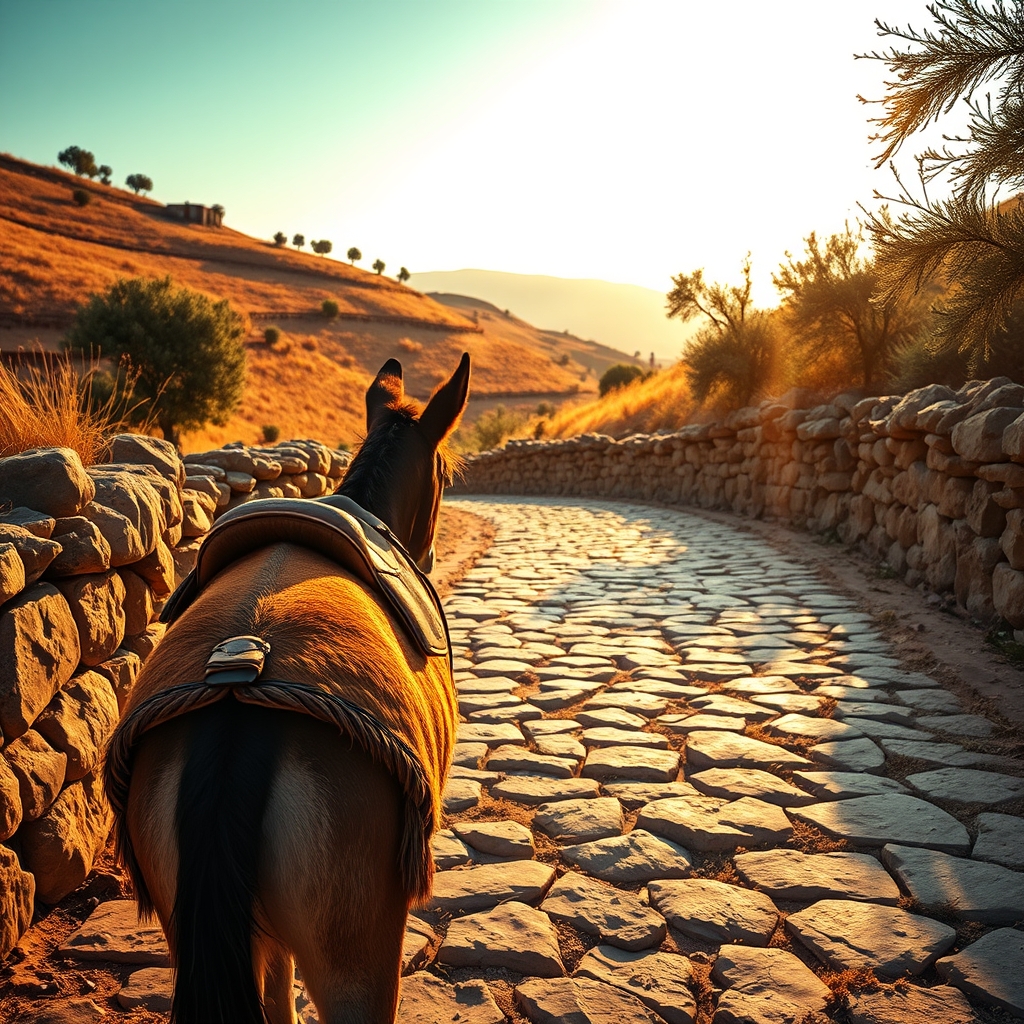
When we hear the phrase “Jesus, Mary, and Joseph and the wee donkey,” many of us picture a humble family traveling to Bethlehem on the back of a small donkey. But does the Bible actually say that Mary and Joseph rode a donkey on that famous journey? Let’s look at what Scripture truly tells us.
The Biblical Account of the Journey to Bethlehem (Luke 2:1-5)
The Gospel of Luke gives us the clearest account of this journey. In Luke 2:1-5, we read that a decree went out from Caesar Augustus that all the world should be registered. Joseph went up from Galilee, from the town of Nazareth, to Judea, to the city of Bethlehem, because he was of the house and lineage of David. He went to be registered with Mary, who was betrothed to him and was expecting a child.
Here is the passage in full context:
- Luke 2:1 — “In those days a decree went out from Caesar Augustus that all the world should be registered.”
- Luke 2:3 — “And all went to be registered, each to his own town.”
Notice that Luke mentions the journey clearly. He tells us why they went and where they went. However, he does not describe the specific mode of transportation they used.
What Scripture Does and Doesn’t Specify About the Donkey
This is an important distinction for every believer who wants to honor the truth of God’s Word. The Bible never explicitly states that Mary rode a donkey to Bethlehem. The Gospel accounts are silent on this detail.
Here is what we can say with confidence:
- What the Bible says: Joseph and Mary traveled from Nazareth to Bethlehem while Mary was pregnant with Jesus.
- What the Bible implies: The journey was long — approximately 90 miles through hilly terrain. Travel by donkey would have been common for a family of modest means in that era.
- What the Bible does not say: That Mary rode a donkey, that Joseph walked beside one, or that a donkey was present at all.
Furthermore, some scholars point to Old Testament prophecy as a possible source for the donkey imagery. In Zechariah 9:9, it says: “Rejoice greatly, O daughter of Zion! Shout aloud, O daughter of Jerusalem! Behold, your king is coming to you; righteous and having salvation is he, humble and mounted on a donkey, on a colt, the foal of a donkey.” While this prophecy points to Jesus’ triumphal entry into Jerusalem (recorded in Matthew 21:1-11), it does not directly connect to the journey to Bethlehem before His birth.
In addition, the Gospel of Luke mentions that Mary laid the newborn Jesus in a manger because there was no room in the inn (Luke 2:7). The presence of a manger suggests an animal shelter or stable area, which may have contributed to the tradition of including a donkey in nativity scenes. However, the text itself does not confirm this connection.
Why the Donkey Became a Fixed Image in the Nativity Story
If the Bible doesn’t mention a donkey, why is it such a central part of how we picture the Christmas story? The answer lies in centuries of Christian tradition, art, and storytelling.
Several factors helped establish the donkey in our collective imagination:
- Historical context: Donkeys were the most common mode of transportation for ordinary families in first-century Palestine. It would have been natural for Mary and Joseph to use one on such a long journey.
- Early Christian art: By the second and third centuries, depictions of the journey to Bethlehem began appearing in Christian art, often showing Mary riding a donkey with Joseph walking alongside. These images became deeply embedded in Christian culture.
- The nativity tradition: As nativity scenes developed over the centuries — particularly through the influence of St. Francis of Assisi in 1223 — the donkey became a standard figure alongside the ox, the shepherds, and the wise men.
- The phrase itself: “Jesus, Mary, and Joseph and the wee donkey” became a beloved expression, especially in Irish Christian culture, reinforcing the image in the hearts of believers across generations.
While the donkey is not explicitly mentioned in Scripture, its inclusion in nativity traditions is not harmful. It reflects a reasonable assumption based on the historical and cultural context of the time. However, as followers of Christ, we should always distinguish between what God’s Word clearly states and what tradition has added.
The true beauty of the journey to Bethlehem is not found in the details of transportation. It is found in the humility of our Lord Jesus Christ, who left the glory of heaven to be born in a small town, laid in a feeding trough, and destined to be the Savior of the world. As Philippians 2:6-8 reminds us, “Though he was in the form of God, [He] did not count equality with God a thing to be grasped, but emptied himself, by taking the form of a servant, being born in the likeness of men. And being found in human form, he humbled himself by becoming obedient to the point of death, even death on a cross.”
So the next time you hear “Jesus, Mary, and Joseph and the wee donkey,” let it remind you not just of a charming phrase, but of the incredible humility and love of our Savior, who came to earth for you.
Was ‘Jesus, Mary, and Joseph and the Wee Donkey’ in a TV Episode Which Episode?
Here is the HTML content for the section:
Popular Culture References and Their Impact
Irresistible as it is to search for every pop culture mention of “Jesus, Mary, and Joseph and the wee donkey,” the truth is that there is no single, well-documented television episode where the exact phrase “Jesus, Mary, and Joseph and the wee donkey” is spoken as a memorable line. This phrase is not tied to a famous TV episode in the way some search results might suggest.
However, elements of the Nativity story—Mary, Joseph, the donkey, and the journey to Bethlehem—have appeared in numerous television programs including holiday specials and biblical dramas. Here are some examples that have used similar themes:
- "A Charlie Brown Christmas" (1965) – When Linus recites Luke 2:8-14, he retells the story of the shepherds and the birth of Jesus.
- "The Nativity Story" (film, 2006) – Depicts the journey of Mary and Joseph to Bethlehem, though the phrase “wee donkey” is not used.
- "Doctor Who" “The Doctor, the Widow and the Wardrobe" episode (2009) – Features references to the Nativity scene.
- Irish comedy shows — Given that “Jesus, Mary, and Joseph and the wee donkey” is primarily an Irish exclamation, various Irish sketch comedies and variety shows have likely used it as a throwaway exclamation of surprise.
The reason people search for a specific TV episode is almost certainly related to hearing the line on a show.
However, no major episode has made this phrase its title or a famous punchline. Search results that hint at this are often confusing the Irish exclamation with the Nativity story itself.
Why Faith-Based Content Should Always Point Back to Scripture
The search for this phrase in pop culture reveals something important for believers.
When we become curious about faith-related phrases, our first instinct should not be to find a TV clip.
Instead, we should turn directly to God’s Word. Scripture is the ultimate authority on every matter of faith. As it says in 2 Timothy 3:16, "All Scripture is God-breathed and is useful for teaching, rebuking, correcting and training in righteousness."
Pop culture can introduce us to biblical concepts, but it often distorts them or strips them away from their true meaning. The phrase “Jesus, Mary, and Joseph and the wee donkey” is a perfect example:
- In pop culture: It’s a humorous exclamation used to express shock or surprise.
- In Scripture: The journey to Bethlehem was a real, sacred event in God’s redemptive plan.
The journey Mary and Joseph took was not a punchline. It was an act of obedience. Joseph obeyed the angel’s instruction. Mary trusted God’s plan even when the circumstances were difficult. They walked that road so that prophecy would be fulfilled and so that the Savior of the world could be born in Bethlehem, just as the prophet Micah declared thousands of years earlier:
Micah 5:2 — "But you, Bethlehem Ephrathah, though you are small among the clans of Judah, out of you will come for me one who will be ruler over Israel, whose origins are from of old, from ancient times."
This is the real story behind the phrase. Jesus Christ entered this world through a humble journey undertaken by faithful parents.
Every time we hear “Jesus, Mary, and Joseph and the wee donkey,” let us remember:
- Jesus is Lord and Savior, not a character in a joke.
- Mary and Joseph were real people who obeyed God’s call.
- The journey to Bethlehem was part of God’s perfect, sovereign plan.
- The true “ewe donkey” or donkey is a reminder of Jesus’ humility.
- Our faith is rooted in Scripture, not in television or pop culture.
Let us always turn first to the Bible for truth. Let us honor the Holy Family not through jokes but through worship. And let us marvel at the journey to Bethlehem—not as a punchline, but as the moment when God Himself stepped into human history to bring salvation to all who believe.
What Does the Journey to Bethlehem Teach Us About Jesus Christ?
The famous expression “Jesus, Mary, and Joseph and the wee donkey” calls to mind a humble journey to Bethlehem. But beyond being a colorful Irish exclamation, this phrase points to one of the most profound events in all of Scripture. The journey to Bethlehem was no ordinary trip. It was God Himself entering the world. This section explores what that sacred journey reveals about the identity, mission, and character of Jesus Christ.
Jesus Entered the World in Humility
The story begins not in a palace but in a stable. The King of Kings arrived as a helpless infant. He was born in a manger, surrounded by animals and hay. There were no armies to announce His coming. There was no throne of gold. Instead, He came wrapped in swaddling clothes, just like any other baby born in Bethlehem.
Scripture declares this mystery clearly:
- Philippians 2:6-8 — “Who, being in very nature God, did not consider equality with God something to be used to his own advantage; rather, he made himself nothing by taking the very nature of a servant, being made in human likeness. And being found in appearance as a man, he humbled himself by becoming obedient to death — even death on a cross!” [1]
- John 1:14 — “The Word became flesh and made his dwelling among us.”
- 2 Corinthians 8:9 — “For you know the grace of our Lord Jesus Christ, that though he was rich, yet for your sakes he became poor, so that you through his poverty might become rich.”
The donkey itself, often depicted as Mary’s mount in nativity tradition, reinforces this theme of humility. Kings rode horses. Servants and common travelers rode donkeys. By choosing this humble means of transport, God signaled that His Son came not as a conqueror of armies but as a Savior for the lowly, the broken, and the forgotten.
God’s Sovereign Plan to Bring Salvation to Mankind
The journey to Bethlehem did not happen by chance. Long before Mary and Joseph set out on that road, God had already declared His plan through centuries of prophecy.
Micah 5:2 prophesied over 700 years before Jesus’ birth:
“But you, Bethlehem Ephrathah, though you are small among the clans of Judah, out of you will come for me one who will be ruler over Israel, whose origins are from of old, from ancient times.”
Every detail was orchestrated by God:
- The timing of Caesar Augustus’ census (Luke 2:1-3) brought Joseph and Mary to exactly the right place at exactly the right moment.
- The availability of the manger and stable fulfilled the humble circumstances foretold by the prophets.
- The shepherds receiving the angelic announcement (Luke 2:8-14) revealed that the Good News was first given to the ordinary, not the elite.
As a result, we can trust that God’s plan for our salvation is just as deliberate and sure today. He orchestrates events, moves people, and fulfills every promise He makes. As Ephesians 1:11 declares, God “works out everything in conformity with the purpose of his will.” [1]
Mary and Joseph’s Obedience and Trust in God
Mary and Joseph’s journey to Bethlehem teaches us what it looks like to trust God completely, even when circumstances seem confusing or difficult.
Consider what they faced:
- Mary was heavily pregnant. The journey was long and uncomfortable.
- They had no hotel room waiting. No room at the inn (Luke 2:7).
- Joseph was protecting an extraordinary child he had been called to raise.
Yet they obeyed. They traveled. They trusted.
This obedience was built on a foundation of faith. Mary had already declared in Luke 1:38, “I am the Lord’s servant. May your word to me be fulfilled.” Joseph had responded to the angel’s message without hesitation (Matthew 1:24). Both demonstrated that following God’s plan does not require understanding every detail. It requires surrender.
Their example calls us to the same posture. When God calls us to do something difficult — whether it is a physical journey, a life change, or a quiet act of faithfulness — we are to respond as Mary and Joseph did. God does not always explain the full picture. But His Word is trustworthy, and His plan is perfect.
A Journey That Changed Everything
The journey to Bethlehem, often summed up in that charming phrase “Jesus, Mary, and Joseph and the wee donkey,” was so much more than a family trip. It was the arrival of God Himself into a broken world. It was prophecy fulfilled. It was humility on display. It was obedience in action.
Most importantly, it was the beginning of the rescue mission that would end at the cross. Jesus came to Bethlehem so that He could walk to Calvary. He was born in a manger so that He could be laid in a tomb. And He rose again, conquering death once and for all.
As we reflect on this journey, let us remember that every step on that dusty road to Bethlehem was a step toward our salvation. Jesus Christ, the Son of God, is who the Scriptures declare Him to be — Lord, Savior, and the hope of the world.
Jesus, Mary, and Joseph and the Wee Donkey in Christmas Traditions
Throughout the years, the phrase “Jesus, Mary, and Joseph and the wee donkey” has become woven into the fabric of Christmas celebrations far beyond its Irish origins as an exclamation of surprise. In addition, it has found its way onto Christmas cards, nativity sets, holiday decorations, and even clothing. As Christians, it is important to examine how this phrase and its associated imagery function within our Christmas traditions, and to ensure that our celebrations always honor the Lord Jesus Christ above all else.
Christmas Decorations and Nativity Scenes
The nativity scene, also known as a manger scene or crèche, is one of the most beloved Christmas traditions in the Christian world. Furthermore, it serves as a visual retelling of the Christmas story described in the Gospel of Luke.
- The earliest nativity scenes date back to 1223, when Saint Francis of Assisi created a live nativity in Greccio, Italy.
- Since then, nativity sets have become a staple of Christmas decorations in homes, churches, and public spaces around the world.
- The inclusion of a donkey in these scenes serves as a visual reminder of the humble journey that Mary and Joseph undertook to reach Bethlehem.
In many nativity sets sold and displayed today, you will find the donkey positioned near the manger. Additionally, some artisans craft entire sets featuring “Jesus, Mary, and Joseph, and the wee donkey” specifically — a direct nod to the beloved Irish saying. Nevertheless, even when the Scripture does not explicitly mention the donkey, its inclusion helps tell the broader story of the Holy Family’s journey. It connects the birth of our Savior to the real, physical world where animals were a part of daily life in ancient Palestine.[2]
However, when setting up a nativity scene in your home, remember that the true focus is baby Jesus in the manger. The donkey, the shepherds, and the wise men all point toward Him. As it is written, “For unto you is born this day in the city of David a Saviour, which is Christ the Lord” (Luke 2:11, KJV).
T-Shirts, Mugs, and the Commercialization of Faith
The twenty-first century has seen the phrase “Jesus, Mary, and Joseph, and the wee donkey” appear on a wide range of commercial products. Consequently, you can now find it printed on Christmas T-shirts, coffee mugs, tote bags, ornaments, and holiday greeting cards. This commercialization raises an important question for Christians: How should we engage with faith-based merchandise?
Here are some thoughtful and balanced perspectives:
- As a conversation starter: A T-shirt or mug featuring the phrase can open the door to sharing the Gospel story of Jesus’ birth with others.
- As a cultural expression: For those with Irish heritage, the phrase can be a way to celebrate one’s cultural and faith traditions simultaneously.
- As a cautionary reminder: However, if the decoration or product trivializes the sacred story — making it into a joke or reducing it to mere sentiment — Christians should thoughtfully reconsider its place in their holiday celebrations.
The apostle Paul wrote, “Whether therefore ye eat, or drink, or whatsoever ye do, do all to the glory of God” (1 Corinthians 10:31, KJV). Therefore, even something as simple as a coffee mug can become a tool for glorifying God if it directs our hearts toward the true meaning of Christmas.
Keeping Christ at the Center of Christmas Celebrations
Ultimately, whether the phrase “Jesus, Mary, and Joseph, and the wee donkey” appears on a nativity set in your living room or a greeting card in your mailbox, the most important thing to remember is this: Christmas is about Jesus. The baby boy who was born in Bethlehem was no ordinary child. He was — and is — God in human flesh.
As you celebrate Christmas this year, let every tradition, every decoration, and every greeting redirect your heart to the true reason for the season:
- Jesus came into the world to save sinners — including you and me (1 Timothy 1:15).
- Our God is a humble God, choosing to enter the world not in a palace, but in a manger, fulfilling His sovereign plan (Philippians 2:6-8).
- The salvation Jesus offers is available to everyone who calls upon His name and believes in Him (Romans 10:13).
So let us enjoy our Christmas traditions — the nativity scenes, the sayings, the decorations, and even the mugs — but always with a heart fixed firmly on the Son of God who came to redeem us. May every “Jesus, Mary, and Joseph, and the wee donkey” be a joyful, reverent reminder that our Savior has come, and that He lives forevermore.
What Was the Age Gap Between Mary and Joseph?
What Historical and Biblical Evidence Suggests
The Bible does not give us exact ages for Mary or Joseph when Jesus was born. However, historical and cultural evidence from the first century offers clues about their likely ages.
According to Jewish tradition at the time of Christ, young women were typically betrothed between the ages of 12 and 14. This was the customary age for marriage in first-century Jewish culture. [3]
- Mary was likely a young teenager when she gave birth to Jesus.
- Joseph is often described as a mature man, possibly in his 30s, based on early church historical writings.
- First-century Jewish men often married after establishing a trade, which would place Joseph at a more advanced age.
- Some ancient texts, such as the Protoevangelium of James, suggest Joseph was an older widower, though this is not found in Scripture.
It is important to note that the Protoevangelium of James is not part of the Bible. Christians should rely on the Gospels of Matthew and Luke as authoritative sources for the story of Jesus’ birth. The exact ages of Mary and Joseph ultimately remain a matter of historical speculation rather than biblical fact.
However, what we do know for certain is that God chose two faithful people, regardless of their ages, to fulfill His perfect plan. The age gap between them is not the focus of God’s Word. Their faithfulness, obedience, and willingness to carry out His divine mission are what truly matter.
Why Their Ages Matter Less Than Their Faithfulness to God’s Plan
While it is natural to wonder about the details of their lives, the age of Mary and Joseph is far less important than the roles they played. God chose them specifically for His divine purpose.
- Mary obeyed the angel’s message with pure faith. In Luke 1:38, she said, “I am the Lord’s servant. May your word to me be fulfilled.”
- Joseph trusted God completely. In Matthew 1:24, he immediately obeyed the angel’s instruction and took Mary as his wife.
- Their youth or age did not determine their usefulness to God. God chose the foolish things of the world to shame the wise. This is clearly stated in 1 Corinthians 1:27.
- God equipped them supernaturally to raise and protect His Son, Jesus Christ, our Lord and Savior.
Ultimately, their ages are not what made them remarkable. Their willingness to surrender to God’s will was what set them apart. This is the same surrender that Christ calls every believer to today.
When we reflect on the phrase “Jesus, Mary, and Joseph and the wee donkey,” we are reminded of a journey fueled by faith, not by age. God’s power was made perfect through their humble obedience. As we seek to follow Christ, we too are called to step out in faith, no matter our age or circumstance. For more on the deeper meaning of this beloved phrase, continue reading the full article.
What Does the Saying ‘Jesus, Mary, and Joseph’ Mean on Its Own?
A Reverent Invocation of the Holy Family
At its core, the saying “Jesus, Mary, and Joseph” is a reverent exclamation. It calls upon the earthly family that God Himself designed for His only Son. The phrase is not meant as casual language. Instead, it is an invocation — a heartfelt cry that names the three central figures of the Christmas story.
When believers speak these names together, they are acknowledging something profound. They are recognizing that God chose to enter the world through a real family. He did not appear out of a cloud or descend unannounced. He came as a baby, born to a loving mother and a faithful earthly father.
The phrase also carries emotional weight. It expresses wonder, surprise, devotion, and even relief. Much like a prayer, it turns the heart toward the God of the Bible and the story of salvation.
Consider what each name represents:
- Jesus — The Son of God, our Lord and Savior, whose birth fulfilled centuries of prophetic promise (Matthew 1:21)
- Mary — The virgin chosen by God to carry and nurture His Son with purity and obedience (Luke 1:38)
- Joseph — The righteous man who protected the child Jesus and obeyed God’s commands without hesitation (Matthew 1:24)
Together, these three names remind us that God’s plan of redemption began in the most intimate of settings — within a family. This truth should fill every Christian with gratitude and awe.
How Christians Honor the Family That God Chose for His Son
Christians honor the Holy Family not through worship, but through admiration, gratitude, and imitation. The Bible is clear that worship belongs to God alone (Exodus 20:3-5). However, the faithfulness of Mary and Joseph gives every believer a powerful example to follow.
Mary said to the angel, “I am the Lord’s servant. May your word to me be fulfilled” (Luke 1:38, NIV). Her response models complete surrender to God’s will. Joseph, likewise, did not hesitate when God spoke to him in a dream. He took Mary as his wife and raised Jesus as his own son (Matthew 1:24-25).
As a result of their obedience, God used two ordinary people to shape the early life of the Savior of the world. This should encourage every Christian. God does not require perfection. He requires a willing and obedient heart.
Here are meaningful ways believers honor this sacred family:
- By studying their lives — Reading the biblical accounts in Matthew and Luke reveals their courage, faith, and devotion.
- By imitating their obedience — Just as Mary and Joseph trusted God, we are called to trust Him in every circumstance.
- By keeping Jesus at the center — The phrase “Jesus, Mary, and Joseph” ultimately points to Christ. He is the reason their story matters.
- By sharing the Gospel — Their willingness to carry out God’s plan made it possible for us to have salvation. Honoring them means telling others about their Son.
Furthermore, honoring the Holy Family also means understanding the deeper theological truth behind their story. The family was not the end goal. Jesus Christ was — and is — the end goal. Every element of the nativity points forward to the cross and the empty tomb.
“For God so loved the world that he gave his one and only Son, that whoever believes in him shall not perish but have eternal life.” — John 3:16 (NIV)
In conclusion, the saying “Jesus, Mary and Joseph” is far more than an Irish expression of surprise. In its fullest meaning, it is a declaration that God became man. He entered our world through a humble family so that we might have eternal life through faith in His Son. That truth deserves our deepest reverence and our loudest praise.
Frequently Asked Questions
Below you will find answers to some of the most frequently asked questions about “Jesus, Mary, and Joseph and the wee donkey.” Each answer is grounded in Scripture and written to strengthen your faith in Christ.
Does the Bible mention Joseph riding a donkey to Bethlehem?
The Bible tells us that Joseph and Mary traveled to Bethlehem. However, it does not explicitly mention a donkey. Luke 2:1-5 records the journey:
“In those days Caesar Augustus issued a decree that a census should be taken of the entire Roman world… So Joseph also went up from the town of Nazareth in Galilee to Judea, to Bethlehem the town of David, because he belonged to the house and line of line of David. He went there to register with Mary, who was pledged to be married to him and was expecting a child.”
— Luke 2:1, 4-5 (NIV)
Notice what Scripture includes about the journey:
- Joseph traveled with Mary from Nazareth to Bethlehem
- Mary was expecting the Christ child at the time
- The purpose was to fulfill the Roman census
- Joseph went as a descendant of King David
The donkey is never named in the Gospel accounts. In addition, some scholars have suggested that Mary may have ridden a donkey while Joseph walked beside her. This is a reasonable assumption given that she was heavily pregnant. However, the Bible simply does not say.
What matters most is not the donkey itself. What matters is that God was fulfilling His eternal plan. Jesus, the promised Messiah, was born in Bethlehem as the prophet Micah foretold centuries earlier (Micah 5:2). The mode of transportation is secondary to the miraculous arrival of our Savior.
Is “Jesus, Mary, and Joseph and the wee donkey” a biblical verse?
No, this phrase is not a verse from the Bible. It is an Irish exclamation. Christians and non-Christians alike in Ireland and beyond use it as an expression of surprise or shock. Think of it the way someone might say “Oh my goodness” or “Good heavens.”
That said, the phrase does contain biblical names. “Jesus,” “Mary,” and “Joseph” are all real people from the Gospel accounts. Scripture affirms them clearly:
- Jesus — the Son of God, born of a virgin, who came to save us from our sins (Matthew 1:21-23)
- Mary — the chosen vessel through whom God entered the world in human flesh (Luke 1:30-35)
- Joseph — the righteous man who obeyed God’s call to protect and raise Jesus (Matthew 1:19-24)
While the full saying including “the wee donkey” is biblical folklore rather than Scripture, it reminds listeners of the nativity story. In that sense, even casual use of the phrase can open the door to real conversations about Jesus Christ.
As Christians, we should always point people back to the actual Word of God. Scripture is alive and powerful (Hebrews 4:12). Therefore, encourage friends and family to read the Gospels themselves — especially Luke’s account of the birth of Jesus.
Why is the donkey included in nativity scenes if the Bible doesn’t mention it?
This is a great question. The donkey appears in nearly every nativity scene, yet Scripture does not record its presence. So where did this tradition come from?
The likely explanation involves two factors:
- Historical reasoning: In the ancient world, donkeys were the most common form of transportation. A pregnant woman traveling roughly 90 miles from Nazareth to Bethlehem would almost certainly have needed a mount. It is therefore a reasonable assumption, even without a direct biblical statement.
- Symbolic meaning: The donkey carries deep biblical significance. In Zechariah 9:9, the coming King is described as “righteous and victorious, lowly and riding on a donkey.” Jesus fulfilled this prophecy when He entered Jerusalem on Palm Sunday (Matthew 21:1-11). The donkey, therefore, became associated with Jesus’ humility and kingship.
As a result, centuries of Christian art and tradition added the donkey to nativity scenes. Artists sought to communicate theological truth through visual storytelling. The donkey in the manger scene gently reminds us that Jesus came in lowliness. He was not born in a palace. He arrived in poverty, surrounded by animals and hay.
Nevertheless, we must be careful. Tradition is valuable, but it should never replace Scripture. Always use nativity scenes as an opportunity to read the biblical account aloud and share the true Gospel with those around you.
What is the deeper spiritual meaning of the journey to Bethlehem?
The journey of Joseph and Mary to Bethlehem is far more than a historical footnote. It reveals profound truths about God’s character and His plan for humanity.
1. God fulfills His promises through ordinary obedience.
Joseph and Mary did not choose to go to Bethlehem for spiritual reasons. They went because Caesar Augustus ordered a census (Luke 2:1-3). Yet behind that political decree, God was sovereignly moving. He was ensuring His Son would be born in Bethlehem — the city of David — just as Micah had prophesied over 700 years earlier.
2. Jesus entered the world in ultimate humility.
The Creator of the universe arrived in the world not as a conquering king but as a helpless baby. Isaiah 53:2 says, “He grew up before him like a tender shoot, and like a root out of dry ground.” The journey to Bethlehem shows a young, humble family with no room at the inn. Jesus chose to identify with the lowliest among us.
3. Mary and Joseph modeled faith under pressure.
Imagine the difficulty: Mary was near the end of her pregnancy. The journey was long and dangerous. Yet she and Joseph obeyed without hesitation. Their trust in God’s plan stands as an example for every believer today. When we face uncertain circumstances, we can follow their lead and trust that God is working all things together for good (Romans 8:28).
How should Christians respond to memes or jokes about Jesus, Mary, and Joseph?
In today’s culture, you will inevitably see memes, jokes, and casual references to Jesus, Mary, and Joseph. Many are harmless and lighthearted. However, some mock or trivialize sacred truths. So how should we respond?
Here are a few biblical principles to guide you:
- Respond with grace, not anger. Scripture tells us to be “quick to listen, slow to speak, and slow to become angry” (James 1:19). Even when we encounter mockery, our posture should reflect the character of Christ.
- Speak truth in love. Ephesians 4:15 encourages us to speak the truth in love. If someone genuinely asks who Jesus is, seize that moment. Share the Gospel clearly and kindly.
- Guard your own heart. While we should not seek offense unnecessarily, Psalm 101:3 says, “I will not look with approval on anything that is vile.” Fill your mind with what is true, noble, and praiseworthy (Philippians 4:8).
- Use humor as a bridge, not a wall. Sometimes a gentle, joyful response does more to winsome a skeptic than a harsh rebuke (Colossians 4:5-6). Demonstrate that your faith in Jesus is a source of genuine joy.
Ultimately, every reference to Jesus — even a casual one — is an opportunity. People may not open a Bible on their own. Yet they might listen if you lovingly explain who Jesus really is and why He came. Let your response always point back to the cross and the empty tomb.
The saying “Jesus, Mary, and Joseph and the wee donkey” may be just a phrase to some. But to us as believers, the names within it carry eternal weight. Jesus is Lord. Mary was obedient. Joseph was faithful. And the God who orchestrated a humble journey to Bethlehem is the same God who holds your life in His hands today. Let every conversation, no matter how small, point back to Him.
Conclusion: The True Focus is Always Jesus Christ
As we have explored the beloved phrase “Jesus, Mary, and Joseph and the wee donkey,” one truth stands above all others. This saying, whether spoken in surprise or sung in celebration, ultimately points us to the heart of the Gospel. The true focus is always Jesus Christ.
Throughout this article, we have examined the Irish origins of the phrase. We have looked at the biblical journey to Bethlehem. We have discussed nativity scenes, Christmas traditions, and even pop culture references. However, every single thread leads back to one person. His name is Jesus.
Why Jesus Christ Is the Center of the Story
Mary and Joseph played vital roles in God’s plan. The donkey carried a precious cargo. Yet none of these details matter apart from the baby born in that manger. Jesus is the reason we celebrate. He is the reason the story endures.
Scripture makes this abundantly clear. The angel told Joseph, “You shall call His name Jesus, for He will save His people from their sins” (Matthew 1:21). Furthermore, the prophet Isaiah foretold His coming centuries earlier: “For unto us a Child is born, unto us a Son is given” (Isaiah 9:6).
Consider what sets Jesus apart from every other figure in history:
- He is fully God and fully man. Jesus existed before His birth in Bethlehem. John 1:1 tells us, “In the beginning was the Word, and the Word was with God, and the Word was God.”
- He came to save sinners. Jesus did not come to be served but to serve and to give His life as a ransom for many (Mark 10:45).
- He conquered death. The resurrection of Jesus Christ is the foundation of our faith. As Paul wrote, “If Christ is not risen, your faith is futile” (1 Corinthians 15:17).
- He offers eternal life to all who believe. “For God so loved the world that He gave His only begotten Son, that whoever believes in Him should not perish but have everlasting life” (John 3:16).
Honoring Mary and Joseph Without Losing Focus
It is beautiful to honor Mary and Joseph. They demonstrated extraordinary faith and obedience. Mary said to the angel, “Let it be to me according to your word” (Luke 1:38). Joseph obeyed God’s command without hesitation. Their example inspires every believer.
However, we must be careful. Our worship belongs to God alone. Mary and Joseph would be the first to agree. They would point you straight to Jesus. After all, Jesus Himself said, “I am the way, the truth, and the life. No one comes to the Father except through Me” (John 14:6).
Therefore, when we see a nativity scene or hear the phrase “Jesus, Mary, and Joseph and the wee donkey,” let us use it as a reminder. Let it draw our hearts closer to the Savior who left His throne in heaven to be born in a humble stable.
The Journey to Bethlehem Points to the Cross
The journey Mary and Joseph took to Bethlehem was not just a physical trip. It was part of God’s sovereign plan to bring salvation to the world. Every detail, from the Roman census to the manger, fulfilled prophecy.
Micah 2:5 foretold that the Messiah would be born in Bethlehem. God orchestrated events so that Joseph and Mary would be in the right place at the right time. This shows us that God is always in control. His plans never fail.
Moreover, the humble circumstances of Jesus’ birth foreshadowed His entire mission. He came not as a conquering king on a war horse but as a gentle Savior laid in a feeding trough. Philippians 2:7-8 tells us that Jesus “made Himself of no reputation, taking the form of a bondservant… He humbled Himself and became obedient to the point of death, even the death of the cross.”
Keeping Jesus at the Center of Everything
In a world full of distractions, we must guard our focus. Christmas decorations, holiday traditions, and cultural sayings can enrich our celebrations. Yet they must never replace the true reason for our joy.
Here are a few practical ways to keep Jesus at the center:
- Read the biblical accounts of Jesus’ birth. Spend time in Luke 2 and Matthew 1-2 during the Christmas season.
- Share the Gospel with others. Use the curiosity around nativity scenes and Christmas phrases as an opening to share the good news.
- Worship Christ wholeheartedly. Let every tradition, every song, and every gathering lift up the name of Jesus.
- Trust in His finished work. Rest in the assurance that Jesus died for your sins and rose again, offering you eternal life as a free gift.
Our Invitation to You
If you have never placed your faith in Jesus Christ, today is the day. The same baby born in Bethlehem grew up to die on a cross for your sins. He rose from the dead on the third day. He is alive right now, and He is calling you to Himself.
Romans 10:9 promises, “If you confess with your mouth the Lord Jesus and believe in your heart that God has raised Him from the dead, you will be saved.” There is no other name under heaven by which we must be saved (Acts 4:12).
So the next time you hear someone say “Jesus, Mary, and Joseph and the wee donkey,” let it stir your heart. Let it remind you of the greatest story ever told. A story that began in a manger and will never end. A story centered entirely on Jesus Christ, our Lord and Savior.
May we never lose sight of Him. He is the true focus. He is the reason we live. He is the hope of the world.