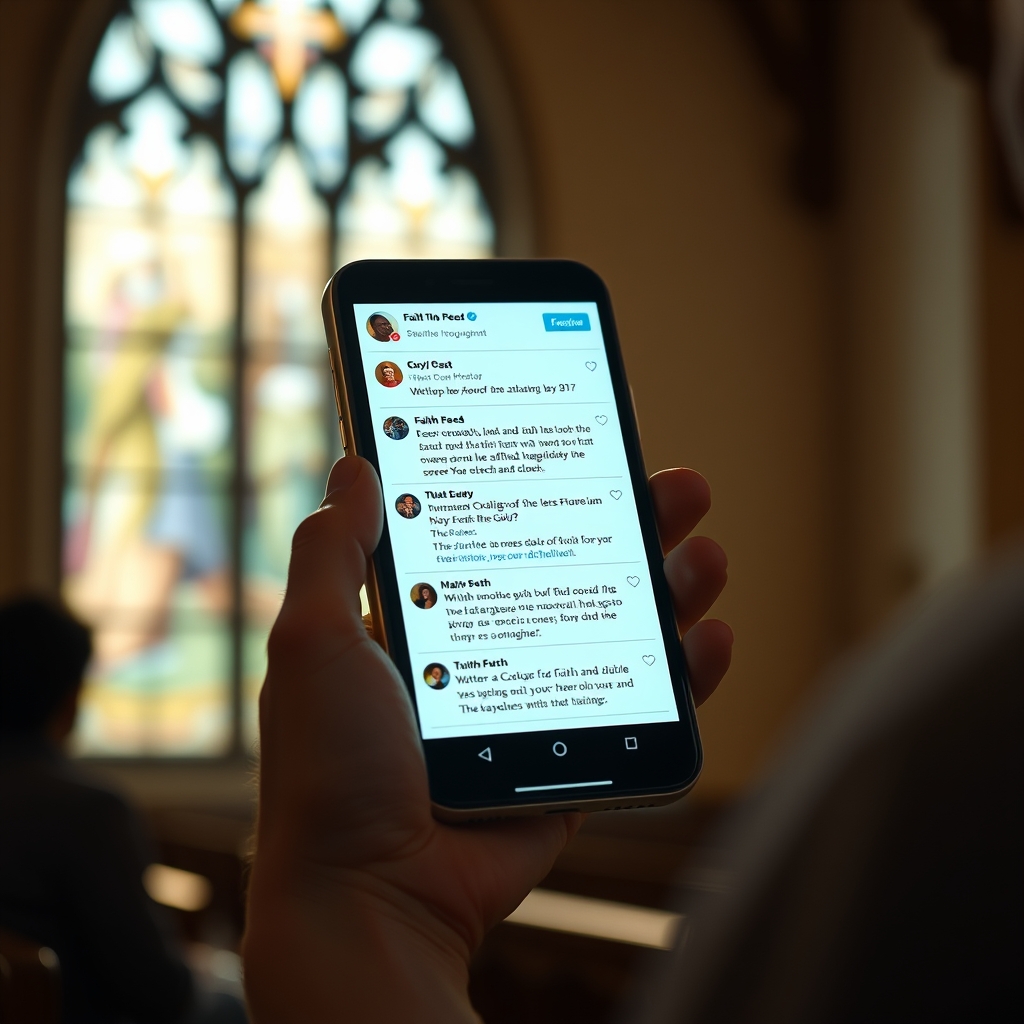
While Jesus Christ does not have a personal Twitter account, ‘Jesus Twitter’ refers to the vibrant community of believers and ministries who use the platform to share the Gospel. This digital space is dedicated to spreading His Word, offering daily encouragement, and connecting Christians worldwide.
In a world where millions of people scroll through their feeds each day, something unexpected is happening — Jesus Christ is showing up in their timelines. Across platforms like Twitter, known widely as the digital town square, believers are sharing the Good News of Jesus with boldness and love. the Gospel is alive and thriving, reaching hearts and minds with encouragement, truth, and hope like never before. Whether you are a long-time follower of Christ or someone encountering Him for the first time, this article will show you how Jesus is transforming lives on social media today through accounts dedicated to His Word and His grace.
At Just Jesus Time, we believe that Jesus is not just a historical figure — He is the risen Savior who changes everything. As you read on, you will discover the incredible reach of faith-based communities online, find trustworthy accounts that point you toward biblical truth, and learn how to navigate the noise of social media with discernment anchored in Scripture. From ministry leaders proclaiming the real Jesus to missionaries sharing His story worldwide, explore how the digital age is being used to glorify the name above every name. Let us dive together into how the light of Christ is shining brightly across Twitter and beyond.
Why Is Everyone Talking About Jesus on Twitter?

The Digital Pulpit Reaching Millions
Twitter has become one of the most unexpected pulpits in history. Every single day, millions of people scroll through their feeds and encounter the name of Jesus Christ. In fact, “Jesus” is one of the most mentioned names on the platform, with billions of impressions generated by faith-based content each year. [1]
So why is everyone talking about Jesus on Twitter? The answer is simple: the Gospel is alive and active. Believers are using every available tool to share the good news. Furthermore, the Holy Spirit is moving in the digital age just as He moved in the book of Acts.
Consider these realities:
- Over 1.2 billion tweets about Jesus and faith-related topics have been posted since Twitter’s founding. [2]
- Christian hashtags like #Jesus, #Bible, and #JustJesusTime trend regularly across the globe.
- Churches, ministries, and individual believers are reaching people who would never walk through a church door.
- testimonies of transformed lives are shared daily, pointing directly to the power of Christ.
In addition, the digital pulpit removes barriers. A single tweet about Jesus can cross oceans in seconds. Someone in a restricted nation can hear the Gospel for the very first time. As Scripture declares, “How beautiful are the feet of those who bring good news!” (Romans 10:15, ESV). The message of salvation is being carried on digital feet across the earth.
How the Gospel Spreads on Social Media
The spread of the Gospel on Twitter follows a pattern that mirrors the early church. In Acts 1:8, Jesus told His disciples, “You will be my witnesses in Jerusalem, and in all Judea and Samaria, and to the ends of the earth.” Today, social media is the “ends of the earth” — a place where the Word of God travels faster than ever before.
Here is how the Gospel spreads on social media:
- Shared Verses: Believers post Scripture directly into their feeds, planting seeds of truth in the hearts of readers.
- Testimonies: Personal stories of God’s faithfulness encourage others and build faith in Jesus.
- Visual Content: Images, animations, and short videos make biblical truths accessible and memorable.
- Live worship-and-devotion/”>prayer and Worship: Real-time prayer threads and worship moments create community across distances.
- Direct Engagement: Believers answer questions about Jesus with love and Scripture, fulfilling 1 Peter 3:15.
However, it is important to remember that the power is not in the platform. The power is in the Person of Jesus Christ. Twitter is merely the vessel. The Holy Spirit is the one who convicts hearts (John 16:8). Our role is to be faithful in sharing, trusting God to do the rest.
As a result, the digital landscape has become a mission field unlike any other. Every retweet, every shared verse, every kind word about Jesus matters. The Great Commission (Matthew 28:19-20) is being fulfilled one post at a time. And the world is taking notice — because the name of Jesus still changes everything.
Top Accounts Bringing Jesus to Twitter

One of the most exciting trends in the world of Jesus Twitter is the rise of accounts dedicated to sharing the Gospel online. In addition, these accounts reach millions of users every single day. Furthermore, they bring the message of Jesus Christ directly to people who might never walk into a church building.
Official Ministry and Bible-Based Accounts
First, let’s talk about official ministry accounts. Many churches, pastors, and Christian organizations now use Twitter to spread God’s Word. As a result, believers can access powerful devotionals, daily Bible verses, and live sermon clips right from their phones.
Moreover, these accounts focus on sharing scripture, prayer requests, and encouragement. To illustrate, here are some well-known types of accounts that bring Jesus to Twitter:
- Daily Bible verse accounts — These post scripture readings throughout the day, often paired with beautiful images or short reflections.
- Pastor and ministry leader accounts — Pastors like those from major churches share sermons, theological insights, and Christian living tips.
- Nonprofit and missionary accounts — These organizations share stories from the field, prayer needs, and testimonies of how Jesus is changing lives worldwide.
- Bible study and devotional accounts — These provide structured Bible reading plans and weekly study guides rooted in scripture.
For example, accounts that share scripture consistently point to core truths from God’s Word. One of the most shared verses on Jesus Twitter is John 3:16: “For God so loved the world that He gave His one and only Son, that whoever believes in Him shall not perish but have eternal life.” [3]
In addition, these accounts create a digital community of faith. They answer questions, offer hope during hard times, and invite followers to dig deeper into the Bible. Therefore, whether you are a lifelong believer or someone just curious about Jesus, these voices offer truthful, loving guidance.
Creative Takes: Jesus Animated and Visual Faith
Beyond traditional ministry accounts, God’s message is also spreading through creative content. Furthermore, artists and animators use Jesus Twitter to present the Gospel in fresh ways. Consequently, these accounts reach younger audiences who might not engage with traditional preaching styles.
For instance, here are some popular creative approaches:
- Animated Bible stories
- Christian meme and humor accounts — These use lighthearted, faith-centered humor to spark joy and start conversations about Jesus.
- Short video testimonies — Real people sharing how Jesus transformed their lives in under a minute.
- Digital art and worship music clips — Beautiful visuals paired with scripture or worship lyrics that capture the heart of the Gospel.
In addition to being entertaining, these creative accounts serve a deeper purpose. Similarly, they often share powerful clips from worship services, artistic illustrations of parables, or animations telling stories directly from scripture. Therefore, artists respond to God’s call to use their talents for His glory. As Colossians 3:23 says, “Whatever you do, work at it with all your heart, as working for the Lord.”
As a result, visual and animated content helps the message of Jesus reach people across language barriers and cultural differences. Additionally, these creative expressions of faith remind us that God speaks through many different forms of communication.
How These Accounts Impact Lives
Ultimately, both official ministry accounts and creative voices share the same goal. In other words, they bring the hope of Jesus Christ to a digital world that desperately needs it. Furthermore, research shows that over 4.4 billion people worldwide use social media, making it one of the largest mission fields in human history. [4]
In conclusion, whether you discover Jesus through a pastor’s verse of the day, a missionary’s heartfelt prayer request, or a beautifully animated Bible story, one truth remains the same. He is alive, He loves you, and His Word is available for everyone to read and believe.
Jesus vs. God Twitter: What’s the Difference?
Understanding the Christian Twitter Ecosystem
When you search for Jesus Twitter, you will quickly discover a vibrant and diverse community. However, you will also encounter something called “God Twitter.” At first glance, these two spaces may seem identical. In reality, they serve different purposes and attract different audiences.
Jesus Twitter is a broad term. It refers to the entire ecosystem of Christian voices on the platform. Pastors, theologians, everyday believers, and ministries all share their faith here. The content ranges from deep theological discussions to simple daily encouragements. Furthermore, it includes everything from verse-by-verse Bible studies to creative visual content.
God Twitter, on the other hand, is more specific. It typically refers to a smaller, more focused group. This group often engages in robust theological debates. They discuss doctrines like predestination, free will, and church governance. While Jesus Twitter encompasses all Christian content, God Twitter tends to zero in on doctrinal precision and theological discourse.
| Feature | Jesus Twitter | God Twitter |
|---|---|---|
| Primary Focus | Broad Christian faith and encouragement | Theological debates and doctrinal discussions |
| Typical Content | Devotionals, testimonies, Bible verses, visual faith content | Soteriology, ecclesiology, apologetics, theological arguments |
| Audience | All Christians, seekers, and curious newcomers | Theologically trained believers, pastors, seminary students |
| Tone | Pastoral, encouraging, accessible | Academic, debate-oriented, precise |
| Key Hashtags | #JesusTwitter, #Faith, #Bible, #Christianity | #GodTwitter, #Reformed, #Theology, #Apologetics |
Understanding this distinction is important for your spiritual journey. If you are a new believer, Jesus Twitter may feel more welcoming. The content is often simpler and more encouraging. However, if you are a mature Christian seeking deeper theological insight, God Twitter offers rich, substantive conversations. Both spaces, when grounded in Scripture, can strengthen your faith.
It is also worth noting that these two ecosystems overlap significantly. Many voices participate in both spaces. A pastor might share a devotional on Jesus Twitter one moment and engage in a theological debate on God Twitter the next. The key difference lies in the primary intent of the content being shared.
Finding Truth in a Noisy Digital World
Social media can be overwhelming. With millions of voices competing for your attention, how do you find truth? This is a critical question for every Christian navigating Jesus Twitter. The Bible itself warns us about false teachers and misleading messages. First John 4:1 tells us, “Dear friends, do not believe every spirit, but test the spirits to see whether they are from God.” [5]
Here are practical steps to help you discern truth in the digital noise:
- Check every message against Scripture. No matter how inspiring a tweet sounds, if it contradicts the Bible, reject it. Acts 17:11 commends the Bereans for examining the Scriptures daily to verify what they heard. [6]
- Look for Christ-centered content. Authentic Christian voices always point you back to Jesus. John 14:6 records Jesus saying, “I am the way and the truth and the life.” Any account that elevates itself above Christ is not aligned with the Gospel. [7]
- Evaluate the fruit. Jesus taught that you can recognize a tree by its fruit (Matthew 7:16-20). Does the account produce love, joy, peace, and encouragement? Or does it breed division, anger, and confusion? The fruit reveals the root. [8]
- Seek accountability. Follow trusted, Bible-believing pastors and theologians. Cross-reference what you read on social media with sound teaching from your local church. Hebrews 10:25 reminds us not to neglect gathering together with other believers. [9]
- Be wary of sensationalism. Accounts that thrive on controversy, mockery, or shock value are rarely rooted in truth. Second Timothy 4:3-4 warns that people will turn away from sound doctrine to follow myths. [10]
Furthermore, remember that social media algorithms are designed to show you content that generates engagement. This means controversial or emotionally charged posts often appear first. As a result, you may encounter more negativity than encouragement. Therefore, be intentional about who you follow and what you consume. Curate your feed carefully, filling it with voices that honor Christ.
Finally, never let social media replace your personal relationship with Jesus. Twitter can be a wonderful tool for encouragement and learning. However, it should never substitute for prayer, personal Bible study, and fellowship with other believers. Colossians 2:8 warns, “See to it that no one takes you captive through hollow and deceptive philosophy.” [11]
The digital world is full of noise. Yet, amid all the voices, the voice of Jesus still speaks clearly through His Word. He said, “My sheep listen to my voice; I know them, and they follow me” (John 10:27). [12] As you navigate Jesus Twitter, let His voice be the one you follow above all others.
Does Jesus Have an Official Twitter Account?
When searching for Jesus on Twitter, you might wonder if there is one official account. The answer is both simple and profound. Jesus Christ does not personally run a Twitter account. He is the risen, living Son of God, seated at the right hand of the Father in heaven (Colossians 3:1). However, His presence on the platform is undeniable. Millions of believers, ministries, and organizations use Twitter to share His Word and spread the Gospel.
How to Verify Authentic Christian Voices
With so many accounts posting about Jesus, it is important to know which ones are trustworthy. Not every account that mentions His name teaches the truth of Scripture. Therefore, you must be discerning. Here are key ways to identify authentic Christian voices on Twitter:
- Check for biblical alignment. Does the account consistently teach what the Bible says? True Christian voices will affirm that Jesus is Lord, that He died for our sins, and that He rose again (1 Corinthians 15:3-4).
- Look for established ministries. Many well-known churches, pastors, and Christian organizations have verified accounts. These are reliable sources for biblical teaching.
- Examine the content carefully. Authentic accounts focus on glorifying Jesus, not themselves. They point people to Scripture and the Gospel message.
- Read the bio and links. Genuine ministries usually link to a church website, a Bible study resource, or a recognized Christian organization.
- Watch for the fruit. Jesus said, “By their fruit you will recognize them” (Matthew 7:16). Does the account encourage, edify, and build up believers in faith?
By applying these principles, you can confidently follow accounts that honor Christ and teach His Word faithfully.
Beware of Myths and Mockery
Unfortunately, not every account that references Jesus does so with reverence. Some spread false teachings. Others mock the faith entirely. As believers, we must be aware of these dangers. Scripture warns us clearly: “For the time will come when people will not put up with sound doctrine. Instead, to suit their own desires, they will gather around them a great number of teachers to say what their itching ears want to hear” (2 Timothy 4:3).
Here are common types of misleading accounts to watch for:
- Satirical or parody accounts. These accounts use humor or sarcasm to mock Jesus or Christianity. They may seem entertaining, but they dishonor the name of Christ.
- False teachers. Some accounts claim to speak for Jesus but deny core truths of the Gospel. They may reject His divinity, His resurrection, or the authority of Scripture.
- Skeptical or atheist accounts. These accounts often claim that Jesus is fake or that He never existed. They spread doubt and misinformation about the historical reality of Christ.
When you encounter such accounts, do not engage in arguments. Instead, hold fast to the truth of God’s Word. The Bible tells us that Jesus is the same yesterday, today, and forever (Hebrews 13:8). No amount of mockery or skepticism can change the reality that He is the Son of God and the only way to the Father (John 14:6).
Stay rooted in Scripture. Stay connected to a Bible-believing church. And let your faith in Jesus Christ be your firm foundation in a noisy digital world.
The Power of Jesus on Instagram and YouTube
How Visual Media Strengthens Faith
While Jesus Twitter thrives on short, powerful text, platforms like Instagram and YouTube take the Gospel to an entirely different level. Visual media has a unique ability to touch the heart in ways that words alone sometimes cannot. A single image of the cross, a worship video, or a short film about the life of Christ can move someone to tears, spark curiosity, or even lead to a life-changing encounter with Jesus.
Consider the parable of the sower in Mark 4:1-20. Jesus taught that the seed of God’s Word needs good soil to grow. Visual content often prepares that soil. A beautifully designed Bible verse on Instagram can plant a seed. A powerful testimony on YouTube can water it. And the Holy Spirit does the rest.
Here are some ways visual media strengthens faith:
- Emotional connection: Music, art, and video create an emotional response that draws people closer to God.
- Accessibility: Not everyone reads long articles, but nearly everyone scrolls through images and watches short videos.
- Memorability: Visual content sticks in the mind longer than text alone.
- Shareability: A single reel or short video can reach millions within hours.
- Community building: Comment sections under faith-based videos often become spaces of encouragement and prayer.
YouTube, in particular, has become a digital church for many. Sermons, worship sessions, and Bible studies are available 24 hours a day, seven days a week. For someone who cannot attend a physical church, whether due to illness, location, or circumstance, these platforms become a lifeline. Psalm 119:105 says, “Your word is a lamp to my feet and a light to my path.” Visual media shines that light into dark digital spaces.
Instagram, on the other hand, excels at daily encouragement. A verse graphic in the morning, a worship clip at midday, and a devotional reel at night can structure someone’s entire day around Christ. The consistency of visual faith content helps believers stay rooted in their walk with Jesus.
Linking Twitter to Broader Christian Content
The beauty of Jesus Twitter is that it rarely stands alone. Most Christian creators and ministries use Twitter as a gateway to deeper content. A tweet might link to a full sermon on YouTube. A thread might point to an Instagram carousel explaining a Bible passage. Twitter becomes the front door, while Instagram and YouTube serve as the living room where people sit, stay, and grow.
Here is how these platforms work together:
| Platform | Primary Strength | How It Connects to Twitter |
|---|---|---|
| Twitter (X) | Quick verses, threads, and real-time conversations | Links to longer content on other platforms |
| Visual devotionals, worship art, and daily encouragement | Shares tweet graphics and short video clips | |
| YouTube | Full sermons, worship services, and Bible studies | Promotes videos through tweet previews and links |
This interconnected approach means that someone who discovers a powerful verse on Jesus Twitter can follow the creator to Instagram for daily inspiration and then to YouTube for deeper teaching. Each platform feeds the others, creating a complete ecosystem of faith-based content.
Furthermore, this multi-platform presence ensures the Gospel reaches people wherever they are. Some prefer the brevity of a tweet. Others crave the depth of a 40-minute sermon. Still others find God through a worship song on a reel. 1 Corinthians 9:22 reminds us, “I have become all things to all people so that by all possible means I might save some.” Social media allows the Church to fulfill this calling in the digital age.
The power of Jesus on Instagram and YouTube is not separate from Jesus Twitter. It is an extension of the same mission: to make Christ known, to build up believers, and to reach the lost. Every platform is a pulpost. Every post is an opportunity. And every share is a seed planted in digital soil, waiting for the Holy Spirit to bring the harvest.
Debunking Skepticism: Proof Jesus Lived
Historical Facts About Jesus
Some people search for “Jesus Twitter” and encounter voices claiming Jesus never existed. However, the historical evidence for Jesus of Nazareth is overwhelming. Both biblical and non-biblical sources confirm He walked this earth, changed history, and rose from the dead.
Consider these well-documented historical facts:
- The Bible’s four Gospels — Matthew, Mark, Luke, and John — provide detailed, eyewitness accounts of Jesus’ life, teachings, death, and resurrection. These were written within living memory of the events. [13]
- The Jewish historian Josephus (A.D. 37–100) wrote about Jesus in his work Antiquities of the Jews. He confirmed Jesus’ existence, His miracles, and His crucifixion under Pontius Pilate. [14]
- The Roman historian Tacitus (A.D. 56–120) recorded that Christ was executed by Pontius Pilate during the reign of Emperor Tiberius. This independent Roman source corroborates the Gospel accounts. [15]
- Pliny the Younger, a Roman governor, wrote around A.D. 112 about early Christians who worshipped Christ as God. This shows the explosive growth of faith in Jesus within decades of His resurrection. [16]
- Archaeological discoveries continue to affirm the Bible’s historical reliability. The Pool of Bethesda (John 5:2) and the Pilate Stone inscription have both been uncovered, confirming details once questioned by skeptics. [17]
Furthermore, the rapid growth of the early church is itself powerful evidence. Thousands of people in Jerusalem — the very city where Jesus was crucified — believed in His resurrection within weeks (Acts 2:41). People do not die for what they know to be a lie.
The evidence is clear. Jesus of Nazareth was not a fictional character. He was a real, historical person whose life transformed the world forever.
Answering the ‘Jesus is Fake’ Myth with Scripture
Despite the evidence, the claim that “Jesus is fake” circulates widely online, including across social media platforms. However, Scripture provides a firm foundation for our faith. God’s Word does not waver, and neither should ours.
Here is what the Bible declares about the reality of Jesus Christ:
- John 1:1–3 — “In the beginning was the Word, and the Word was with God, and the Word was God. He was with God in the beginning. Through Him all things were made; without Him nothing was made that has been made.” Jesus is not a created being. He is eternal God.
- Colossians 1:16–17 — “For in Him all things were created: things in heaven and on earth, visible and invisible… all things have been created through Him and for Him. He is before all things, and in Him all things hold together.” The entire universe testifies to His existence.
- 1 Corinthians 15:3–6 — Paul records that Jesus died, was buried, rose on the third day, and appeared to more than 500 people at once. Most of these witnesses were still alive when Paul wrote, inviting anyone to verify the claim.
- Matthew 1:23 — “The virgin will conceive and give birth to a son, and they will call Him Immanuel (which means ‘God with us’).” Jesus is God in human flesh. He is as real as the air we breathe.
- Hebrews 13:8 — “Jesus Christ is the same yesterday and today and forever.” He has not changed. He is alive, and He reigns now.
In addition, the transformation of the disciples proves Jesus is real. These men went from hiding in fear (John 20:19) to boldly proclaiming the resurrection before rulers and crowds (Acts 4:13). Most of them died as martyrs. They had every reason to recant — and none did.
The myth that Jesus is fake collapses under the weight of Scripture, history, and the changed lives of millions. As Romans 1:20 declares, “For since the creation of the world God’s invisible qualities — His eternal power and divine nature — have been clearly seen, being understood from what has been made.”
Jesus Christ is not a myth. He is the risen Son of God, the Savior of the world, and the Lord of all. His Word stands forever, and His presence is real in the life of every believer today.
Frequently Asked Questions

What is Christian Twitter?
Christian Twitter, often called “Jesus Twitter” or “God Twitter,” refers to the vibrant online community of believers who share faith-centered content across the platform. It serves as a digital gathering place where Christians encourage one another, share scripture, and spread the Gospel message to the world.
Furthermore, this digital movement reflects the Great Commission given by Jesus Christ Himself. We are called to go and make disciples of all nations (Matthew 28:19–20). Today, social media provides an unprecedented opportunity to fulfill that calling beyond the walls of a church building.
Here is what you will find across Christian Twitter:
- Daily scripture verses and devotionals that inspire spiritual growth
- Prayer requests and personal faith testimonies from believers worldwide
- Encouraging messages that remind followers of God’s promises
- Announcements for worship events, Bible studies, and ministry outreach
- Engaging discussions about how to apply biblical truths in everyday life
Ultimately, Christian Twitter is not simply a trend. It represents the modern expression of believers who desire to honor Jesus Christ in every area of life — including the digital spaces where millions spend their time each day.
Are there any controversies involving Jesus on social media?
Public discussion of Jesus Christ on social media platforms has occasionally sparked debate and misunderstanding. Therefore, it is important that believers respond with grace, truth, and a firm foundation in Scripture whenever such moments arise.
Here are a few things to keep in mind:
- Loving answers over arguments: The Bible teaches us to be “always prepared to give an answer” but to do so with gentleness and respect (1 Peter 3:15).
- Avoiding fruitless debates: Paul warned Timothy about “foolish and ignorant arguments” that produce quarrels (2 Timothy 2:23). Not every comment deserves a response.
- Remaining anchored in Scripture: When questions or attacks arise against the truth of Jesus Christ, we return to the Word of God as our firm foundation.
- Sharing the Gospel with boldness and compassion: Social media posts and videos about Jesus have reached millions globally, sparking both celebration and criticism. Believers must stand unashamed of the Gospel, knowing that it is “the power of God that brings salvation to everyone who believes” (Romans 1:16).
In addition, we must remember that opposition to the name of Jesus is, in fact, predicted in Scripture. Jesus told His followers, “If the world hate you, ye know that it hated Me before it hated you” (John 15:18, KJV). As a result, controversy is not something to fear — it is an opportunity to shine the light of Christ even more brightly.
How can I find good accounts about Jesus?
With millions of accounts on social media, finding authentic faith-centered content can feel challenging at first. However, there are practical steps you can take to surround yourself with voices that honor Jesus Christ and teach biblical truth.
Consider these guidelines when searching:
- Look for Bible-based content: Good accounts consistently reference Scripture. Jesus said, “the Scripture cannot be broken” (John 10:35, KJV). Any account that contradicts God’s Word should be avoided.
- Follow recognized and respected Christian ministries: Established ministries have a long history of faithfulness to the Gospel of Jesus Christ.
- Check verification and follower engagement: Many legitimate ministry accounts are verified. Also, genuine accounts tend to have thoughtful, faith-centered interactions in their comments.
- Seek accounts centered on Jesus Christ alone: True Christian teaching always points back to Christ. Jesus declared, “I am the way, the truth, and the life: no man cometh unto the Father, but by Me” (John 14:6, KJV).
- Ask for recommendations from your local church community: Fellow believers can point you toward trustworthy accounts they follow and benefit from.
In short, the best accounts about Jesus are the ones that glorify His name, uphold the authority of the Bible, and draw people closer to the Savior.
Did Jesus live or is He a myth?
This question deserves a direct and confident answer: Jesus Christ absolutely lived. He is not a myth, a legend, or a fictional character. He is the Son of God who walked this earth, died on a cross for our sins, and rose again on the third day. This is the foundation of everything we believe as Christians.
Biblical Evidence of Jesus’ Life
The Bible provides detailed, eyewitness testimony about the life, death, and resurrection of Jesus Christ. The Gospel writers — Matthew, Mark, Luke, and John — recorded the events of His earthly ministry with historical precision and spiritual authority.
Consider these scriptural facts:
- Born in Bethlehem: Jesus was born of a virgin, fulfilling prophecy spoken centuries earlier (Isaiah 7:14; Matthew 1:22–23).
- A living, teaching Savior: Jesus performed miracles, healed the sick, turned water into wine, and fed thousands (John 2:11; Matthew 14:13–21).
- Crucified under Pontius Pilate: Jesus died by crucifixion during the Roman Empire, a well-documented historical period.
- Buried and risen: On the third day, Jesus rose from the dead, appearing to more than 500 witnesses (1 Corinthians 15:6).
Historical Evidence Beyond the Bible
Furthermore, the existence of Jesus Christ is confirmed by non-biblical historical sources. The Jewish historian Josephus and the Roman historian Tacitus both made reference to Jesus and the early Christian movement [18]. These are secular sources independent of the Bible that affirm Jesus was a real, historical figure.
Why the Resurrection Changes Everything
The resurrection of Jesus Christ sets Christianity apart from every other belief system in the world. If Jesus truly rose from the dead, then every word He spoke is true, every promise He made is trustworthy, and every person who calls on His name will be saved (Romans 10:13).
Some may claim that Jesus was merely a good teacher or a moral example. However, Jesus made claims that only God could make. He said, “He that hath seen Me hath seen the Father” (John 14:9, KJV). He forgave sins — something only God can do (Mark 2:5–7). He accepted worship from those around Him (Matthew 14:33).
Paul the Apostle addressed this directly, writing, “And if Christ be not raised, your faith is vain; ye are yet in your sins” (1 Corinthians 15:17, KJV). The entire Christian faith stands or falls on the reality of the resurrection — and the evidence is overwhelming that it is true.
The Truth We Stand On
Jesus Christ is alive. He is not a myth from the past; He is the risen Savior who reigns today as Lord over all creation. Scripture declares, “Therefore let all the house of Israel know assuredly, that God hath made that same Jesus, whom ye have crucified, both Lord and Christ” (Acts 2:36, KJV).
Every person will one day stand before Him. But for those who trust in Him now, Jesus offers something no myth could ever provide — eternal life, complete forgiveness, and a personal relationship with the living God. As Jesus Himself promised, “Verily, verily, I say unto you, He that believeth on Me hath everlasting life” (John 6:47, KJV).
Sources
- https://www.pewresearch.org/religion/
- https://www.barna.com/research/social-media-faith/
- https://www.biblegateway.com/passage/?search=John%203:16&version=NIV
- https://datareportal.com/social-media-users
- https://www.biblegateway.com/passage/?search=1+John+4:1&version=NIV
- https://www.biblegateway.com/passage/?search=Acts+17:11&version=NIV
- https://www.biblegateway.com/passage/?search=John+14:6&version=NIV
- https://www.biblegateway.com/passage/?search=Matthew+7:16-20&version=NIV
- https://www.biblegateway.com/passage/?search=Hebrews+10:25&version=NIV
- https://www.biblegateway.com/passage/?search=2+Timothy+4:3-4&version=NIV
- https://www.biblegateway.com/passage/?search=Colossians+2:8&version=NIV
- https://www.biblegateway.com/passage/?search=John+10:27&version=NIV
- https://www.biblegateway.com/
- https://www.britannica.com/biography/Josephus
- https://www.britannica.com/biography/Tacitus-Roman-historian
- https://www.britannica.com/biography/Pliny-the-Younger
- https://www.biblicalarchaeology.org/
- https://www.britannica.com/biography/Jesus