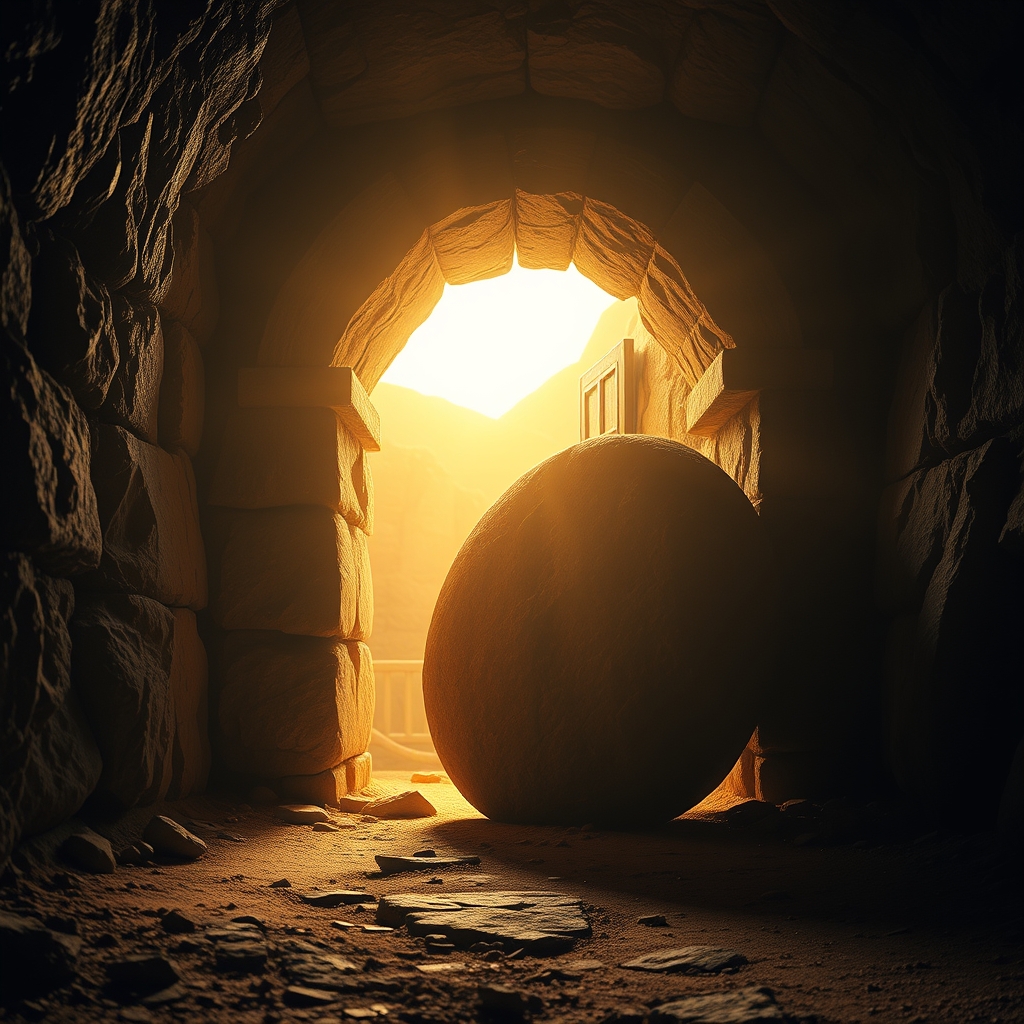
No credible archaeological evidence supports claims of a lost tomb contradicting the resurrection. Scripture affirms Jesus rose victorious over death, rendering the concept of a lost tomb ineffective against His divine authority.
For centuries, the world has been captivated by sensational claims and documentaries suggesting that the “lost tomb of Jesus” has been discovered, challenging the very heart of Christian faith. These theories propose that Jesus was merely a man, His resurrection a myth, and His tomb somehow hidden away, waiting to be found. But what does the Bible actually say? In a culture saturated with doubt and speculation, it is vital for believers to stand firm on the unshakeable truth of Scripture. This article explores the biblical reality of the resurrection and why faith in Jesus Christ remains the only path to eternal life.
Join us as we dive deep into the scriptural evidence for the empty tomb, the historical reality of the resurrection, and the enduring hope we have in Him. Whether you are a new believer seeking answers or a mature Christian desiring to strengthen your faith, this exploration of the “lost tomb of Jesus” claims will equip you with the truth. Prepare to discover why the Bible reveals that Jesus is not lost, but is alive, and why your faith in Him is the cornerstone of your salvation.
What Does the Bible Say About the “Lost Tomb” of Jesus?
Understanding the Documentaries
In 2007, a documentary titled The Lost Tomb of Jesus made bold claims about discovering the burial site of Jesus. Furthermore, it suggested that His remains were found in a tomb in Talpiot, Jerusalem. However, these claims have been widely disputed by archaeologists and biblical scholars alike. As Christians, we must approach such claims with discernment and always turn to Scripture as our ultimate authority.
The documentary proposed that the ossuaries found in the tomb belonged to Jesus and His family. In addition, it claimed that Mary Magdalene was His wife. Yet, these assertions directly contradict the biblical account. Scripture clearly states that Jesus was buried in a tomb provided by Joseph of Arimathea (Matthew 27:57-60). Moreover, the Bible affirms that Jesus rose from the dead on the third day (1 Corinthians 15:4). Therefore, any claim that His remains exist today denies the very heart of the Gospel.
It is important to note that many archaeologists have rejected the documentary’s findings. For example, scholars from various universities have stated that the names on the ossuaries were common in that era. [1] As a result, the evidence does not support the documentary’s conclusions.
Faith in the Resurrection
The resurrection of Jesus Christ is not merely a historical debate. It is the cornerstone of our faith. Scripture declares, “If Christ has not been raised, your faith is futile” (1 Corinthians 15:17). Therefore, claims about a “lost tomb” challenge the very foundation of Christianity. However, we can stand firm because the Bible provides clear testimony.
Consider the following biblical truths about the resurrection:
- Jesus predicted His own death and resurrection (Matthew 16:21).
- He appeared to over 500 people after rising (1 Corinthians 15:6).
- The tomb was found empty on the third day (Luke 24:3).
- His disciples were transformed from fearful to bold witnesses (Acts 4:13).
These accounts are not myths. They are historical records affirmed by eyewitnesses. Furthermore, the disciples suffered and died for their testimony. People do not die for a lie they know to be false. As a result, their willingness to endure persecution confirms the truth of the resurrection.
In addition, the resurrection power of Jesus is available to all who believe. Romans 10:9 states, “If you declare with your mouth, ‘Jesus is Lord,’ and believe in your heart that God raised Him from the dead, you will be saved.” Therefore, our faith rests not on archaeological theories but on the living Word of God.
While documentaries may spark curiosity, they often lack credible evidence. In contrast, the Bible has stood the test of time for thousands of years. It remains the most reliable source of truth about Jesus Christ. As believers, we do not need to fear such claims. Instead, we can confidently proclaim that Jesus is alive.
Ultimately, the question is not about a physical tomb. It is about a living Savior. Jesus said, “I am the resurrection and the life” (John 11:25). Therefore, let us hold fast to His promises. Let us share the hope of the resurrection with a world in need. And let us never waver in our faith, for Christ has conquered death once and for all.
Has the actual tomb of Jesus been found?
The short answer is no. The actual tomb of Jesus has not been found. Despite sensational claims from documentaries like The Lost Tomb of Jesus, there is no credible archaeological evidence that contradicts the biblical account of His resurrection. The empty tomb of Jesus remains one of the most powerful proofs of His victory over death.
What the Evidence Actually Shows
Archaeologists have studied numerous tombs in Jerusalem. However, none have been identified as the burial place of Jesus Christ. The Bible clearly states that Jesus was buried in a specific tomb owned by Joseph of Arimathea. Furthermore, the tomb was found empty on the third day, just as the Gospels record.
In contrast, claims about a “lost tomb” rely on circumstantial evidence. They often point to names found on ancient ossuaries. Yet, names like “Jesus son of Joseph,” “Mary,” and “Joseph” were extremely common in first-century Judea. Therefore, finding these names together does not prove a family connection to Jesus of Nazareth.
The Empty Tomb: A Cornerstone of Faith
The empty tomb is not just an archaeological question. It is the foundation of our Christian hope. Scripture declares that Jesus rose from the dead. As the angel told the women at the tomb:
“He is not here; he has risen, just as he said. Come and see the place where he lay.” — Matthew 28:6 (NIV)
This truth changes everything. If the tomb were found, the resurrection would be a lie. However, history and faith testify otherwise. The disciples were willing to die for what they saw. They encountered the risen Lord. Their transformed lives confirm that Jesus conquered the grave.
Why This Matters for Your Faith
When you hear claims about a “lost tomb,” remember this: our faith does not rest on hidden artifacts. It rests on the living Word of God. Jesus said:
“I am the resurrection and the life. The one who believes in me will live, even though they die.” — John 11:25 (NIV)
As believers, we do not search for a tomb. We worship a Savior who is alive. The empty grave stands as eternal proof that death has been defeated. No discovery can change that glorious truth.
Hold fast to the promise of the resurrection. Let the world’s claims fade in the light of Christ’s victory. He is risen, and because of Him, we have hope beyond the grave.
Frequently Asked Questions

What Is the Lost Tomb of Jesus About?
The “Lost Tomb of Jesus” refers to a controversial documentary and book released in 2007. The filmmakers claimed to have discovered the family tomb of Jesus in Talpiot, a suburb of Jerusalem. They argued that ossuaries (bone boxes) found in this tomb bore names like “Jesus son of Joseph,” “Mary,” and “Joseph.” As a result, they suggested that Jesus was never resurrected and that His body was buried there like any ordinary person.
However, this claim has been widely rejected by archaeologists, biblical scholars, and Christians around the world. The names found on the ossuaries were extremely common in first-century Judea. In fact, the name “Jesus” appeared on numerous ossuaries from that era. Furthermore, there is no credible evidence linking this specific tomb to Jesus of Nazareth.
Most importantly, the claim contradicts the clear testimony of Scripture. The Bible declares that Jesus rose from the dead on the third day (1 Corinthians 15:4). His tomb was found empty by His followers (Luke 24:1-6). Over 500 witnesses saw Him alive after His resurrection (1 Corinthians 15:6). The “lost tomb” theory cannot stand against the overwhelming historical and biblical evidence for the resurrection.
As believers, we rest our faith not on archaeological speculation but on the living Word of God. Jesus said, “I am the resurrection and the life. The one who believes in me will live, even though they die” (John 11:25).
Why Did Jesus Refuse Mary to Touch Him?
After His resurrection, Jesus appeared to Mary Magdalene near the empty tomb. When she recognized Him, she likely reached out to embrace Him. Jesus said to her, “Do not hold on to me, for I have not yet ascended to the Father” (John 20:17). This moment has raised questions for many believers over the centuries.
Jesus was not rejecting Mary’s love or devotion. Instead, He was teaching her an important truth about His new resurrected body and His mission. He was telling her that things had changed. He was no longer simply her earthly teacher. He was now the risen Lord who was about to ascend to the Father.
There are several key reasons Jesus gave this instruction:
- His mission was not yet complete. Jesus needed to ascend to the Father to complete the work of redemption. He told Mary, “Go instead to my brothers and tell them, ‘I am ascending to my Father and your Father, to my God and your God'” (John 20:17).
- He was establishing a new relationship. Believers would no longer relate to Jesus in a purely physical way. Through the Holy Spirit, He would be present with all believers everywhere (John 14:16-17).
- He wanted Mary to share the news first. Jesus sent Mary as the first messenger of the resurrection. She became the first person to announce that Christ had risen (John 20:18).
Shortly after this encounter, Jesus did allow others to touch Him. He invited Thomas to touch His wounds (John 20:27). He also ate fish with His disciples to prove He was physically risen (Luke 24:42-43). Therefore, the instruction to Mary was specific to that moment and that purpose.
This passage reminds us that the resurrection changed everything. Jesus is alive, and through faith and the Holy Spirit, we have a living relationship with Him today.
Do We Have Any of Jesus’ DNA?
No, there is no verified DNA from Jesus Christ. Despite various claims made in books, documentaries, and online articles, no scientific laboratory has ever confirmed the discovery of Jesus’ genetic material. Any such claim should be treated with extreme skepticism.
Some have pointed to relics such as the Shroud of Turin or fragments of the cross as potential sources of DNA. However, none of these claims have been scientifically verified. The Shroud of Turin, for example, has been the subject of intense debate. Carbon dating tests have produced conflicting results, and the Catholic Church itself has never officially declared it authentic. [2]
Furthermore, even if physical remains were discovered, there would be no reliable way to prove they belonged to Jesus of Nazareth. Without a verified reference sample, DNA testing cannot confirm identity. The claims made by the “Lost Tomb of Jesus” documentary regarding DNA from the Talpiot tomb were also widely criticized by geneticists and have not been accepted by the scientific community. [3]
As Christians, we do not need DNA evidence to confirm our faith. The resurrection of Jesus is supported by:
- The empty tomb. Multiple witnesses confirmed that the tomb was empty on the third day (Luke 24:1-3).
- Eyewitness testimony. Over 500 people saw the risen Christ (1 Corinthians 15:6).
- The transformation of the disciples. Cowardly men became bold proclaimers of the Gospel, many dying as martyrs for their testimony.
- The existence of the Church. The rapid growth of Christianity in the first century is itself powerful evidence of the resurrection.
- The testimony of Scripture. The Bible is God’s inspired and authoritative Word (2 Timothy 3:16).
Our faith rests on the unshakable foundation of God’s Word and the living presence of Jesus Christ in our hearts. As the writer of Hebrews declared, “Now faith is confidence in what we hope for and assurance about what we do not see” (Hebrews 11:1). Jesus is risen, He is alive, and He is Lord.