
At the Last Supper, Apostle Peter boldly declared he would never deny Jesus, yet Jesus lovingly foretold Peter’s three denials before the rooster crowed (Luke 22:34). Despite Peter’s failure, Jesus interceded for him and later restored him, demonstrating that Christ’s grace is greater than our weaknesses (Luke 22:32; John 21:15-17).
Of all the moments captured in Scripture, few are as intimate, powerful, and deeply revealing as the Last Supper. In that upper room, Jesus gathered His closest disciples around a simple meal of bread and wine, and in doing so, He unveiled the very heart of the Gospel — His body broken, His blood poured out for the forgiveness of sins. Among those seated at that table was Apostle Peter, a man whose passionate love for Jesus would be tested in the hours that followed. The story of Apostle Peter and the Last Supper is not just a historical account; it is a window into the unfailing love of Christ, the frailty of human devotion, and the breathtaking grace that meets us even in our greatest failures.
In this article, we will walk through what the Bible reveals about Peter’s role at that sacred meal — from his bold declaration of loyalty to the devastating prophecy of his denial, and ultimately to the restoration that Jesus had planned all along. Whether you are a new believer seeking to understand the foundations of your faith or a mature Christian longing to go deeper into the truths of Scripture, this exploration of Peter’s experience at the Last Supper will remind you of a profound and comforting reality: Jesus does not abandon us at our weakest moment. He intercedes for us, He restores us, and His love for us never wavers. Let us open God’s Word together and discover what the Last Supper teaches us about the heart of Christ and the hope we have in Him.
What Was the Last Supper and Why Does It Matter?
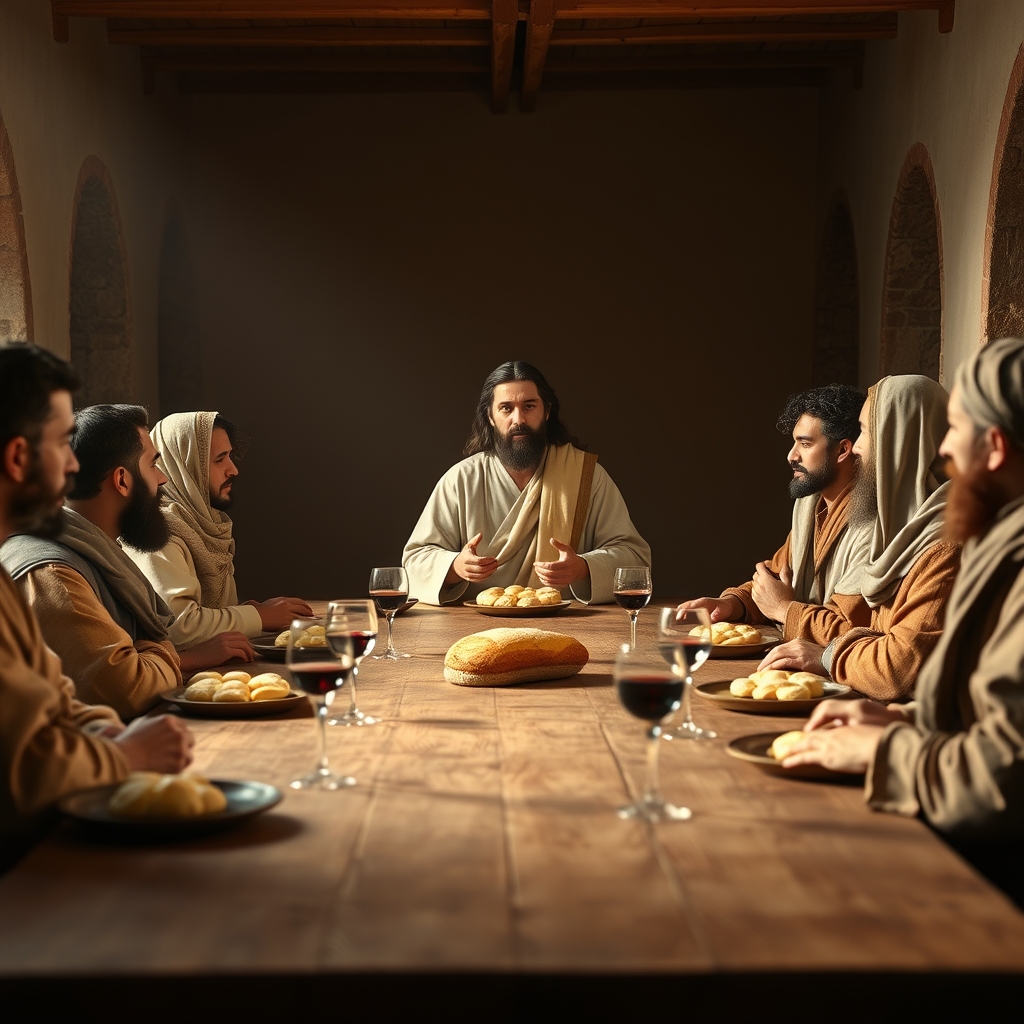
The Biblical Account of the Last Supper
The Last Supper stands as one of the most significant events in all of Scripture. It was the final meal Jesus shared with His twelve disciples before His crucifixion. The account is recorded in all three Synoptic Gospels — Matthew 26:17–30, Mark 14:12–26, and Luke 22:7–38 — as well as referenced by the Apostle Paul in 1 Corinthians 11:23–26. Each Gospel writer provides unique details, yet together they paint a unified and powerful picture of that sacred evening.
On the first day of the Feast of Unleavened Bread, Jesus sent Peter and John ahead to prepare the Passover meal. When evening came, Jesus reclined at the table with the twelve. During the meal, He made a startling announcement: one of them would betray Him. This revelation deeply troubled the disciples. Each one began asking, “Surely not I, Lord?” (Matthew 26:22, NIV). Jesus responded that the betrayer was the one who would dip bread into the bowl with Him, and He solemnly declared, “Woe to that man who betrays the Son of Man! It would be better for him if he had not been born” (Mark 14:21, NIV).
Furthermore, during this meal, Jesus instituted what we now call the Lord’s Supper, or Communion. He took bread, gave thanks, broke it, and said, “This is my body given for you; do this in remembrance of me” (Luke 22:19, NIV). Likewise, He took the cup of wine and declared, “This cup is the new covenant in my blood, which is poured out for you” (Luke 22:20, NIV). These words carry eternal significance for every believer today.
The Apostle Peter was present at this table. His role that evening — marked by bold declarations, humble foot-washing, and a painful prophecy of denial — reveals much about the human heart and the grace of Christ. Understanding Peter’s experience at the Last Supper helps us grasp the depth of Jesus’ love and the reality of our own need for His forgiveness.
Jesus’ Purpose in Gathering His Disciples
Jesus did not gather His disciples for a casual meal. Every detail of the Last Supper carried divine purpose. He knew that His hour had come. He knew betrayal was imminent. Yet He chose to sit at a table with the very men who would abandon, deny, and scatter from Him.
First, Jesus gathered them to fulfill the Passover. The Passover meal commemorated God’s deliverance of Israel from slavery in Egypt. Jesus, however, transformed its meaning. He revealed that He Himself was the ultimate Passover Lamb. As John the Baptist had declared, “Look, the Lamb of God, who takes away the sin of the world!” (John 1:29, NIV). The blood on the doorposts in Egypt foreshadowed the blood Jesus would shed on the cross.
Second, Jesus gathered them to establish a new covenant. The old covenant, written on stone tablets, was fulfilled in Christ. The new covenant would be written on hearts through the Holy Spirit. As the writer of Hebrews explains, “He has made the first covenant obsolete” (Hebrews 8:13, NIV). This new covenant offered forgiveness, reconciliation, and eternal life to all who believe.
Third, Jesus gathered them to teach final lessons of love and service. He washed their feet — a task reserved for the lowest servant. When Peter objected, Jesus replied, “Unless I wash you, you have no part with me” (John 13:8, NIV). This act demonstrated that true greatness in the Kingdom of God is found in humble service, not in power or position.
Finally, Jesus gathered them to intercede for them. He told Peter, “I have prayed for you, Simon, that your faith may not fail” (Luke 22:32, NIV). Even knowing Peter would deny Him three times, Jesus prayed for his restoration. This reveals the heart of our Savior — He does not abandon us in our weakest moments. He prays for us, and He restores us.
The Last Supper, therefore, was far more than a farewell dinner. It was the moment Jesus sealed the new covenant, revealed His sacrificial mission, and demonstrated the depth of His love. For every believer today, it remains a powerful reminder that Jesus’ body was broken and His blood was shed — for you, for me, and for all who call upon His name.
What Role Did Apostle Peter Play at the Last Supper?

Peter’s Declaration of Loyalty to Jesus
Among all the apostles, Peter often spoke first and felt deeply. At the Last Supper, this was especially true. When Jesus told the disciples that one of them would betray Him, the room fell into stunned silence. Yet Peter was the first to respond with boldness and emotion.
In Matthew 26:33, Peter declared, “Even if all fall away on account of you, I never will.” This statement reveals Peter’s passionate heart. He genuinely believed he would stand by Jesus no matter what. His loyalty was sincere, even if his understanding was incomplete.
Furthermore, in John 13:37, Peter went even further, saying, “Lord, why can’t I follow you now? I will lay down my life for you.” These words were not empty. Peter truly loved Jesus. However, he did not yet understand the depth of what lay ahead that night.
Peter’s declaration teaches us an important lesson. Our hearts may be sincere, but our human strength is limited. Only through Christ can we remain faithful in every trial.
Jesus Washes Peter’s Feet
One of the most powerful moments at the Last Supper was when Jesus washed His disciples’ feet. This act shocked everyone at the table. In the ancient world, washing feet was the job of the lowest servant. Yet the Son of God knelt before His own followers.
When Jesus came to Peter, the apostle was deeply uncomfortable. In John 13:6-8, Peter asked, “Lord, are you going to wash my feet?” Jesus replied that Peter did not understand now but would understand later. Peter then protested strongly, saying, “You shall never wash my feet.”
However, Jesus gave Peter a profound answer. He said, “Unless I wash you, you have no part with me” (John 13:8). This statement carried deep spiritual meaning. Jesus was teaching that we need His cleansing to have true fellowship with Him.
As a result, Peter’s heart shifted from protest to surrender. He then asked Jesus to wash not only his feet but his hands and head as well. Jesus explained that those who are bathed need only to have their feet washed, meaning that believers are fully cleansed through His work.
This moment reveals several truths about Jesus and Peter:
- Jesus humbled Himself to serve those He loved, setting an example for all believers.
- Peter struggled with pride, not wanting his Lord to serve him in such a lowly way.
- Jesus offers spiritual cleansing that goes far beyond physical washing.
- We must receive what Jesus offers, even when it challenges our pride or expectations.
Jesus washing Peter’s feet shows us that true greatness in the Kingdom of God is found in humble service. As Jesus said in John 13:15, “I have set you an example that you should do as I have done for you.”
Jesus Foretells Peter’s Denial
Perhaps the most sobering moment for Peter at the Last Supper was Jesus’ prediction of his denial. Jesus told Peter, “Before the rooster crows, you will disown me three times” (Matthew 26:34). This prophecy must have been devastating to hear.
Peter could not believe it. He insisted he would never deny Jesus, even if it meant death. Yet Jesus knew Peter’s heart better than Peter knew himself. The Lord saw the fear that would overtake Peter in the hours ahead.
However, Jesus did not speak this prophecy to condemn Peter. He spoke it with love and purpose. In Luke 22:32, Jesus said, “I have prayed for you, Simon, that your faith may not fail. And when you have turned back, strengthen your brothers.” This reveals the heart of our Savior.
Jesus knew Peter would fail. Yet He also knew Peter would be restored. Furthermore, He knew Peter’s failure would become a testimony of God’s grace and power. Peter’s story is not a story of permanent defeat. It is a story of redemption.
Here is what we learn from Jesus foretelling Peter’s denial:
- Jesus knows our weaknesses before we even face them, yet He does not abandon us.
- Self-confidence is dangerous when it replaces dependence on Christ.
- Jesus intercedes for His own, praying that our faith will endure through trials.
- Failure is not final when we have a Savior who restores the brokenhearted.
Peter’s experience at the Last Supper reminds us that Jesus sees everything, knows everything, and still loves us completely. He does not wait for us to be perfect before He calls us His own. Instead, He walks with us through our failures and brings us back to Himself.
As we reflect on Peter’s role at the Last Supper, we see a man who was deeply loved by Jesus. Peter was bold yet flawed. He was passionate yet weak in the moment of testing. Most importantly, he was a man who experienced the transforming grace of Jesus Christ. And that same grace is available to every one of us today.
Why Did Jesus Love Peter So Much?
Peter’s Passionate Heart for Christ
Among all the twelve apostles, Peter stood out. He was often the first to speak. He was the first to step out of the boat onto the waves. He was the first to declare Jesus as the Christ, the Son of the living God. Jesus saw in Peter a heart that burned with genuine love and devotion, even when that passion was imperfect.
At the Last Supper, Peter’s loyalty was on full display. When Jesus began to wash the disciples’ feet, Peter initially refused. “You shall never wash my feet,” he exclaimed (John 13:8). Yet when Jesus explained the spiritual meaning behind the act, Peter’s response was immediate and wholehearted. “Not just my feet but also my hands and my head!” (John 13:9). This was Peter’s nature — all in, no hesitation.
Jesus also foretold that Peter would deny Him three times before the rooster crowed. Peter’s reaction was passionate. “Lord, I am ready to go with you both to prison and to death!” (Luke 22:33). Jesus did not rebuke Peter’s zeal. Instead, He looked beyond the words to the heart behind them.
Peter’s passionate heart was not flawless. Yet it was real. And that authenticity drew Jesus’ love and attention throughout their time together.
Jesus Sees Our Potential, Not Just Our Failures
One of the most beautiful truths revealed at the Last Supper is how Jesus viewed Peter. He knew Peter would deny Him three times. He knew Peter’s weakness. Yet Jesus did not reject him. Instead, Jesus prayed for him.
“Simon, Simon, behold, Satan demanded to have you, that he might sift you like wheat, but I have prayed for you that your faith may not fail” (Luke 22:31-32). These words reveal the heart of our Savior. Jesus does not abandon us in our weakest moments. He intercedes for us even before we fall.
Furthermore, Jesus gave Peter a mission after his restoration. “When you have turned again, strengthen your brothers” (Luke 22:32). Jesus saw not just the denial that was coming, but the powerful ministry that would follow. He saw the Peter who would preach at Pentecost. He saw the Peter who would lead the early church. He saw the Peter who would ultimately lay down his life for the Gospel.
This is the grace that Jesus offers to every believer. He does not define us by our worst moments. He sees who we can become through His transforming power.
Consider how Jesus views us today:
- He knows our weaknesses — yet He does not abandon us (Hebrews 4:15-16)
- He intercedes for us — even before we ask (Romans 8:34)
- He sees our future — not just our present failures (Philippians 1:6)
- He calls us by name — just as He called Peter (John 10:3)
- He restores us — after we repent and return (John 21:15-17)
The story of Peter at the Last Supper is ultimately a story of Jesus’ unfailing love. It reminds us that our Savior is not waiting for us to be perfect before He loves us. He loves us now. He sees the person He is shaping us to be. And through His grace, even our greatest failures can become the foundation for our greatest service to Him.
If you have ever felt like Peter — passionate yet flawed, devoted yet failing — take heart. Jesus loves you with the same steadfast love He showed to Peter. He sees your potential. He is praying for you. And He is not finished with you yet.
What Sin Did Peter Struggle With?
`html
Peter’s Impulsiveness and Pride
Peter was one of Jesus’ most devoted followers. However, he had a recurring struggle that surfaced again and again throughout his walk with Christ. That struggle was his impulsiveness and pride. Peter often spoke before he thought. He acted on emotion rather than wisdom.
At the Last Supper, Jesus told His disciples that one of them would betray Him. Peter immediately declared, “Lord, I am ready to go with you both to prison and to death” (Luke 22:33, ESV). Peter meant every word. Yet he did not yet understand the weakness of his own heart.
Jesus responded with a sobering prophecy. He told Peter that before the rooster crowed that night, Peter would deny knowing Him three times (Luke 22:34). Peter’s pride would not allow him to accept this warning. He was confident in his own loyalty. As a result, he was unprepared for the trial ahead.
This pattern of impulsive behavior appeared earlier as well. When Jesus walked on water, Peter stepped out of the boat in faith (Matthew 14:29). Yet moments later, he began to sink when he focused on the wind and waves. Peter’s heart was passionate, but his flesh was weak.
Furthermore, when Jesus began to speak of His coming suffering, Peter took Him aside and rebuked Him (Matthew 16:22). Jesus responded sharply, “Get behind me, Satan! You are a hindrance to me” (Matthew 16:23, ESV). Peter’s good intentions were rooted in human thinking, not God’s plan.
Peter’s pride was not arrogance in the traditional sense. It was self-reliance. He trusted his own courage and devotion. He believed he could stand on his own strength. This is a temptation every believer must guard against.
The Denial of Christ and Peter’s Repentance
Jesus’ prophecy at the Last Supper came true that very night. When Jesus was arrested, Peter followed at a distance. As he sat by a fire in the courtyard, a servant girl recognized him. She said, “This man was with him” (Luke 22:56, ESV).
Peter denied it. Not once, not twice, but three times he claimed he did not know Jesus (Luke 22:57-60). Each denial grew more desperate. The rooster crowed, and Peter remembered Jesus’ words. Scripture tells us that “the Lord turned and looked at Peter” (Luke 22:61, ESV).
That single look from Jesus broke Peter’s heart. He went out and wept bitterly (Luke 22:62). This was not mere regret. This was godly sorrow that leads to true repentance (2 Corinthians 7:10).
Peter’s denial was a devastating failure. Yet it was not the end of his story. After His resurrection, Jesus sought Peter out specifically. He asked Peter three times, “Do you love me?” (John 21:15-17, ESV). Each question healed one of Peter’s three denials.
Jesus did not reject Peter because of his sin. Instead, He restored him. He commissioned Peter to feed His sheep. This is the heart of the Gospel. Jesus does not cast us away when we fail. He calls us back to Himself.
Peter’s experience teaches us several vital truths:
- Self-confidence is dangerous. We must depend on the Holy Spirit, not our own strength.
- Failure is not final. God’s grace is greater than our worst sin.
- Repentance leads to restoration. When we turn back to Jesus, He meets us with love.
- Jesus intercedes for us. Before Peter fell, Jesus prayed for him (Luke 22:32).
Peter went on to become a bold preacher of the Gospel. He stood before thousands at Pentecost and proclaimed the risen Christ (Acts 2:14-41). His past failure did not define him. God’s grace transformed him.
If you have failed Jesus, take heart. Peter’s story proves that no sin is beyond the reach of God’s mercy. Come back to Him today. He is waiting with open arms, just as He waited for Peter.
`
Who Was the Only Disciple That Was Not Killed?
The Apostle John’s Unique Fate
Among the twelve apostles, the Apostle John holds a unique place in Scripture and in church history. He was the only one who was not martyred for his faith. This is a remarkable distinction, especially when we consider the suffering endured by the other disciples.
John was the son of Zebedee and the brother of James. Jesus called them “Sons of Thunder” (Mark 3:17). John was part of Jesus’ inner circle, along with Peter and James. He was present at the Last Supper, leaning close to Jesus (John 13:23). He was also the only apostle who stood at the foot of the cross (John 19:26).
Church tradition tells us that John lived to an old age. He was exiled to the island of Patmos, where he received the visions recorded in the book of Revelation (Revelation 1:9). Unlike Peter, who tradition says was crucified upside down, or James, who was beheaded, John died of natural causes. This was not by accident. It was part of God’s sovereign plan.
John’s long life allowed him to write five books of the New Testament:
- The Gospel of John
- 1 John
- 2 John
- 3 John
- Revelation
Through these writings, John’s testimony has reached billions of people across two thousand years. His unique fate served a greater purpose in God’s redemptive plan.
God’s Sovereign Plan for Each Disciple
Every apostle’s life and death were under God’s sovereign control. Some were martyred early. Others lived longer to serve the early church. Each path was ordained by the Lord.
Consider the varied fates of the apostles:
| Apostle | Traditional Fate |
|---|---|
| Peter | Crucified upside down in Rome |
| Andrew | Crucified on an X-shaped cross |
| James (son of Zebedee) | Beheaded by Herod (Acts 12:2) |
| Thomas | Speared to death in India |
| John | Died of natural causes in Ephesus |
God does not treat all His servants the same way. He knows what each person needs. He knows what each mission requires. As Jesus told Peter about John, “If I want him to remain until I come, what is that to you?” (John 21:22).
This reminds us of an important truth. We must not compare our journey to someone else’s. God’s plan for your life is unique. His timing is perfect. His purposes cannot be thwarted.
Furthermore, the martyrdom of the apostles stands as powerful evidence for the truth of the Gospel. These men had every reason to recant. They had seen Jesus die. Yet they chose to die rather than deny Him. Why? Because they had seen the risen Christ. Their willingness to suffer and die confirms the reality of the resurrection.
As the Apostle Paul wrote, “If Christ has not been raised, your faith is futile” (1 Corinthians 15:17). But Christ has been raised. The apostles’ lives and deaths prove it.
Whether God calls us to a long life of service or a short life of sacrifice, our response should be the same. We must trust Him completely. We must follow Jesus wholeheartedly. After all, He is the same Lord who walked with Peter at the Last Supper, who restored him after his denial, and who has a perfect plan for each one of His children.
Who Is the 13th Disciple of Jesus?
Understanding the Twelve Apostles
When we think about Apostle Peter and the Last Supper, we often picture Jesus gathered with His twelve disciples around the table. But have you ever wondered about the number twelve? Why twelve specifically? The answer goes deep into God’s perfect plan.
Jesus chose twelve apostles to represent the twelve tribes of Israel. This was not a random choice. It was a deliberate act that pointed to God’s promise of restoration. The twelve apostles were:
- Simon Peter
- Andrew
- James (son of Zebedee)
- John
- Philip
- Bartholomew
- Matthew
- Thomas
- James (son of Alphaeus)
- Thaddaeus
- Simon the Zealot
- Judas Iscariot
These twelve men walked with Jesus during His earthly ministry. They witnessed His miracles. They heard His teachings. They were present at the Last Supper. However, one of them would betray our Lord.
Judas Iscariot’s betrayal fulfilled Scripture. After Jesus ascended to heaven, the apostles recognized they needed to restore the number to twelve. This is where the story of the so-called “13th disciple” begins.
Matthias Chosen to Replace Judas
After Jesus ascended, Peter stood up among the believers. He addressed about 120 followers gathered together. Peter quoted from Psalm 69 and Psalm 109, declaring that Judas’s position needed to be filled (Acts 1:15-20).
The requirements for replacing Judas were specific. The new apostle needed to have:
- Accompanied the disciples throughout Jesus’ entire ministry
- Been a witness of Jesus’ resurrection
- Been chosen by God through prayer and His guidance
Two men were nominated: Joseph called Barsabbas and Matthias. The believers prayed earnestly. They asked the Lord to show which one He had chosen. Then they cast lots. The lot fell to Matthias. He was numbered with the eleven apostles (Acts 1:23-26).
So who is the 13th disciple? It is Matthias. He was not part of the original twelve at the Last Supper. But he was chosen by God to take Judas’s place. Matthias had been a faithful follower from the beginning. He witnessed Jesus’ ministry, death, and resurrection.
Some have wondered why Paul was not chosen instead. The answer is simple. Paul’s calling came later. God had a unique apostolic mission for Paul. He would become the apostle to the Gentiles. Matthias, however, was called to complete the twelve.
This moment teaches us something beautiful. God always provides what His church needs. When there is a gap, He fills it. When there is a need, He meets it. The selection of Matthias shows that God’s plan never fails.
As we reflect on Apostle Peter and the Last Supper, we see God’s faithfulness on full display. Peter led the early church with boldness. Matthias stepped into his calling with humility. Both men served the same risen Savior.
Jesus Christ is the same yesterday, today, and forever (Hebrews 13:8). He calls ordinary people to extraordinary purposes. Whether you feel like Peter, full of passion and flaws, or like Matthias, waiting in the background for your moment, God has a place for you in His kingdom.
What Can We Learn From Peter’s Experience at the Last Supper?

The Danger of Self-Confidence
One of the most powerful lessons we can learn from Apostle Peter and the Last Supper is the danger of self-confidence. Peter was a devoted follower of Jesus. He loved the Lord deeply. Yet, at the Last Supper, Peter made a bold declaration that would soon be tested.
When Jesus told His disciples that one of them would betray Him, Peter confidently declared, “Lord, I am ready to go with you both to prison and to death” (Luke 22:33). Peter genuinely believed he would never deny Jesus. He trusted in his own strength and loyalty. However, Jesus knew the truth. He told Peter plainly that before the rooster crowed that very night, Peter would deny Him three times (Luke 22:34).
This moment teaches us a vital spiritual truth. When we rely on our own strength, we are setting ourselves up for failure. The Bible warns us, “Let anyone who thinks that he stands take heed lest he fall” (1 Corinthians 10:12). Peter’s mistake was not that he lacked love for Jesus. His mistake was that he overestimated his own ability to remain faithful.
As believers, we must learn to depend not on ourselves but on the Lord. True spiritual strength comes from humility and surrender to Christ. When we acknowledge our weakness, God’s power is made perfect in us (2 Corinthians 12:9). Peter’s experience at the Last Supper reminds us that self-confidence apart from God is a dangerous foundation.
The Power of Jesus’ Intercession
Another profound lesson from Apostle Peter and the Last Supper is the power of Jesus’ intercession. Even before Peter denied the Lord, Jesus had already prayed for him. Jesus told Peter, “I have prayed for you that your faith may not fail” (Luke 22:32).
This is an extraordinary truth. Jesus knew Peter would fail. He knew Peter would deny Him three times in the darkest hour. Yet, Jesus did not abandon Peter. Instead, He interceded on Peter’s behalf. Jesus stood as Peter’s advocate before the Father, ensuring that Peter’s faith would ultimately endure.
This same intercession is available to every believer today. The Bible tells us that Jesus lives to make intercession for us (Hebrews 7:25). No matter how far we fall, Jesus is praying for our restoration. His prayers are not passive wishes. They are powerful, effective, and rooted in His perfect love for us.
Consider what this means for our daily walk with Christ:
- Jesus prays for us even when we are unaware of our own weaknesses.
- His intercession is not based on our performance but on His finished work on the cross.
- When we stumble, Jesus does not cast us away. He prays for our faith to be restored.
- We can have confidence that nothing can separate us from the love of God in Christ Jesus (Romans 8:38-39).
Peter’s story is proof that Jesus’ intercession works. Despite Peter’s devastating denial, his faith did not ultimately fail. Jesus’ prayer carried him through the darkest moment of his life and brought him back into faithful service.
Restoration After Failure
Perhaps the most hopeful lesson from Apostle Peter and the Last Supper is the reality of restoration after failure. Peter’s denial of Jesus was one of the most painful moments in his life. After denying the Lord three times, Peter went out and wept bitterly (Luke 22:62). He was crushed by guilt and shame.
However, the story does not end there. After His resurrection, Jesus specifically sought out Peter. In John 21, Jesus appeared to the disciples by the Sea of Galilee. He asked Peter three times, “Do you love me?” (John 21:15-17). Each time Peter affirmed his love, Jesus commissioned him to feed His sheep. This was not a moment of condemnation. It was a moment of beautiful, grace-filled restoration.
Jesus did not define Peter by his failure. He defined Peter by his love and his calling. This is the heart of the Gospel. “If we confess our sins, He is faithful and just to forgive us our sins and to cleanse us from all unrighteousness” (1 John 1:9). God does not discard us when we fall. He picks us up, forgives us, and restores us to purpose.
Peter’s restoration teaches us several important truths:
- Failure is not final when we serve a risen Savior.
- God’s grace is greater than our greatest sin.
- Jesus does not hold our past against us. He calls us forward into new purpose.
- Repentance opens the door to restoration and renewed fellowship with Christ.
After his restoration, Peter became one of the most powerful preachers of the early church. On the day of Pentecost, he stood boldly and proclaimed the Gospel to thousands (Acts 2). The man who once denied Jesus in fear became a fearless ambassador for Christ. This transformation was possible only because of the grace and mercy of our Lord.
Peter’s experience at the Last Supper and beyond is a powerful reminder that our God is a God of second chances. No matter how badly we have failed, Jesus stands ready to forgive, restore, and use us for His glory. As the Scripture declares, “Therefore, if anyone is in Christ, he is a new creation. The old has passed away; behold, the new has come” (2 Corinthians 5:17).
Frequently Asked Questions
Why did Jesus love Peter so much?
Jesus loved Peter because He saw beyond Peter’s flaws. Peter was impulsive and often spoke before thinking. Yet Jesus recognized a heart that was deeply devoted. In Luke 22:31-32, Jesus told Peter, “Satan has asked to sift all of you as wheat. But I have prayed for you, Simon, that your faith may not fail.” Jesus loved Peter’s passionate heart. He saw the faithful disciple Peter would become. Furthermore, Jesus loves all who seek Him with sincerity. As Romans 5:8 reminds us, “God demonstrates his own love for us in this: While we were still sinners, Christ died for us.” Peter’s story shows that Jesus values a willing heart over perfect performance.
Who was the only disciple that was not killed?
The Apostle John was the only disciple who was not martyred. He lived to an old age and died naturally on the island of Patmos. John was known as “the disciple whom Jesus loved” (John 13:23). He authored the Gospel of John, three epistles, and the book of Revelation. God had a unique plan for John’s long life. In contrast, most other apostles suffered martyrdom for their faith. For example, Peter was crucified upside down in Rome. James was executed by Herod (Acts 12:2). Each disciple’s path was part of God’s sovereign plan. John’s extended ministry allowed him to provide profound theological writings that continue to strengthen the Church today.
What sin did Peter struggle with?
Peter struggled with impulsiveness and pride. At the Last Supper, he boldly declared, “Lord, I am ready to go with you to prison and to death” (Luke 22:33). Yet just hours later, he denied knowing Jesus three times. Peter’s downfall was self-confidence. He trusted his own strength instead of relying on the Lord. However, Peter’s story does not end in failure. After his denial, Peter repented deeply. Jesus later restored him with the command, “Feed my sheep” (John 21:17). Peter’s experience teaches us a vital lesson. We must depend on God’s grace, not our own resolve. As Proverbs 3:5 instructs, “Trust in the LORD with all your heart and lean not on your own understanding.”
Who is the 13th disciple of Jesus?
There is no “13th disciple” in the traditional sense. Jesus chose twelve apostles to form the foundation of His Church. After Judas Iscariot betrayed Jesus and died, the remaining eleven apostles chose Matthias to replace him (Acts 1:26). Matthias had been a faithful follower from the beginning of Jesus’ ministry. Therefore, the number of apostles remained twelve. Some also consider Paul as a significant apostle called by the risen Christ. However, the original twelve, with Matthias replacing Judas, hold a unique role in God’s plan. Revelation 21:14 describes the New Jerusalem with twelve foundations bearing the names of the twelve apostles. God’s design was precise and purposeful.