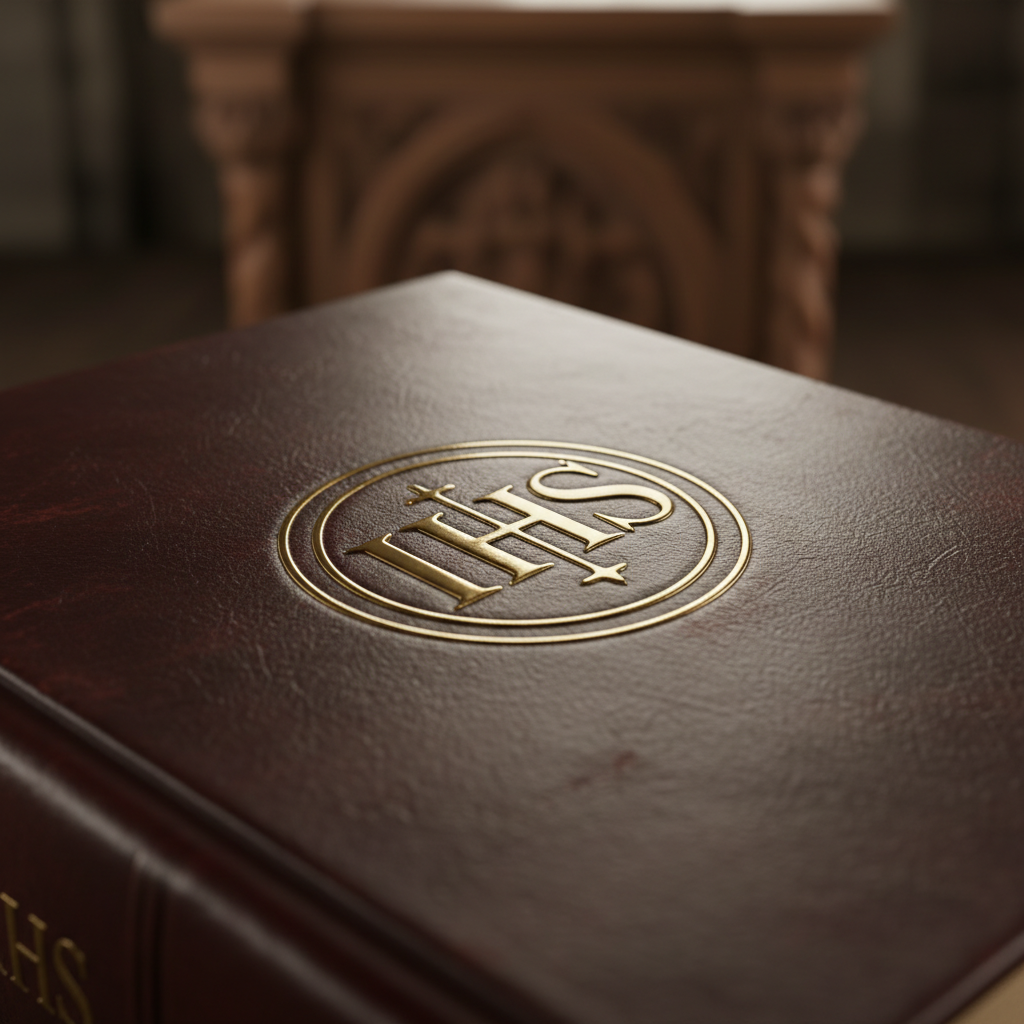
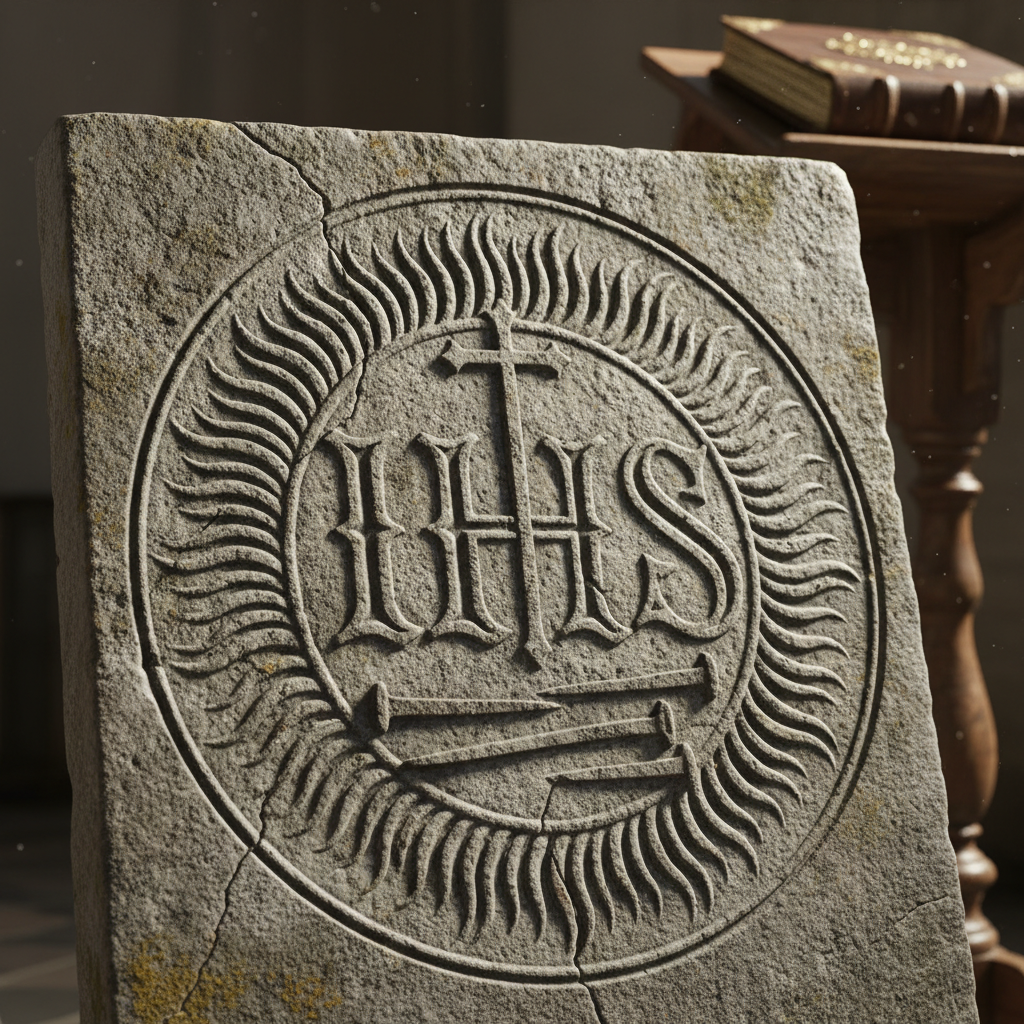
IHS is a Christogram, a symbol that represents Jesus Christ. It originates from the first three letters of Jesus’ name in Greek: Iota (I), Eta (H), and Sigma (S). It is also widely interpreted in Latin as ‘Iesus Hominum Salvator,’ which translates to ‘Jesus, Savior of Mankind,’ affirming His central role in the Christian faith.
Christianity is rich with symbols—visual reminders of the profound truths of our faith and our Savior. From the cross to the fish, these emblems serve as silent testaments to the enduring power of the Gospel. Among them, the symbol “IHS” often appears, etched into altars, embroidered on vestments, and adorning sacred texts. You may have seen it countless times and wondered about its deeper significance. What do those three letters truly mean for believers and their faith in Jesus Christ?
This article will unveil the powerful meaning behind the IHS symbol, tracing its roots from ancient script to its theological importance for every follower of Jesus. Far from being a mere decoration, IHS is a Christogram—a monogram of Christ—that affirms His Lordship and saving work. While often associated with the Catholic Church, particularly through its use by the Society of Jesus, its core message transcends denominational lines, pointing all believers back to the Name above all names. For it is written, “Therefore God has highly exalted Him and bestowed on Him the name that is above every name, so that at the name of Jesus every knee should bow, in heaven and on earth and under the earth, and every tongue confess that Jesus Christ is Lord, to the glory of God the Father” (Philippians 2:9-11).
Join us as we explore the history and scripture behind the IHS symbol. We will unpack its full meaning, examine its various interpretations, and discover how this timeless emblem continues to declare the sovereignty and redemptive power of Jesus Christ. Let’s begin by answering the central question: What is the full meaning of IHS?
What is the full meaning of IHS?
The Greek Origin: The First Letters of Jesus’ Name
The symbol IHS originates in ancient Greek, the language of the New Testament. It is not merely a decorative emblem but a powerful abbreviation for the name of Jesus. In early Christian manuscripts, scribes used special abbreviations called “nomina sacra” (sacred names) to shorten frequently used divine names.
Specifically, IHS represents the first three letters of the Greek name for Jesus: Ἰησοῦς (Iesous). These letters are:
- Iota (Ι): The first letter.
- Eta (Η): The second letter.
- Sigma (Σ): The third letter.
Therefore, IHS is a direct link to the name of Jesus Christ as it appeared in the earliest Christian writings. It reminds us that Jesus is the same yesterday, today, and forever (Hebrews 13:8).
The Latin Interpretation: ‘Iesus Hominum Salvator’
As Christianity spread through the Western Roman Empire, Latin became the primary language of the Church. In this new context, the Greek abbreviation IHS was given a new, equally meaningful Latin interpretation. This reinterpretation did not diminish the original meaning but enriched it, making it accessible to a new generation of believers.
The letters IHS came to stand for the Latin phrase ‘Iesus Hominum Salvator,’ which translates to “Jesus, Savior of Men” or “Jesus, Savior of Humanity.” This interpretation powerfully captures the core message of the Gospel: that Jesus Christ came into the world to save sinners (1 Timothy 1:15).
This Latin meaning rooted the symbol in the redemptive work of Christ, serving as a constant reminder of His divine mission and ultimate sacrifice. The dual origin of the symbol, both Greek and Latin, highlights the universal truth of Jesus Christ’s identity as Savior of the world.
A Christogram Affirming Jesus as Savior
At its core, IHS is a “Christogram”—a monogram or combination of letters that abbreviates the name of Jesus Christ. It is a sacred emblem that serves as a visual shorthand pointing to Jesus Himself [1]. Throughout history, Christians have used such symbols to honor and identify with their Lord.
Whether traced to its Greek or Latin roots, the fundamental message of IHS remains the same: it affirms that Jesus is our Savior. It is a powerful declaration of His identity and purpose, echoing the truth found throughout Scripture.
The Bible states there is no other name under heaven by which we must be saved (Acts 4:12). The IHS symbol, therefore, is a visual testament to this essential belief. It encourages us to fix our eyes on Jesus, the author and perfecter of our faith (Hebrews 12:2). When we see IHS, we are reminded of:
- Jesus’ Deity: He is the Son of God, truly God and truly man.
- Jesus’ Sacrifice: He died on the cross for our sins and rose again.
- Jesus’ Role as Savior: He alone offers salvation and eternal life to all who believe.
Ultimately, IHS points us to the living Christ, reminding us of His boundless love and unwavering promise of redemption. It stands as a beacon of hope and a silent, yet powerful, proclamation of faith in Jesus Christ, our Lord and Savior.
What is the meaning of IHS in the Catholic Church?
The Symbol of the Society of Jesus (Jesuits)
The IHS symbol holds profound significance within the Catholic Church, particularly for the Society of Jesus. Founded by St. Ignatius of Loyola, this esteemed religious order—commonly known as the Jesuits—formally adopted IHS as its official emblem. Prominently featured on their crest, it represents their core identity and mission. The symbol is a powerful visual declaration of their devotion to Jesus Christ. In all their endeavors, including education, missionary work, and spiritual guidance, Jesuit priests and brothers dedicate their lives to serving God by following the example of Jesus. The IHS monogram reminds them, and all believers, of Christ’s central role as the One who empowers their service and calls them to greater glory for God. (1 Corinthians 10:31) [2]
Use in Sacred Art, Altars, and Vestments
Beyond its use by the Jesuits, the IHS symbol is widespread throughout Catholic worship and artistry. It is frequently incorporated into the design of sacred spaces and liturgical items, serving as a constant reminder of our Lord.
- Sacred Art: The IHS monogram is often found in beautiful stained-glass windows, intricate carvings, and religious paintings. These artistic renditions adorn church walls and ceilings, uplifting the soul toward Jesus.
- Altars: The symbol frequently graces the altar, the central point of a Catholic church. This placement is deeply meaningful because the altar is where the Holy Sacrifice of the Mass is offered and where Jesus Christ becomes truly present in the Eucharist. (Matthew 26:26-28) Displaying the IHS here reaffirms His divine presence and saving act.
- Vestments: Many liturgical vestments worn by priests during divine services bear the IHS monogram. This symbolizes that the priest acts in persona Christi—in the person of Christ. It reinforces that all worship, prayer, and sacraments are directed through Jesus, our High Priest and mediator. (Hebrews 4:14)
In all these applications, the IHS symbol serves as a powerful testament to Jesus Christ, glorifying His holy name and proclaiming Him as our Savior and Lord. Indeed, “there is no other name under heaven given among men by which we must be saved.” (Acts 4:12)
What is the difference between IHC and IHS?
Understanding Ancient Greek Letterforms
The symbols IHS and IHC are Christograms that both represent the holy name of Jesus Christ. The slight difference between them stems from ancient Greek writing conventions. Both versions are derived from the first three letters of Jesus’s name in Greek: Iota (Ι), Eta (Η), and Sigma (Σ).
The key to understanding the variation is the Greek letter Sigma (Σ). In ancient and medieval manuscripts, Sigma was often written in a crescent form that looks like the letter ‘C’. This form is known as a “lunate sigma” [3].
So, the ‘C’ in IHC is not the Latin letter ‘C’ but rather this ancient, lunate form of the Greek Sigma. This means IHC is simply an older or alternative spelling of IHS. Both forms are abbreviations that draw directly from the Greek spelling of Jesus’ sacred name.
Both Symbols Point to the Same Lord Jesus
Ultimately, this stylistic difference between IHC and IHS does not change the core meaning. Each symbol points to the same divine Savior, Jesus Christ, and serves as a powerful reminder of His identity and mission.
These abbreviations affirm His Lordship and declare His central role in our salvation. Whether you encounter IHS or IHC, the symbol is meant to direct your focus to the Person it represents: Jesus, the Son of God, who gave His life for us.
Both Christograms honor the profound truth described in the Bible: that the name of Jesus is above all other names. As it is written, “Therefore God has highly exalted him and bestowed on him the name that is above every name, so that at the name of Jesus every knee should bow, in heaven and on earth and under the earth, and every tongue confess that Jesus Christ is Lord, to the glory of God the Father” (Philippians 2:9-11).
How Does the IHS Symbol Point to Scripture?

A Reminder of the Name Above All Names (Philippians 2:9-11)
The IHS symbol is a powerful visual reminder of Jesus Christ, directly calling to mind His holy name. This name is not just a label; it holds immense power and significance for all believers.
The apostle Paul beautifully articulates this truth in Philippians 2:9-11, which says:
- “Therefore God has highly exalted him”
- “And bestowed on him the name that is above every name,”
- “So that at the name of Jesus every knee should bow,”
- “In heaven and on earth and under the earth,”
- “And every tongue confess that Jesus Christ is Lord,”
- “To the glory of God the Father.”
This passage affirms the absolute supremacy of Jesus Christ, whose name stands unmatched. Consequently, when we see IHS, it should evoke profound reverence. The symbol reminds us of God’s divine plan for His Son and points to the future day when all creation will acknowledge Jesus’ Lordship.
While the IHS symbol is widely embraced by various Christian traditions, including the Catholic Church, its fundamental message transcends denominational lines. It points to the universal truth of Jesus Christ’s exalted status.
Furthermore, meditating on this symbol encourages us to reflect on Jesus’ sacrifice. He humbled Himself, even to death on a cross (Philippians 2:8). Because of this obedience, God exalted Him to the highest place, giving His name such unparalleled authority.
Focusing on the Person of Christ, Not Just the Symbol
While the IHS symbol powerfully represents Jesus’ name, its true value lies in directing our gaze beyond the letters themselves. It should always lead us to the living Person of Jesus Christ.
Symbols are helpful tools for faith, serving as visual aids and memory prompts. However, they are never meant to replace a personal relationship with our Lord. The symbol’s purpose is to point toward Jesus, not to become an object of worship itself.
Our faith is centered on:
- The Person of Christ: We believe in Jesus, the Son of God, who lived a perfect life (Hebrews 4:15).
- His Incarnation: He became flesh and dwelt among us (John 1:14).
- His Atoning Death: He died on the cross for our sins (Romans 5:8).
- His Glorious Resurrection: He conquered death, rising on the third day (1 Corinthians 15:3-4).
- His Present Lordship: He sits at the right hand of God, interceding for us (Romans 8:34).
Therefore, when we encounter the IHS symbol, let it be a catalyst, prompting us to:
- Deepen our understanding of who Jesus is.
- Renew our commitment to follow Him daily.
- Reflect on the profound meaning of His sacrifice and resurrection.
- Engage in heartfelt prayer and worship directed to Him.
Ultimately, the IHS symbol is a call to focus on Jesus. It reminds us that our faith is not in a symbol but in the divine Son of God. He is our Savior, Redeemer, and King, who alone offers salvation and eternal life (Acts 4:12).
Frequently Asked Questions about IHS
What does the IHS on Jesus mean?
The symbol IHS is a sacred Christogram, an abbreviation for the name of Jesus Christ. It points directly to His identity and mission.
- Greek Origin: IHS comes from the first three letters of Jesus’ name in Greek: Iota (I), Eta (H), and Sigma (S). In ancient Greek, Jesus is spelled ΙΗΣΟΥΣ (IHSOUS).
- Latin Interpretation: Over time, especially in the Western Church, IHS also came to be understood as an acronym for the Latin phrase “Iesus Hominum Salvator,” which means “Jesus, Savior of Men.”
Therefore, when you encounter IHS on religious art, vestments, or any item related to Christ, it serves as a powerful reminder of who Jesus is:
- He is the Son of God.
- He is our Lord and Savior.
- His name is above all names.
The Bible affirms the immense power and significance of His name. “Therefore God also has highly exalted Him and given Him the name which is above every name, that at the name of Jesus every knee should bow, of those in heaven, and on earth, and under the earth” (Philippians 2:9-10).
Is IHS Catholic or protestant?
At its core, the IHS symbol represents Jesus Christ, a meaning that transcends denominational boundaries.
- Historical Use: The symbol has a long and rich history within Christianity. It gained significant prominence in the Roman Catholic Church, particularly through St. Bernardino of Siena in the 15th century, and was later adopted as the emblem of the Society of Jesus (the Jesuits) [4].
- Universal Christian Meaning: Despite its strong association with Catholicism, the meaning behind IHS—Jesus Christ as Savior—is a foundational truth for all Christians, both Protestant and Catholic.
Ultimately, IHS is a Christogram that celebrates the person of Jesus Christ. Believers from all denominations share a common faith in Him. “There is one body and one Spirit, just as you were called in one hope of your calling; one Lord, one faith, one baptism; one God and Father of all, who is above all, and through all, and in you all” (Ephesians 4:4-6).
What is the truest Church on earth?
From a biblical perspective, the true Church is not defined by a denomination or a physical building. It is a spiritual body.
The true Church is:
- The Body of Christ: It consists of everyone who has placed their faith in Jesus Christ as Lord and Savior. “For by one Spirit we were all baptized into one body—whether Jews or Greeks, whether slaves or free—and have all been made to drink into one Spirit” (1 Corinthians 12:13).
- Built on Christ: Jesus Himself is the cornerstone of the Church. “Now, therefore, you are no longer strangers and foreigners, but fellow citizens with the saints and members of the household of God, having been built on the foundation of the apostles and prophets, Jesus Christ Himself being the chief cornerstone” (Ephesians 2:19-20).
- Guided by Scripture: The true Church upholds the inspired Word of God as its ultimate authority. “All Scripture is given by inspiration of God, and is profitable for doctrine, for reproof, for correction, for instruction in righteousness” (2 Timothy 3:16).
- Proclaiming the Gospel: Its mission is to share the good news of salvation through Jesus Christ with the world. “Go therefore and make disciples of all the nations, baptizing them in the name of the Father and of the Son and of the Holy Spirit” (Matthew 28:19).
Therefore, the true Church on earth is a spiritual reality. It is a universal fellowship of believers united by their faith in Jesus Christ, transcending all geographical and denominational lines. This Church holds the unwavering conviction that Jesus Christ is Lord and Savior, the only way to salvation (John 14:6).