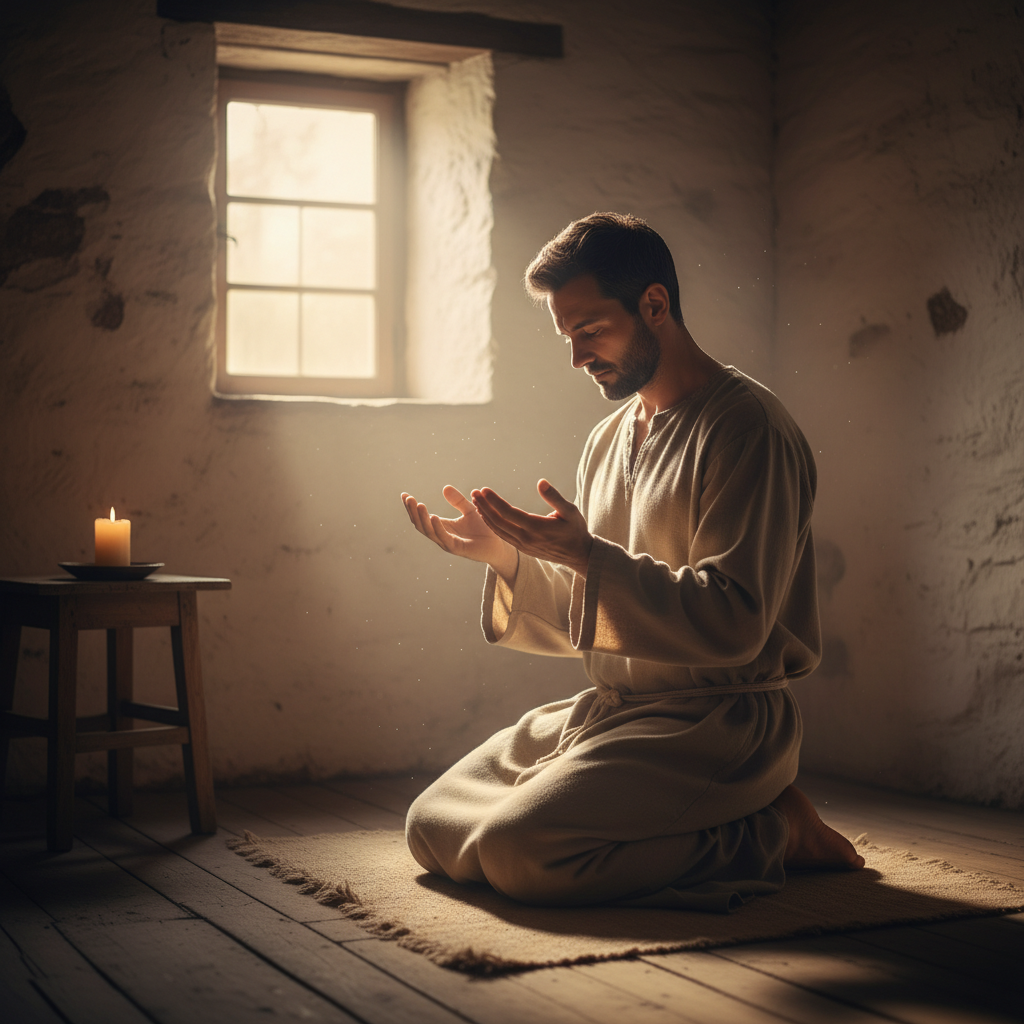
Mark 1:35 describes Jesus rising very early in the morning, while it was still dark, to go to a solitary place and pray. This act demonstrates His deep, personal reliance on God the Father and sets a crucial example for believers on the importance of prioritizing communion with God before engaging in ministry or daily work.
The life of Jesus Christ, our Lord and Savior, was a whirlwind of divine activity. He healed the sick, cast out demons, taught profound truths, and proclaimed the Kingdom of God. From Capernaum to Galilee, His days were filled with ministry, touching countless lives with His grace and power. Yet, amidst this demanding schedule, the Gospels offer intimate glimpses into His devotional life. These moments reveal His deep reliance on and communion with God the Father. One such powerful and often overlooked passage is found in Mark 1:35.
This single verse paints a vivid picture: Jesus, the Son of God, rising before dawn to seek solitude and commune with His Father. This act is a testament to the necessity of prayer, even for our perfect Savior. It demonstrates that a deep relationship with God requires intentional, set-apart time. The profound meaning of mark 1 35 is more than a historical account; it serves as a foundational example and an urgent invitation for every believer seeking to walk more closely with God.
In this article, we will unpack the rich lessons from Jesus’s solitary morning prayer. We will explore the context of His busy ministry, the significance of rising early, the power of a solitary place, and the ultimate purpose of His communion with God the Father. Prepare to discover how Jesus’s wisdom, revealed through the authoritative Word of God, can transform your own spiritual journey. It offers renewed strength, divine guidance, and a clearer sense of purpose for your daily walk with Christ.
What Can We Learn From Jesus’s Morning Prayer in Mark 1:35?

Mark 1:35 offers a powerful glimpse into the devotional life of Jesus Christ. This single verse contains vital lessons for every believer, revealing Jesus’s perfect example of spiritual discipline and His complete reliance on God the Father.
Here we see Jesus, God in human form, setting a crucial pattern for a life deeply connected to the divine. This passage is a cornerstone for understanding Christian prayer and shows us how to maintain spiritual focus in a busy world. Let’s explore the essential truths found in this verse.
The Primacy of Relationship with God
Mark 1:35 clearly shows the absolute priority Jesus placed on His relationship with the Father. Though He was fully God, He also lived as fully man, modeling a perfect dependence on God. For Jesus, spending time alone with the Father was not an option; it was essential for His ministry.
Consider His schedule. The previous day had been filled with healing and teaching, including casting out demons and curing many who were sick (Mark 1:32-34). Yet, before another demanding day began, Jesus sought His Father. This teaches us a powerful truth: a deep, consistent relationship with God must be our highest pursuit. As Matthew 6:33 reminds us, “But seek first the kingdom of God and his righteousness, and all these things will be added to you.”
The Power of Solitude and Early Morning Prayer
The verse specifies that Jesus went to a “solitary place” while it was “still dark.” This intentional act teaches another key lesson: distraction is the enemy of devotion. To truly connect with God, we often need quiet and solitude, which means stepping away from the world’s noise and others’ demands. Jesus sought an undisturbed environment for unhindered communion with His Father.
The early morning hours offer unique benefits. The world is still quiet, and our minds are often less cluttered. This time allows for a fresh focus on God, setting the spiritual tone for the entire day. Proverbs 8:17 says, “I love those who love me, and those who seek me diligently find me.” Jesus’s example highlights the value of starting our day in God’s presence.
Seeking Strength and Guidance from Above
Jesus’s prayer was not a mere ritual; it was His source of strength and direction. He faced immense pressure and a monumental earthly mission, so He constantly drew power and wisdom from the Father. His time in prayer refreshed His spirit and reaffirmed His purpose, offering great encouragement for us today.
We also face challenges that can feel overwhelming and require divine wisdom. Mark 1:35 teaches us to rely on God in everything. Prayer is more than asking for things; it is aligning our will with God’s will and receiving spiritual nourishment. As Philippians 4:6-7 says, “Do not be anxious about anything, but in everything by prayer and supplication with thanksgiving let your requests be made known to God. And the peace of God, which surpasses all understanding, will guard your hearts and your minds in Christ Jesus.”
A Divine Blueprint for Discipleship
Ultimately, Mark 1:35 provides a divine blueprint for all who follow Christ. As the Son of God, Jesus modeled perfect discipleship by showing us how to walk intimately with the Father. While fully human, He embraced His dependence on God. This verse is not just a story; it is an invitation for us to emulate His example and deepen our own prayer lives.
Jesus is our Lord and Teacher, and His actions are our guide. By prioritizing prayer, seeking solitude, and relying on God, we grow in faith and become more like Him. We learn to live out our purpose more fully, reaffirming that Jesus is the Way, the Truth, and the Life (John 14:6). He is the Son of God, offering us a living pattern for an abundant life in Him.
What does Mark 1-35 mean?
The Context: A Busy Day of Healing and Ministry
Mark 1:35 does not stand alone; it follows a whirlwind day of intense ministry for Jesus in Capernaum. After preaching in the synagogue, Jesus immediately healed a man possessed by an unclean spirit (Mark 1:21-28). From there, He went to Peter’s house, where He compassionately healed Peter’s mother-in-law from a high fever (Mark 1:29-31).
As the sun set, the entire town gathered at Peter’s door, bringing all who were sick or demon-possessed to Jesus. He healed many people afflicted with various diseases and cast out many demons (Mark 1:32-34). It was a day of relentless demand, during which Jesus poured out His divine power and love without reservation. The large crowds drawn by His compassion created constant needs and pressures, illustrating the exhaustive nature of His mission and setting the stage for what He did next.
The Action: Rising Before Dawn to Pray
After such an exhausting day, one might expect Jesus to sleep late. However, Mark 1:35 reveals a different priority: “Very early in the morning, while it was still dark, Jesus got up.” This was not an accidental waking but a deliberate, intentional act. By choosing to rise long before sunrise, Jesus demonstrated an unwavering commitment to His Father. He sought intimate time with God before the demands of a new day began. This act powerfully underscores His discipline and His profound spiritual need for connection.
- Early Start: Jesus rose while it was still dark, seeking solitude before the day began.
- Intentionality: This was a purposeful choice, not a circumstance, to prioritize communion with God.
- Sacrifice: He willingly gave up much-needed rest for this sacred time.
The Location: The Importance of a Solitary Place
The verse continues, “He left the house and went off to a solitary place, where he prayed.” His choice of location is significant. He intentionally withdrew from the bustling home to get away from the crowds and the clamor. A “solitary place” or “desolate place” (Greek: erēmos topos) offered the quiet and freedom from distraction needed for deep, uninterrupted communion with God. This physical separation enabled spiritual focus. For prayer to be effective, finding such a place is crucial, as it allows us to set aside worldly concerns and focus solely on our Creator. Historical records suggest Capernaum was a busy fishing village on the Sea of Galilee [source: Jewish Virtual Library: https://www.jewishvirtuallibrary.org/capernaum]. Therefore, Jesus’ need to find a desolate spot highlights the importance of intentional solitude.
- Escape from Distraction: He left the noise and demands behind to find quiet.
- Intimacy with God: A solitary place allows for private, focused conversation with the Father.
- Spiritual Focus: Removing external hindrances is key to meaningful prayer.
The Purpose: Communion with God the Father
Why did Jesus, the Son of God, need to pray? Mark 1:35 states simply, “where he prayed.” This act reveals a profound truth: even Jesus, who is fully God and fully man (John 1:1, Philippians 2:6-7), depended on His Father. His prayer was not a mere ritual but a vital communion where He sought divine guidance, received strength for His ministry, affirmed His mission, and renewed His spirit. Jesus consistently modeled this dependence (John 5:19, John 8:28), demonstrating that prayer is essential for all believers. It is our lifeline to God, through which we align our will with His to find peace, purpose, and power. Just as this intimate connection sustained Jesus, it will sustain us too. His solitary prayer shows that His ultimate source of strength was always the Father (John 14:10).
Why did Jesus pray early in the morning?

To Prioritize His Relationship with the Father
Although fully God, Jesus Christ also lived as a man on earth. His habit of early morning prayer demonstrates His profound commitment to His Father and His deep reliance on Him.
Even the Son of God sought intimate communion, a deliberate act that highlights the central importance of our relationship with the Creator. Jesus modeled perfect fellowship with God by choosing to start His day in this sacred space.
His divinity never negated His human need for connection. Indeed, while He knew the Father perfectly, He intentionally sought Him in prayer. This teaches us a vital lesson: our relationship with God must be our highest priority, as it is the foundation for everything else.
- A Model of Devotion: Jesus perfectly showed us how to prioritize God by making time for His Father first.
- Deep Spiritual Connection: His prayer was not a duty but a yearning for intimate conversation.
- Setting the Example: Even though Jesus knew the Father’s heart, He still sought Him, setting a profound example for us all.
Scripture consistently affirms this divine bond. Jesus Himself said, “I and the Father are one” (John 10:30), yet His commitment to prayer showcases the depth and beauty of that relationship. Through His example, He invited us into the very same fellowship.
To Receive Strength and Guidance for His Mission
Jesus’s colossal mission on earth—to redeem humanity—required both immense spiritual strength and clear divine guidance. His early morning prayers were a vital source for both.
Facing constant opposition and a physically and emotionally demanding ministry, Jesus used this time alone with the Father to replenish His spirit, renew His focus, and gain clarity for the path ahead.
Considering the weight of His calling, every miracle, teaching, and encounter required divine wisdom. Prayer was His way of continually aligning with the Father’s will, empowering Him for the day’s tasks.
We see this pattern throughout the Gospels:
- Before Choosing Disciples: Jesus prayed all night before the critical decision of selecting His twelve apostles (Luke 6:12).
- Facing Suffering: In Gethsemane, He prayed intensely, seeking the Father’s strength before His crucifixion (Luke 22:41-44).
- Preparing for Ministry: Mark 1:35 shows Him praying before a busy day of healing and teaching, gathering strength for the journey ahead.
Therefore, Jesus prayed to receive power from on high and seek divine instruction. This practice was essential for fulfilling His saving mission, ensuring His every step was in perfect obedience to the Father.
To Set a Divine Example for All Believers
Beyond His personal need, Jesus’s prayer life serves as a powerful model. As “the way, the truth, and the life” (John 14:6), His actions teach us how to live a godly life, and His early morning prayer in Mark 1:35 is a key example.
He didn’t just tell us to pray; He showed us how and when, demonstrating the profound importance of solitary time with God. He knew we would need this spiritual discipline to navigate our own lives.
In this way, Jesus teaches us to seek God before the clamor of the world begins. He invites us into the same intimate relationship He shared with the Father, and His example encourages every believer to do the same.
We learn several key lessons from His example:
- Intentionality: Prayer is not accidental; it requires deliberate effort.
- Prioritization: God should come first, before the day’s demands.
- Solitude: Finding a quiet place helps us focus on God without distraction.
- Consistency: Making prayer a regular habit deepens our faith. Many Christian traditions emphasize morning prayer as a foundational spiritual discipline [1].
By perfectly demonstrating reliance on God, Jesus showed us the source of true strength. Following His example allows us to deepen our own faith and walk more closely with our Lord and Savior.
How Can We Apply Mark 1:35 to Our Own Lives?

How Can We Apply Mark 1:35 to Our Own Lives?
Jesus’s actions in Mark 1:35 offer a profound blueprint for our spiritual lives. By examining His example of solitary prayer, we can learn invaluable lessons to enrich our own walk with God. Let’s explore how to integrate these practices into our daily routines.
Finding Your ‘Solitary Place’
As Mark 1:35 highlights, Jesus sought a “desolate place” for communion with God. For us, this solitary place doesn’t have to be a remote wilderness. It can be any dedicated space free from distractions—a quiet sanctuary for focused prayer and reflection. The key is to find a place where you can minimize external noise and interruptions.
Consider these practical steps to establish your own solitary place:
- Identify a quiet spot: This might be a specific chair in your living room, a corner of your bedroom, or even an unused room.
- Minimize interruptions: Silence your phone, turn off the television, and let family members know you need uninterrupted time.
- Create a sacred atmosphere: Consider lighting a candle or keeping your Bible and a journal nearby to help set a reverent tone.
- Be consistent: Returning to the same place each day helps build a routine and trains your mind for prayer.
Just as Jesus withdrew, we must intentionally separate ourselves. This practice allows for intimate fellowship with our Heavenly Father (Matthew 6:6).
Making Time for God Before the Day Begins
Mark 1:35 notes that Jesus rose “very early in the morning, while it was still dark,” demonstrating His commitment to prioritizing time with the Father. When we follow this example and begin our day with God, we anchor our souls and prepare ourselves for the challenges ahead.
Here are ways to cultivate an early morning devotion habit:
- Start small: Begin with just five or ten minutes and gradually increase the duration. Consistency is more important than length at first.
- Set an alarm: Treat this appointment with God as non-negotiable by waking up a little earlier than usual.
- Follow a simple structure:
- Begin with gratitude: Thank God for the new mercies of the day (Lamentations 3:22-23).
- Read Scripture: Choose a Psalm or a Gospel passage and let His Word speak to you.
- Pray: Offer your day to God, lifting up your concerns and praises.
- Prepare the night before: Lay out your Bible or devotional and have your coffee cup ready. This removes friction in the morning.
This early time provides strength and peace. As Psalm 5:3 declares, “In the morning, Lord, you hear my voice; in the morning I lay my requests before you and wait expectantly.”
Praying for Purpose and Direction
Jesus’s prayers were not merely a ritual; they were a vital way He sought the Father’s will for His divine mission. That time in solitary prayer provided clear direction for His ministry. In the same way, we can pray for purpose and divine guidance in our own lives.
When you enter your solitary place, engage in prayers for purpose and direction:
- Seek God’s will: Ask God to reveal His specific purpose for you and pray for clarity in your calling.
- Pray for wisdom: As James 1:5 instructs, ask God for the wisdom He gives generously, seeking His guidance for daily decisions.
- Surrender your plans: Trust in the Lord with all your heart and be open to God redirecting your steps (Proverbs 3:5-6).
- Ask for opportunities to serve: Pray for open doors to bless others and ask how you can use your gifts for His Kingdom.
- Listen and reflect: Prayer is a two-way conversation, so spend time in silence, listening for His gentle leading. Remember that His Word is a lamp to our feet, guiding our path (Psalm 119:105).
Embrace Mark 1:35 as an invitation to deeper communion with God. Through solitary prayer, we can find our true purpose, gain strength for our journey, and learn to walk in His divine direction. As God assures us, He has plans for us, “plans to prosper you and not to harm you, plans to give you hope and a future” (Jeremiah 29:11).
Frequently Asked Questions about Mark 1:35
What is the prayer in Mark 1:35?
Mark 1:35 does not record the specific words Jesus prayed. Instead, it describes His profound act of prayer. The passage tells us:
“Very early in the morning, while it was still dark, Jesus got up, left the house and went off to a solitary place, where he prayed.” (Mark 1:35)
This verse highlights the discipline and priority Jesus placed on communion with His Father. He sought a private place for intimate fellowship, connecting deeply with God. As our Lord and Savior, Jesus consistently modeled dependence on the Father. His prayers were about seeking guidance, receiving strength for His divine mission, and demonstrating His perfect submission to God’s will. This powerful example underscores the importance of prayer for every believer.
What is the full context of Mark 1:35-39?
The verses preceding Mark 1:35 paint a vivid picture of an incredibly demanding day. After teaching in the synagogue and casting out an unclean spirit (Mark 1:21-27), Jesus went to Simon and Andrew’s house and healed Simon’s mother-in-law (Mark 1:29-31). By sunset, the entire town had gathered at the door, where Jesus healed many sick people and cast out many demons (Mark 1:32-34). It was a day of intense ministry and spiritual battle.
Then comes Mark 1:35. After such an exhausting day, Jesus rose before dawn to seek solitude for prayer. This action underscores His reliance on the Father, revealing the source of His strength and wisdom.
The narrative continues in Mark 1:36-39:
- Mark 1:36: Simon and his companions actively searched for Jesus, likely concerned by His absence.
- Mark 1:37: When they found Him, they said, “Everyone is looking for you!” This highlights both His growing popularity and the pressing needs of the people.
- Mark 1:38: Jesus responded by declaring His mission: “Let us go somewhere else—to the nearby villages—so I can preach there also. That is why I have come.” His response demonstrates His divine purpose to spread the Gospel.
- Mark 1:39: Consequently, Jesus traveled throughout Galilee, preaching in their synagogues and driving out demons, confirming His commitment to His calling.
This entire passage reveals Jesus’ perfect balance between tireless ministry and His prioritized relationship with the Father. This balance empowered Him to fulfill God’s will and serves as a profound lesson for us all.
How can I start a habit of early morning prayer like Jesus?
Developing an early morning prayer habit like Jesus is a transformative practice that requires intentionality and builds spiritual discipline. Here are some practical steps to help you begin:
- Commit to a Specific Time: Choose a consistent time each morning before other daily demands begin. Even 15-20 minutes can make a difference. Consistency is key.
- Find Your Solitary Place: Identify a quiet spot in your home, such as a specific chair, a corner, or even a place outdoors. This sacred space will minimize distractions and help you focus entirely on God.
- Prepare the Night Before: Lay out your Bible, journal, or anything else you use. This small act reduces morning friction and signals your commitment. Also, aiming for adequate sleep makes waking up early much easier.
- Start Small and Be Patient: Don’t try for an hour of prayer immediately. Begin with 5-10 focused minutes and gradually increase the duration as you grow comfortable. Be gentle with yourself on days you miss—just start again the next morning.
- Use a Simple Structure: A framework can be helpful. Consider using the ACTS method (Adoration, Confession, Thanksgiving, Supplication) or reading a Psalm and praying based on its verses. The goal is heartfelt conversation with God.
- Pray with Purpose: Remember why you are doing this: to seek communion with your Creator and invite His presence into your day. Ask for His guidance and strength, and pray for others.
- Utilize Alarms (Initially): Set a gentle alarm to help you wake up. Consider placing it across the room, which forces you to get out of bed.
- Connect with Scripture: Read a passage from the Bible and allow God’s Word to speak to you. This practice will deepen your understanding and inform your prayers.
This consistent practice will anchor your day in Christ and draw you closer to the Lord. As you faithfully seek Him, you will experience His transforming power. Jesus, fully God and fully man, set the ultimate example, calling us to follow Him in every aspect of life—including dedicated time in prayer.