
1 Corinthians 14 is the Apostle Paul’s instruction to the Corinthian church on the proper and orderly use of spiritual gifts, especially prophecy and speaking in tongues. The central theme is that every element of a worship service should be intelligible and aimed at building up, encouraging, and consoling the entire church body, reflecting God’s nature as a God of peace, not of disorder.
True Christian worship is a sacred encounter where believers honor God, grow in faith, and experience the Holy Spirit. From the beginning, however, the early church questioned how to best conduct these gatherings for order and edification. The Apostle Paul addressed these concerns for the vibrant but sometimes tumultuous church in Corinth. This commentary on 1 Corinthians 14 explores his guidance, which was designed to ensure every worship service glorifies God and builds up His people.
In this chapter, Paul provides a timeless framework rather than simply laying down rules. He explains how spiritual gifts, especially prophecy and speaking in tongues, should be understood and used wisely. Paul reminds believers that the goal of these gifts is not self-exaltation or chaos but the loving edification of the entire church. This focus on building up others reflects the heart of Jesus Christ, our Lord and Savior, who established the Church to be a beacon of truth and love.
First Corinthians 14 offers a clear vision for vibrant and unified worship. Paul clarifies the value of prophecy for edification and sets practical guidelines for church services. As we unpack this crucial biblical text, we will draw timeless wisdom from God’s Word to deepen our commitment to honoring Jesus in our gatherings. Join us in exploring Paul’s instructions, which are designed to create an atmosphere where everyone can encounter the living God and grow in His truth.
What is the Biblical Context of 1 Corinthians 14?

The Church in Corinth and Spiritual Gifts
In the Apostle Paul’s day, Corinth was a vibrant Roman metropolis, but it was also a morally complex city. As a major commercial hub, it was known for its diverse population and widespread pagan worship. This challenging environment heavily influenced the young Christian church that was established there.
Paul founded the Corinthian church during his second missionary journey, spending about 18 months teaching the Gospel (Acts 18:11). Although the church grew, it soon faced significant challenges, including internal divisions, moral laxity, and a deep misunderstanding of spiritual gifts.
The Corinthians were blessed with a wealth of spiritual gifts from the Holy Spirit, intended for the common good (1 Corinthians 12:7). However, these gifts were often misused and prioritized incorrectly. For example, the church placed a heavy emphasis on outwardly spectacular gifts like speaking in tongues, which led to disorder and confusion in their worship gatherings.
In his letters to Corinth, Paul addresses these issues directly. His goal was to correct their behavior with clear guidance and to restore unity where division had taken root (1 Corinthians 1:10). Ultimately, he wanted to ensure their worship honored God and built up fellow believers.
The core problems Paul tackles in 1 Corinthians 14 include:
- An overemphasis on speaking in tongues without interpretation.
- A lack of focus on the edification of the whole church.
- Disorderly conduct during worship services.
- A desire for self-exaltation rather than Christ’s glory.
Therefore, Paul’s teaching in this chapter is not about forbidding spiritual gifts but regulating their use. His instruction ensures they serve their divine purpose: to build up the body of Christ.
Following the ‘More Excellent Way’ of Love (1 Corinthians 13)
To fully grasp Paul’s instructions in 1 Corinthians 14, we must first look at the preceding chapter. Paul intentionally places his famous discourse on love (chapter 13) directly between his discussions of spiritual gifts (chapters 12 and 14). This placement is no accident; it is the key to understanding his entire argument.
First, in 1 Corinthians 12, Paul explains that while spiritual gifts are diverse, they all come from the same Spirit. He uses the analogy of a body with many parts to illustrate unity in diversity (1 Corinthians 12:4-11). He then concludes the chapter with a crucial transition: “But eagerly desire the greater gifts. And now I will show you the most excellent way” (1 Corinthians 12:31).
This “most excellent way” is revealed in chapter 13 to be divine love, or agape. Paul goes on to define this love not as a mere emotion, but as a selfless, active commitment to the well-being of others. His point is abundantly clear: without love as the motivation, even the most impressive spiritual gifts are utterly meaningless.
Consider these profound truths from 1 Corinthians 13:
- Gifts without love are empty: “If I speak in the tongues of men or of angels, but do not have love, I am only a resounding gong or a clanging cymbal” (1 Corinthians 13:1).
- Love is eternal: Prophecies will cease, tongues will be stilled, and knowledge will pass away (1 Corinthians 13:8). However, love never fails.
- Love is foundational: It is the very essence of God’s character (1 John 4:8). Therefore, it must be the guiding principle for all Christian life and worship.
In essence, Paul presents love as the essential framework for using spiritual gifts. No matter how powerful, a gift must be exercised through the lens of love. If its use fails to build others up or instead causes disorder, it is not being used correctly. This principle leads directly into the practical instructions of chapter 14. Paul’s message is timeless: Jesus Christ Himself exemplified this perfect love, and we are called to follow His pattern in all things.
What is the main point of 1 Corinthians 14?
The Superiority of Prophecy for Edification (vv. 1-5)
Building on his powerful message of love in 1 Corinthians 13, Paul urges believers to pursue love above all else. He then encourages them to eagerly desire spiritual gifts, especially prophecy (1 Corinthians 14:1).
Paul’s primary concern is the benefit of the entire church body. To illustrate this, he contrasts speaking in tongues with prophecy:
- Speaking in Tongues: This gift builds up the individual speaker. However, without interpretation, it offers no benefit to the assembled church (1 Corinthians 14:2-4). It is a mystery spoken to God, not to people.
- Prophecy: This gift builds up, encourages, and comforts the entire congregation. The prophet speaks directly to people for their spiritual growth (1 Corinthians 14:3-4), making prophecy superior in public worship.
Paul emphasizes the superiority of prophecy because the primary goal of spiritual gifts in public worship is to strengthen the body of Christ. As Jesus Christ Himself is the Head of this body, spiritual gifts should glorify Him by edifying His people.
Because God desires His church to grow strong in faith and understanding, prophecy is a vital gift. It directly contributes to this edification, helping believers mature in their walk with the Lord. This aligns with God’s loving plan for His church [source: https://www.thegospelcoalition.org/essay/the-gift-of-prophecy/].
The Need for Intelligibility in Worship (vv. 6-19)
Paul continues to underscore the importance of clarity in public worship by using practical illustrations. For example, if a trumpet sounds an unclear call, no one will prepare for battle (1 Corinthians 14:8). In the same way, uninterpreted tongues offer no clear message to the listener.
The argument is straightforward: for communication to be effective, it must be understood. Words that are not comprehended are like speaking into the air, benefiting no one (1 Corinthians 14:9). Since the purpose of spiritual gifts is to minister to others, they are ineffective without understanding.
Furthermore, Paul states that speaking in an unknown tongue makes the speaker a “foreigner” to the listener, which creates division instead of unity (1 Corinthians 14:11). Because the Apostle’s goal is the edification and unity of the church, he insists that all gifts expressed in public worship must be intelligible.
To underscore his commitment to teaching and understanding, Paul declares he would rather speak five intelligible words than ten thousand words in a tongue (1 Corinthians 14:19). Just as our Lord Jesus Christ taught with profound clarity, we are called to prioritize clear communication in our worship and teaching.
The Purpose of Gifts for Believers and Unbelievers (vv. 20-25)
Shifting his focus, Paul addresses the impact of spiritual gifts on both believers and unbelievers. He urges the Corinthians to be mature in their thinking, reminding them that gifts have a divine purpose and are not for personal showmanship (1 Corinthians 14:20).
Paul explains that tongues function as a sign, primarily for unbelievers (1 Corinthians 14:22). He references Isaiah 28:11-12, where God spoke to His people through foreign languages as a sign of judgment. Similarly, in the church, if an unbeliever hears uninterpreted tongues, it may not lead to faith but to confusion, causing them to conclude the believers are mad (1 Corinthians 14:23).
Prophecy, however, serves a more constructive purpose for unbelievers. A clear prophetic word can reveal the secrets of an unbeliever’s heart, leading to conviction of sin and an encounter with the living God (1 Corinthians 14:24-25). As a result, the person may fall down and worship, declaring that God is truly among His people (1 Corinthians 14:25).
This powerful outcome demonstrates God’s grace and desire for salvation. Ultimately, the proper use of every spiritual gift is to point people to Jesus Christ, our Lord and Savior. When used correctly, these gifts bring glory to God and draw others into His marvelous light [source: https://www.ligonier.org/learn/articles/the-purpose-of-the-gifts].
What three things do one do who prophesied in 1 Corinthians 14?
In 1 Corinthians 14, the Apostle Paul outlines the value of spiritual gifts, emphasizing that prophecy is superior to speaking in tongues without interpretation because it directly builds up the entire church. When a prophet speaks under the inspiration of the Holy Spirit, the message from God has three distinct and powerful effects on the community of believers.
Speaking for Edification (Building Up)
A primary function of prophecy is edification, which means to build up or strengthen the spiritual foundation of the church. God’s Word, delivered through prophecy, fortifies believers by strengthening their faith in Jesus Christ and helping them grow in spiritual maturity. As Paul explicitly states, “one who prophesies edifies the church” (1 Corinthians 14:4).
Furthermore, edification provides instruction that leads to growth. Prophetic messages can illuminate scripture and reveal God’s will for individuals or the community, deepening their understanding and commitment. In this way, edification equips believers for their walk with the Lord and helps them become more like Jesus.
Speaking for Exhortation (Encouragement)
In addition to building up, prophecy serves to exhort, which means to encourage, urge, or stir up believers. It is a powerful call to draw nearer to God, motivating the faithful to live out their beliefs more fully. Prophetic words can inspire renewed dedication, challenge spiritual complacency, and prompt righteous action.
Paul lists exhortation as a direct benefit of prophecy (1 Corinthians 14:3). When a prophet speaks, people can feel a stirring in their hearts—a renewed desire to obey God’s commands. They are encouraged to persevere through trials and are reminded of God’s faithfulness. This encouragement strengthens their resolve and ignites a deeper passion for Christ.
Speaking for Consolation (Comfort)
Finally, prophecy brings consolation, or comfort. In a world filled with hardship, believers often face trials, grief, and discouragement. Through prophetic messages, God’s compassionate heart reaches out to His people with words that offer solace, peace, and a reminder of His abiding presence and love.
Paul includes consolation as a key outcome of prophecy (1 Corinthians 14:3). A comforting word from the Lord can soothe a troubled spirit, restore hope in moments of despair, and assure believers they are not alone. Prophecy reminds us that our Lord Jesus Christ is always with us, demonstrating His unwavering compassion. It brings spiritual healing and renews our trust in His divine plan.
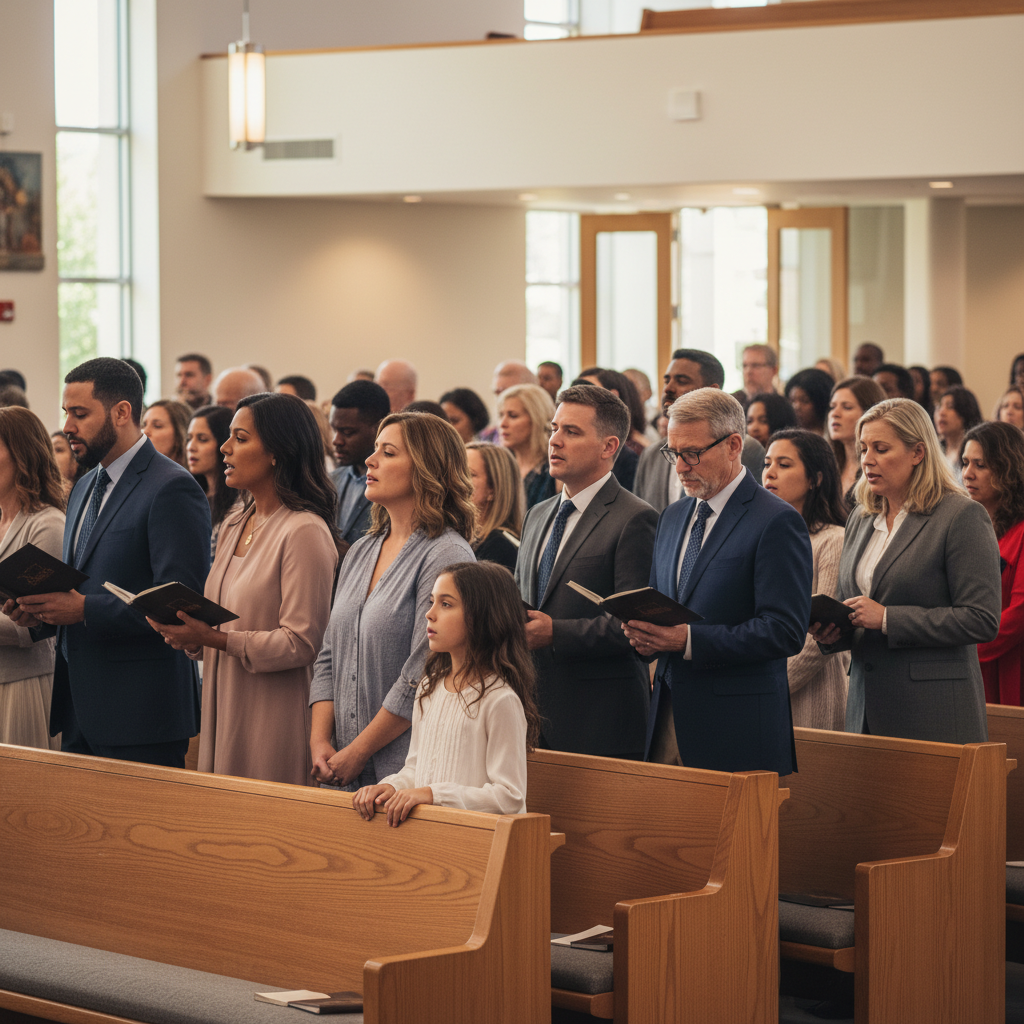
How Should Worship Services Be Conducted According to Paul? (vv. 26-40)
Guidelines for Speaking in Tongues and Interpretation
Paul provides clear instructions for the exercise of spiritual gifts in public worship to ensure every gathering is uplifting and orderly. He specifically addresses speaking in tongues in the church setting.
Here are Paul’s guidelines for tongues and interpretation:
- Limited Speakers: No more than two or three people should speak in tongues during a service, and each must speak in turn (1 Corinthians 14:27). This rule prevents chaos and ensures everyone can follow.
- Required Interpretation: If someone speaks in a tongue, an interpreter must be present (1 Corinthians 14:27). This is crucial because the purpose of spiritual gifts is to edify the entire body of Christ.
- Silence Without an Interpreter: If no interpreter is present, the person with the gift of tongues must remain silent in the church (1 Corinthians 14:28). Instead, they should speak to themselves and to God, as the message should remain personal if it cannot benefit the whole assembly.
This structure ensures the gift of tongues contributes to building up believers, not merely for personal expression in public worship. God’s desire is for all who worship Him to understand.
Guidelines for Prophecy
Prophecy, as Paul emphasizes throughout 1 Corinthians 14, is incredibly valuable for the church because it builds up, encourages, and comforts believers. Therefore, he also provides specific instructions for its practice in worship services.
Here are the guidelines for prophecy:
- Limited Speakers: As with tongues, only two or three prophets should speak during a service (1 Corinthians 14:29). This keeps the focus clear and prevents overwhelming the congregation.
- Discernment by Others: When a prophet speaks, others present should carefully weigh what is said (1 Corinthians 14:29). This is a vital step for maintaining doctrinal purity and protecting the church from error.
- Orderly Revelation: If another person receives a revelation from God, the first speaker should stop (1 Corinthians 14:30). This practice demonstrates humility and respect for how the Holy Spirit may lead others.
- Instruction and Encouragement for All: Paul clarifies that all can prophesy in turn (1 Corinthians 14:31), which allows everyone to be instructed and encouraged by the prophetic word.
- Self-Control: The spirits of prophets are subject to the prophets (1 Corinthians 14:32). This means that individuals can control their spiritual gifts; the Holy Spirit does not force someone to speak out of order.
These instructions highlight God’s desire for an organized and impactful ministry. Prophecy must be both powerful and properly delivered.
The Guiding Principle: ‘Let all things be done decently and in order’ (v. 40)
The overarching principle for all worship services is found in 1 Corinthians 14:40: “But everything should be done in a fitting and orderly way.” This single verse summarizes Paul’s entire teaching on spiritual gifts in the church, serving as the foundation for how believers should conduct themselves in public worship.
This principle has several key implications:
- God’s Character: Our worship should reflect God’s orderly nature, for He is not a God of confusion, but of peace (1 Corinthians 14:33). Chaos does not honor Him.
- Edification of the Body: Order ensures that all activities contribute to building up the church. When things are done “decently and in order,” the message of Christ is clear and impactful (1 Corinthians 14:26).
- Witness to Unbelievers: An orderly service is a powerful witness to unbelievers (1 Corinthians 14:24-25). Instead of human disarray, they will see God’s presence and power.
- Subordination of Gifts to Love: While spiritual gifts are powerful, they must always be exercised in love (1 Corinthians 13:1-13). Because love seeks the good of others, it promotes an orderly environment that serves everyone.
- The Authority of Scripture: Paul emphasizes that these are the Lord’s commands (1 Corinthians 14:37), calling believers to submit to these divine instructions.
Specific instructions, such as those regarding women in the church in verses 34-35, also fall under this principle of order and decorum for the Corinthian context. (This complex topic is explored in detail in the “Does the Bible say a woman should not speak in church?” section of this commentary). The ultimate goal is for every aspect of worship—from speaking in tongues to prophecy—to point clearly to the resurrected Lord Jesus Christ. Worship that is both Spirit-filled and structured affirms His identity and saving mission, bringing glory to Him alone.
Does the Bible say a woman should not speak in church?
Examining the Command in 1 Corinthians 14:34-35
The command in 1 Corinthians 14:34-35 is a frequently debated passage. In it, the Apostle Paul writes plainly:
“Women should remain silent in the churches. They are not allowed to speak, but must be in submission, as the Law says. If they want to inquire about something, they should ask their own husbands at home; for it is disgraceful for a woman to speak in the church.” (1 Corinthians 14:34-35 NIV)
On the surface, these verses appear to be an absolute prohibition, suggesting women should never speak during church gatherings. This command, linked to submission and the Law, has led to various interpretations throughout history. However, a careful reading of Scripture requires us to look beyond isolated verses. A clearer understanding demands that we consider both the immediate context of 1 Corinthians and the broader biblical narrative.
A correct interpretation is vital for two reasons. First, it affirms the authority of the Bible. Second, it upholds the liberating truth of the Gospel. Jesus came to set all people free, calling both men and women to serve Him (Galatians 3:28). Therefore, a deeper exploration of this passage helps us avoid misinterpretations that would contradict the rest of Scripture.
Understanding the Cultural and Historical Context of Corinth
To properly understand Paul’s instruction, we must first consider the unique setting of the Corinthian church. Corinth was a major port city known for its diverse and permissive culture. Pagan temples and cults were common, often involving ecstatic and disorderly worship. Amid this backdrop, the early Christian church in Corinth was trying to set itself apart by maintaining order and a clear public testimony.
Several key points about this context are crucial:
- Disorderly Worship: The entire chapter of 1 Corinthians 14 addresses chaos in their worship services. Paul’s main goal is that “everything should be done in a fitting and orderly way” (1 Corinthians 14:40).
- Cultural Norms: In Greco-Roman society, where women generally held a subservient public role, public speaking by women in a mixed assembly could be seen as scandalous or disruptive [1]. Paul was deeply concerned about the church’s reputation among unbelievers (1 Corinthians 14:23).
- Specific Disruptions: It is also possible that some women in Corinth were causing specific disturbances, such as asking disruptive questions or inappropriately challenging male leadership. Some scholars believe Paul was addressing a particular kind of speech that usurped authority, similar to the issue in 1 Timothy 2:11-12.
- “As the Law Says”: The phrase “as the Law says” likely refers to the created order in Genesis, pointing to a distinction between men and women. This does not, however, inherently forbid women from ministering or using their spiritual gifts.
With this in mind, Paul’s command was likely aimed at restoring order in a specific situation. He sought to stop behaviors that would dishonor Christ or hinder the Gospel’s spread. It was not intended as a universal, timeless ban on all forms of women’s speech or ministry.
Harmonizing with Other Scriptures on Women in Ministry
Interpreting 1 Corinthians 14:34-35 in isolation creates contradictions with other biblical teachings. Since God’s Word is consistent, we must harmonize this challenging passage with other Scriptures about women’s roles and spiritual gifts.
For instance, consider the following examples:
- Women Praying and Prophesying: Just a few chapters earlier, in 1 Corinthians 11:5, Paul gives instructions for “every woman who prays or prophesies with her head uncovered.” This directly confirms that women were speaking in the Corinthian church, since prophecy is a form of inspired speech (1 Corinthians 14:3). This contradicts the idea that they were to be completely silent.
- Women in Leadership and Ministry:
- Phoebe: Paul commends Phoebe as a “deacon” (a minister or servant) of the church and a “benefactor of many people, including me” (Romans 16:1-2).
- Prisca (Priscilla): Alongside her husband Aquila, she was a key ministry partner to Paul. Together, they taught the eloquent Apollos “the way of God more adequately” (Acts 18:26), highlighting her role as a theological instructor.
- Junia: In Romans 16:7, Paul calls Junia “outstanding among the apostles,” which points to her significant leadership role in the early church.
- Old Testament Examples: The Old Testament also provides examples of women in spiritual authority. God used prophetesses like Deborah, who judged Israel (Judges 4-5), and Huldah, who was consulted by King Josiah (2 Kings 22:14). These women spoke God’s Word with divine authority.
- Jesus’ Example: Finally, Jesus himself elevated the status of women in a radical departure from the cultural norms of his day. He welcomed them into His ministry, taught them directly (Luke 10:38-42), and chose women to be the first witnesses and messengers of His resurrection (Matthew 28:1-10).
In light of this evidence, the command in 1 Corinthians 14:34-35 is best understood as a targeted correction for a specific problem in Corinth—likely disorder or inappropriate teaching. It is not a timeless, universal ban on women speaking, praying, or prophesying in church. The full witness of Scripture affirms that God pours out His Spirit on both men and women, empowering them with spiritual gifts to build up His church (Acts 2:17-18). Ultimately, Jesus Christ calls all believers, regardless of gender, to use their unique gifts to serve Him and share the good news of His resurrection.
What Are the Key Takeaways from 1 Corinthians 14 for the Church Today?

First Corinthians 14 offers timeless wisdom, providing clear principles for orderly worship that remain vital for believers today. This chapter ensures our gatherings truly honor God while also building up His people. Therefore, carefully applying these teachings is essential for fostering a healthy, thriving Christian community.
The Primacy of Edification
First and foremost, 1 Corinthians 14 emphasizes edification—the building up of the church. According to Paul, all spiritual gifts must serve this primary purpose (1 Corinthians 14:26). They are not for personal display but for the collective growth of believers.
- Prophecy directly encourages, comforts, and strengthens the congregation (1 Corinthians 14:3).
- Speaking in tongues, without interpretation, benefits only the speaker (1 Corinthians 14:4).
- Therefore, gifts that are understandable and instructive are more valuable in public worship (1 Corinthians 14:19).
We are called to seek gifts that bless others, keeping our focus on strengthening the body of Christ. This mission aligns with God’s loving nature, as He desires all His children to mature in faith.
The Imperative of Order and Decency
Paul’s directive for order is one of the chapter’s key commands: “Let all things be done decently and in order” (1 Corinthians 14:40). This principle applies to every aspect of church life and reflects the very nature of God, who is a God of peace, not of confusion (1 Corinthians 14:33).
Furthermore, chaotic services can hinder true worship by confusing new believers and deterring seekers. In contrast, a structured environment fosters reverence and allows for deeper engagement with God.
- Speakers must take turns (1 Corinthians 14:27, 31).
- Interpretation is essential for tongues in public settings (1 Corinthians 14:28).
- Silence is sometimes more appropriate than unedifying speech.
For these reasons, churches must plan services thoughtfully to ensure a peaceful atmosphere. Such an environment helps everyone focus on Jesus Christ and allows the Holy Spirit to move effectively.
The Need for Intelligibility in Worship
Clear communication in worship is another critical theme. Paul highlights the importance of understandable speech (1 Corinthians 14:9), insisting that words spoken must make sense to everyone present, including believers and unbelievers.
Consider a visitor attending church for the first time. If they hear only unknown languages, they cannot learn anything (1 Corinthians 14:16-17) and might even conclude that the believers are mad (1 Corinthians 14:23). In contrast, a clear prophetic word has the power to convict and convert (1 Corinthians 14:24-25).
Therefore, we should strive for clarity in all our ministries. When sermons, prayers, and songs are understandable, the message of the Gospel is clearly heard, helping people respond to the truth of Jesus.
The Purpose of Gifts: Outreach and Conviction
Spiritual gifts serve a dual purpose: they not only build up believers but also act as a sign to unbelievers (1 Corinthians 14:22). A clear and powerful prophecy, for example, can reveal the secrets of a person’s heart, leading to their conversion.
When an unbeliever hears a prophet speak an intelligible word, they can be convicted, realizing that God is truly among the believers (1 Corinthians 14:25). This powerful experience can draw them to repentance and lead them to accept Jesus as Lord.
Churches today must remember this evangelistic component of worship. Our services should not be insular; instead, they must be welcoming to outsiders and demonstrate the living power of God. As studies show, clear, evangelistic communication is crucial for church growth and retention [source: https://faithandgrowthinstitute.org/research/clarity-evangelism-impact].
Love as the Guiding Principle
Finally, while 1 Corinthians 14 focuses on order, its principles are anchored in the message of 1 Corinthians 13, which defines love as the “most excellent way” (1 Corinthians 12:31). Therefore, every instruction for orderly worship is rooted in love for both God and neighbor.
Using our gifts and speaking the truth in love ensures that the church truly reflects Christ, the embodiment of perfect love. Since our Savior always put others first—demonstrating the ultimate act of love through His death and resurrection—our worship and use of gifts must likewise flow from a heart devoted to Him and His mission.
Frequently Asked Questions About 1 Corinthians 14
What is the main point of 1 Corinthians 14?
The main point of 1 Corinthians 14 is to guide the Corinthian church toward orderly worship. In this chapter, Paul emphasizes that all spiritual gifts must be used to build up the entire body of Christ. He stresses the importance of clarity, understanding, and love in church gatherings. As a result, everyone, including visitors, can receive effective ministry.
Paul’s core message is simple: worship services must be conducted “decently and in order” (1 Corinthians 14:40). This practice prevents confusion and, most importantly, glorifies God.
What is the meaning of 1 Corinthians 14:34-35?
1 Corinthians 14:34-35 states, “The women should keep silent in the churches. For they are not permitted to speak, but should be in submission, as the Law also says. If there is anything they desire to learn, let them ask their husbands at home. For it is shameful for a woman to speak in church.” This controversial passage has been widely discussed.
Understanding these verses requires considering the unique cultural and historical context of ancient Corinth. The Corinthian church was struggling with disorder and chaos in its worship services. It is possible that some women, like some men, were speaking out of turn or causing disruptions, which would have created confusion in the assembly.
For this reason, many scholars believe Paul’s instruction refers to a specific kind of authoritative or disruptive speaking, not a ban on all vocal participation. For example, 1 Corinthians 11:5 shows that women were permitted to pray and prophesy in church. Paul’s requirement was that they do so with their heads covered, a sign of proper submission within that culture’s norms.
Therefore, the command for women to “keep silent” likely addresses specific disruptive behaviors, such as questioning or judging prophecies out of turn (a command also given to men in 1 Corinthians 14:30). The goal was to prevent chaos and maintain the dignity of the worship service. This passage is not a universal command to silence women from all ministry. After all, the Holy Spirit gives gifts to all believers, men and women alike (Acts 2:17-18). Ultimately, Paul’s aim was to ensure orderly and edifying worship for everyone.
What are the three functions of prophecy in 1 Corinthians 14?
According to 1 Corinthians 14:3, prophecy serves three specific and beneficial purposes:
- Edification: Prophecy builds up the church. It strengthens believers in their faith and promotes spiritual growth.
- Exhortation: Prophecy encourages believers to live out their faith. It provides timely motivation and moral guidance.
- Consolation: Prophecy brings comfort to those who are hurting or struggling. It offers divine reassurance and solace.
In essence, prophecy is a gift designed to bless and mature the entire Christian community by speaking directly to the hearts and minds of its listeners.
What is the difference between the gift of tongues and prophecy in this chapter?
In 1 Corinthians 14, Paul clearly distinguishes between the gift of tongues and the gift of prophecy, explaining their different purposes and impacts.
Here are the key differences:
- Nature of the Language:
- Tongues: Speaking in a language unknown to the speaker and often to the listeners (1 Corinthians 14:2). Without interpretation, the congregation cannot understand it.
- Prophecy: Speaking a message from God in the common language of the people present (1 Corinthians 14:3). The message is plain and immediately understandable.
- Beneficiary:
- Tongues: Without interpretation, tongues edify only the speaker, who communes with God in spirit (1 Corinthians 14:4).
- Prophecy: Prophecy edifies the entire church, building up the whole body of believers (1 Corinthians 14:4).
- Requirement for Interpretation:
- Tongues: For the church to benefit, tongues must be interpreted (1 Corinthians 14:5, 13, 27-28). If no interpreter is present, it should not be used publicly.
- Prophecy: Since it is spoken in a known language, prophecy does not require interpretation. Its message is instantly accessible.
- Impact on Unbelievers:
- Tongues: Uninterpreted tongues can make unbelievers think Christians are out of their minds (1 Corinthians 14:23). When interpreted, however, tongues can serve as a sign to them (1 Corinthians 14:22).
- Prophecy: Prophecy can convict unbelievers by revealing the secrets of their hearts, leading them to worship God and acknowledge His presence (1 Corinthians 14:24-25).
In summary, while Paul values both gifts, he considers prophecy superior for public worship because it directly builds up and teaches the church. Because its message is understandable, it ensures that Jesus Christ is glorified and His truth is proclaimed clearly to everyone.